
Japanese Zen Garden Landscape Design and Buildfor Stillness and Restraint
Stone, water, moss and carefully placed planting, composed so a garden feels settled and quiet. A style that works as well on a small side yard as it does across a whole property.
The Japanese Zen Style
Immerse yourself in the beauty of Zen architecture
Zen garden landscaping is meant to combine aspects of nature to create a meaningful atmosphere. A Zen garden brings a reflective, soothing presence to a property. Whether you have a small space or a large one, it can add features that are as calming as they are beautiful: lanterns, wood bridges, reflecting pools, waterfalls, wooden pergolas, gravel, koi, moss, sand, stone and wood.
The principle underneath all of it is restraint. A Zen garden is composed rather than filled: asymmetric rather than mirrored, with odd-numbered groupings, deliberate empty space, and a few elements placed precisely instead of many placed evenly. Every stone is chosen for its face and its angle, and where nothing has been put is as considered as where something has.
Signature Elements
The details that make a garden read as Zen
A Zen garden works through a small number of elements used with intention. These are the ones that recur, and each one is placed rather than simply installed.
Zen Gardens
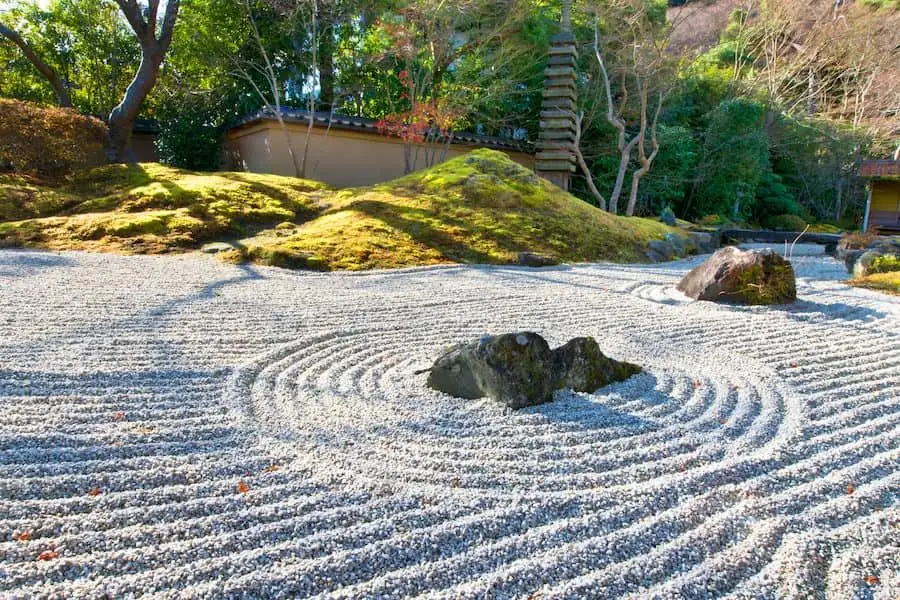
The raked gravel garden, with placed stones and open space, is the form the style is named for. It works beautifully as a contained element viewed from a window or a bench rather than walked through.
Stone Lanterns
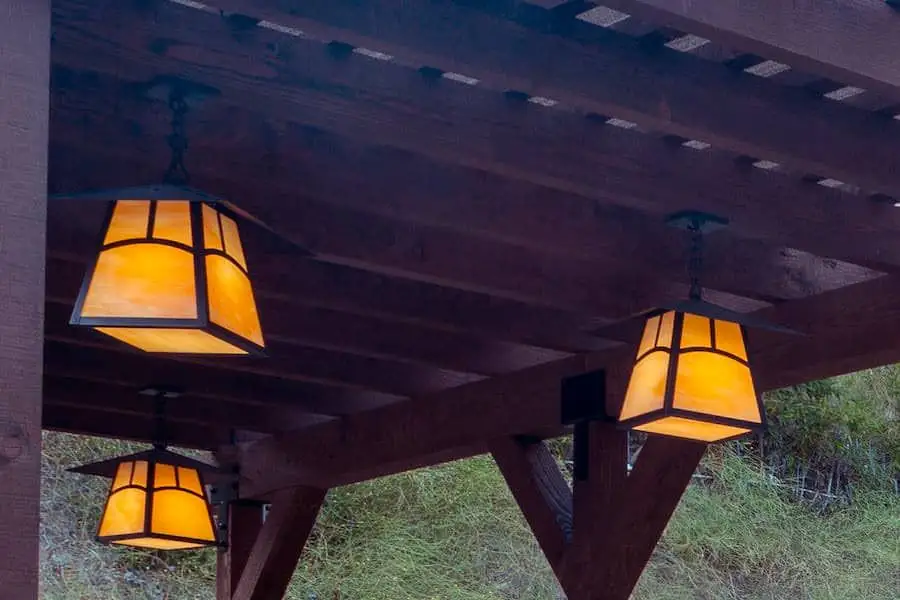
A stone lantern gives a garden a fixed point and a sense of age. Traditionally placed near water or at a turn in a path, where it marks a moment rather than lights the whole space.
Reflecting Pools
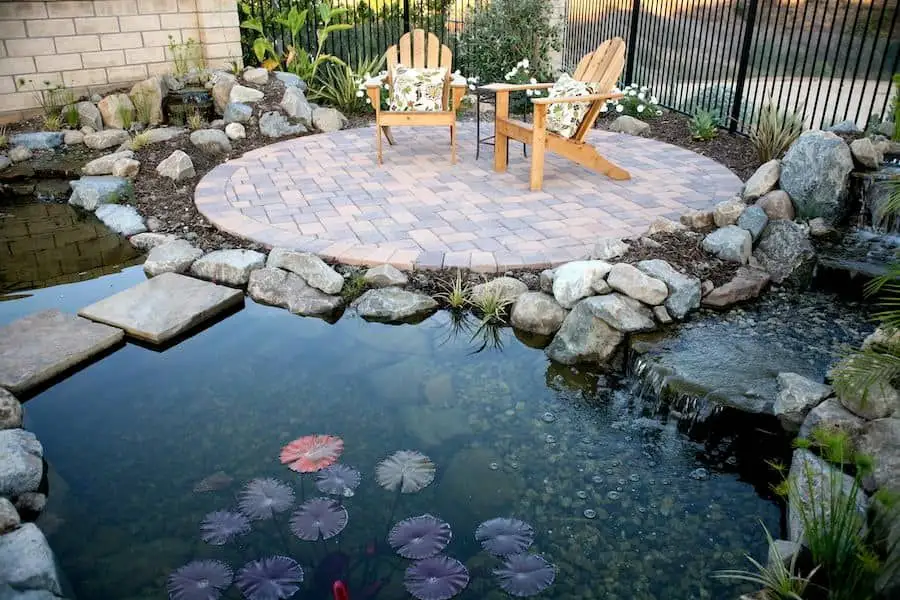
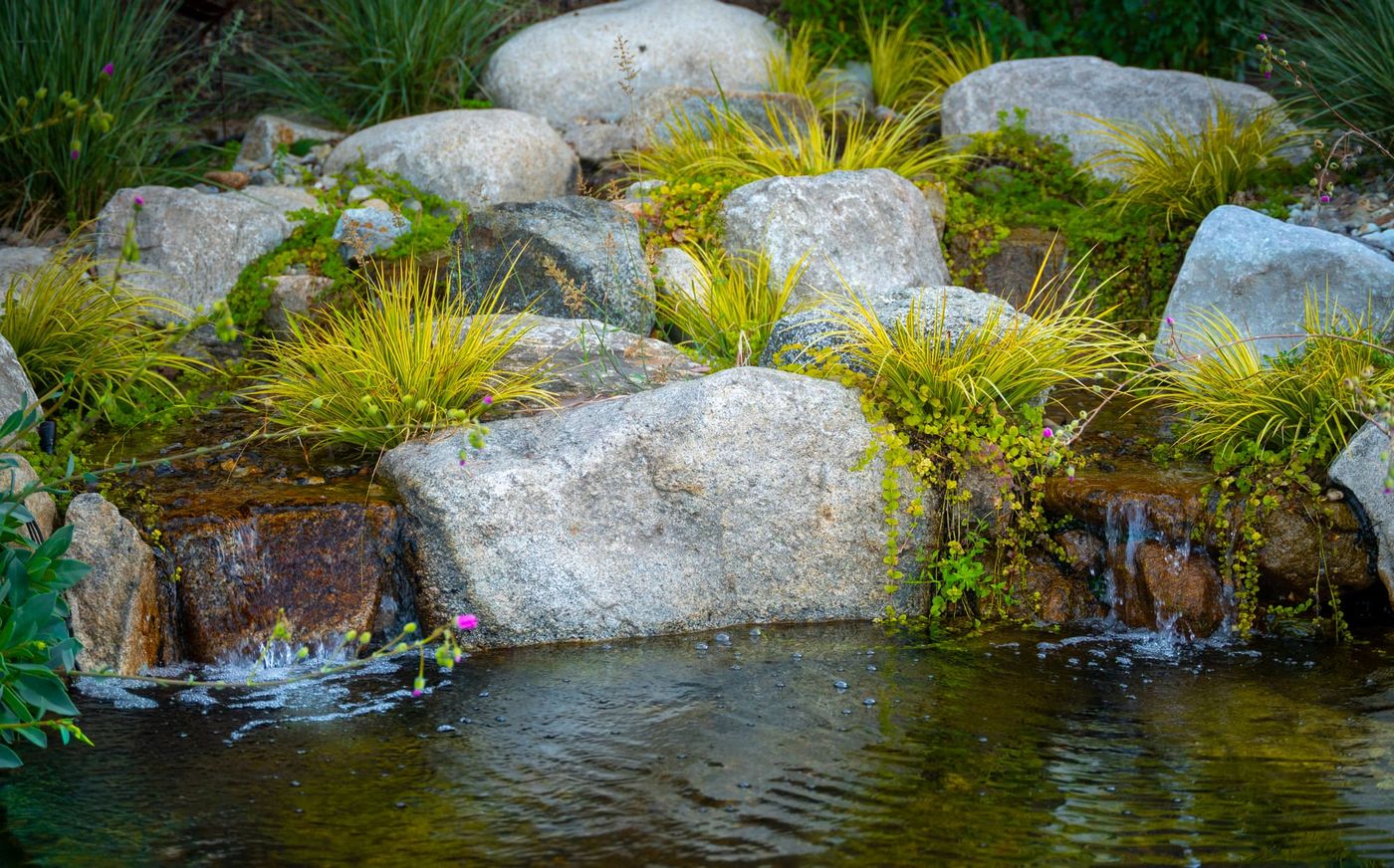
Still water doubles the garden and the sky above it. A shallow, dark-bottomed pool reads as much deeper than it is and keeps the space feeling calm.
Waterfalls
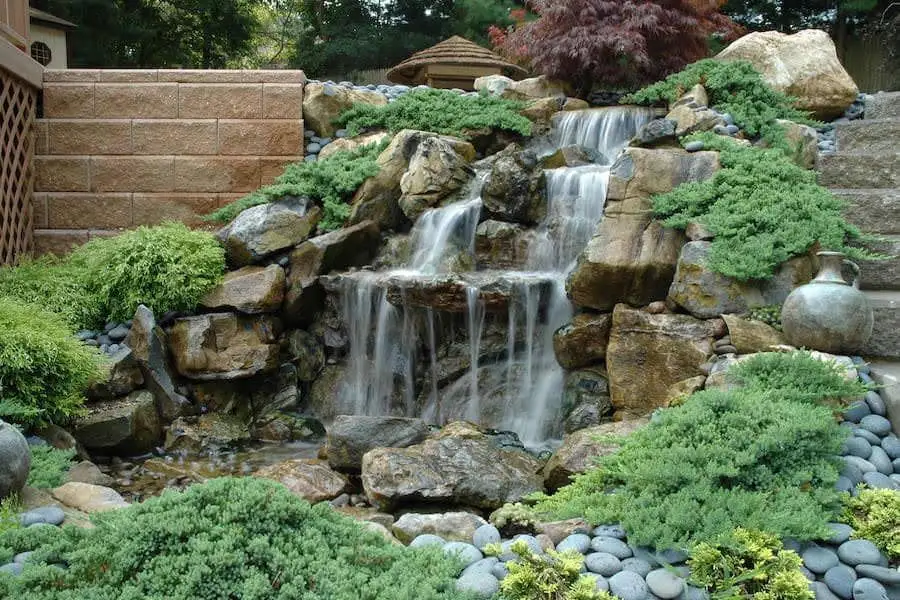
Where a property has any grade to work with, a low waterfall over placed stone adds sound and movement. The aim is a stream you might come across, not a display.
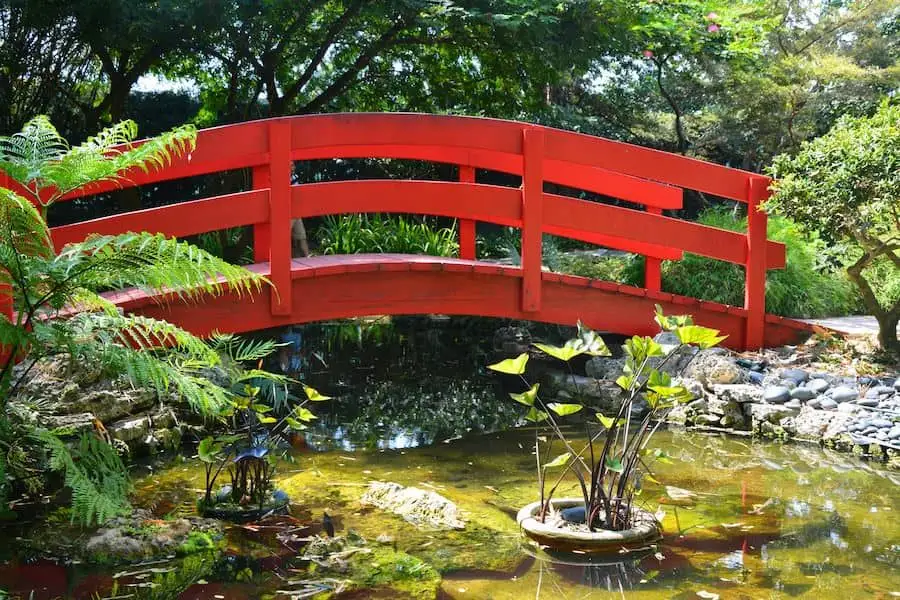
Wood Bridges
A simple arched or flat timber bridge over water or gravel slows you down and frames the view from the middle of it, which is exactly the point.
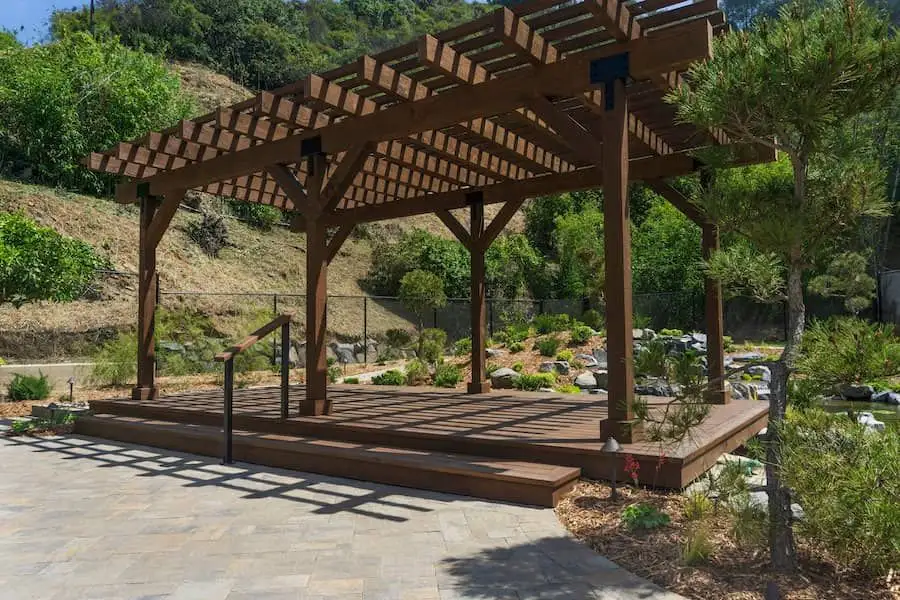
Wooden Pergolas
An open timber structure gives a garden a place to sit within it, with the shade and overhead framing that turns a view into a room.
Why It Works Here
Adapting a Zen Garden to California
Japan is humid, with rain through much of the year. That is what grows the moss carpets and the deep green understorey in the gardens this style is drawn from. California is dry, bright and hard-lit, so a literal copy struggles here, and the honest approach is to build the composition faithfully and substitute the planting.
What makes that work is that a Zen garden is mostly not planting. Stone, gravel, water, timber and empty space carry the design, and none of them care about humidity. Where the original would use moss, a dry-garden interpretation uses low sedges, dymondia or a fine gravel field; where it would use maple, a smaller-leafed tree with the same fine texture stands in.
The Composition Is Climate-Neutral
Asymmetry, odd-numbered groupings, placed stone and considered empty space work identically in any climate. The style survives the translation because its structure is not botanical.
Moss Needs Shade and Moisture
True moss carpets only hold in a consistently shaded, damp corner here. In open sun, low sedges, dymondia or a fine gravel field give the same quiet ground plane without a losing battle.
Japanese Maples Need Protection
Japanese maple can do well in California given filtered light, wind shelter and reliable water, and scorches badly in open afternoon sun. Placement decides whether it is a centrepiece or a disappointment.
Water Features Recirculate
A pond or waterfall runs on a closed recirculating system, so ongoing water use is topping up evaporation rather than continuous consumption. Koi add filtration and maintenance requirements worth planning for.
Plant Selection Tied to the Property
The California Department of Water Resources recommends matching plant choices to a property's specific climate, soil and sun exposure before planting, the same approach your Designer takes during the Site Analysis.
Climate and plant-selection guidance sourced from the California Department of Water Resources and the LADWP California Friendly Landscaping program. CA DWR: Water-Efficient Plant Selection · LADWP: California Friendly Landscaping
Materials
The materials that carry a Zen garden
Gravel, sand, stone, wood, moss and water are the whole material list. In a garden this restrained, the quality and placement of each one is the design rather than a backdrop to it.
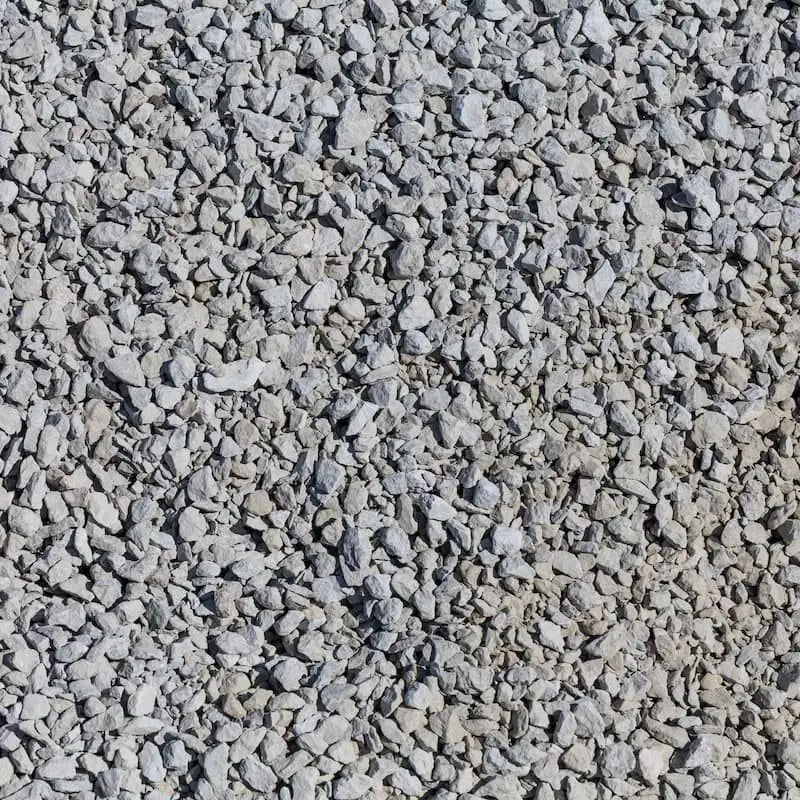
Gravel
A raked gravel field stands in for water and gives the garden its open, quiet ground plane. Gauge and colour matter more than they look like they should.

Sand
Finer than gravel and used where raked patterns are the point, sand holds a crisper line and reads as more formal in a small contained garden.
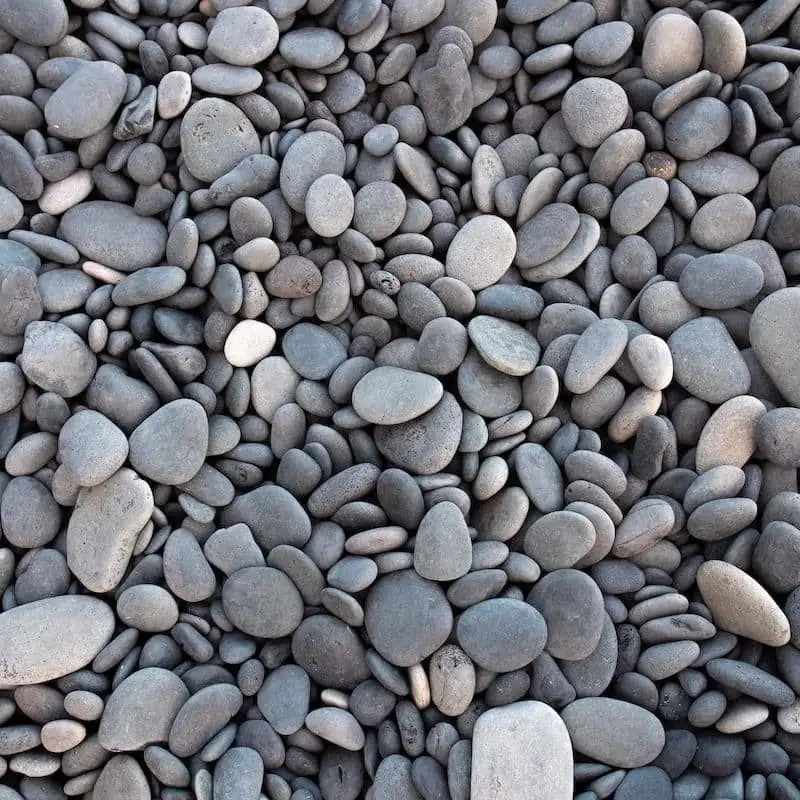
Stone
Placed boulders, stepping stones and edging. Stone is the skeleton of a Zen garden, and how each piece is set and turned decides whether the composition works.

Wood
Timber for bridges, screens, gates and pergolas, generally left to weather rather than painted, so it greys into the garden over time.
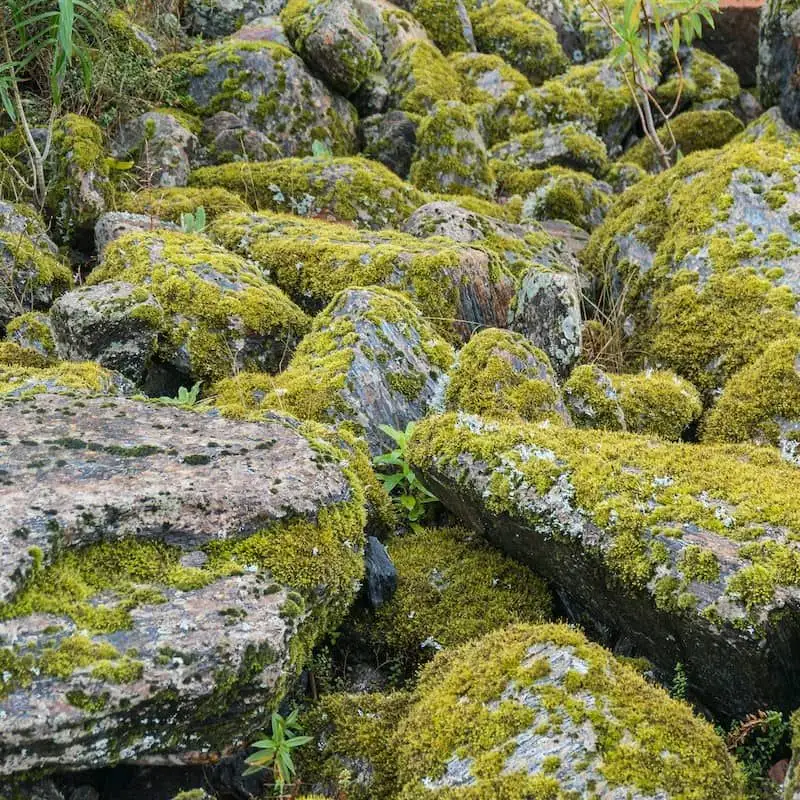
Moss
The soft green ground plane of a traditional Zen garden. It needs shade and consistent moisture here, so it is used in protected pockets rather than across an open yard.

Koi
Koi turn a pond into a focal point with movement and colour. They need adequate depth, filtration and shelter from predators, all of which is designed in rather than added later.
Planting Palette
A Zen planting palette for California
Zen planting is about form, texture and green on green rather than colour. A few species, well placed and given room, do far more than variety. The categories below are a starting point for the conversation with your Designer, not a fixed list.
- Specimen Trees
- Japanese maple (filtered light, wind-sheltered) · Japanese black pine · Olive as a drought-tolerant alternative
- Sculptural Evergreens
- Pine, cloud-pruned · Juniper · Podocarpus
- Ground Plane
- Moss in deep shade · Dymondia · Low sedges (Carex)
- Texture & Movement
- Bamboo, clumping rather than running · Horsetail in a contained bed · Ornamental grasses
- Shade Layer
- Ferns · Hosta in a protected corner · Aspidistra
- Restrained Accent
- Azalea · Camellia · Iris at a water edge
Final plant selections depend on your property's microclimate, sun exposure, irrigation setup, soil, pets and maintenance preferences, along with any local water-use requirements. Running bamboo in particular should be contained or avoided entirely; your Designer will confirm what's right for your yard during the Site Analysis.
Is This Style Right for You?
What to consider before choosing a Zen garden
A Zen garden asks for a particular kind of attention, and gives back a particular kind of space. A few things worth thinking through before your Site Analysis:
It is a garden to look at as much as use
Zen design is at its best framed from somewhere: a window, a bench, the end of a path. If you want a space built primarily around large-group entertaining, this style usually works better as one contained element within a broader plan.
Small spaces are an advantage
This is the style that handles a courtyard, side yard or narrow strip better than any other on this list. Restraint scales down naturally, so a tight footprint is an asset rather than a limitation.
Shade is worth more than sun here
A shaded or partly shaded site opens up the closest thing to an authentic planting palette, moss, ferns, maple. An open, hot, sunny lot pushes the design toward the dry-garden interpretation, which is equally legitimate but a different look.
Stone selection is the design
In a garden with this few elements, which boulders are chosen and how they are set, buried to the right depth, turned to their best face, grouped in odd numbers, is most of the finished result. It is worth the time it takes at the yard.
Water raises the commitment
A recirculating pool or waterfall needs a pump, filtration and periodic cleaning. Add koi and you have livestock: feeding, water quality, and protection from raccoons and herons. A dry gravel stream gives much of the same effect with none of that.
Maintenance is light but exacting
There is little pruning, but gravel needs raking, moss or groundcover needs weeding, and specimen plants need careful shaping rather than shearing. The work is modest in volume and does need doing with some care.
Common Questions
Japanese Zen Landscape Design, Answered
It is arguably the best small-space style there is. Restraint scales down naturally, so a courtyard, side yard or narrow strip beside the house can hold a complete, resolved Zen composition. Many of the gardens this style descends from are small, enclosed and meant to be viewed from a single vantage point.
Only in the right spot: consistent shade, reliable moisture and protection from foot traffic. In a north-facing corner or under dense canopy it can establish. Across an open sunny yard it will not, and rather than fight that we use dymondia, low sedges or a fine gravel field to get the same quiet ground plane.
Neither is required. A dry gravel stream can suggest water convincingly with no pump, no filtration and no maintenance. If you do want water, a simple recirculating pool is much less commitment than a koi pond, which adds depth requirements, filtration, feeding and predator protection.
Low in volume, higher in care. Gravel needs periodic raking, groundcover needs weeding, and specimen plants need selective shaping rather than shearing, since a sheared pine stops reading as Zen immediately. Any water feature adds pump and filter upkeep on top.
Usually yes, better than you would expect. The style is quiet and self-contained, so it sits comfortably beside mid-century, contemporary and Craftsman architecture in particular. It works most easily as an enclosed garden room or courtyard rather than wrapped around an entire property.
In the right position, yes. They need filtered light, shelter from hot wind and reliable water, so a courtyard or a spot under existing canopy suits them. In open afternoon sun the leaves scorch. Where the site cannot offer protection, we substitute a fine-textured tree that gives a similar silhouette.
The best Southern California landscaping balances aesthetics, climate, function, and maintenance. Drought tolerant landscaping, Mediterranean planting, and California natives handle long dry summers well, and fire-conscious plant choices matter in hillside and canyon neighborhoods. We weigh plant selection, water efficiency, sun exposure, architectural style, and how you will use each space, so the landscape suits both the house and Southern California living.
Thoughtfully designed landscaping can increase home value by improving curb appeal and adding usable outdoor living space, which in Southern California works like an extra room for most of the year. Financial returns vary with the market and the project, so no honest contractor can promise a number. We believe the greatest value comes from creating spaces homeowners genuinely enjoy spending time in.
Landscape Styles
Explore Other Landscape Styles


Start With Your Property
Start With Your Site Analysis
A Zen garden depends on knowing exactly where the shade falls, how the ground drains and where the garden will be seen from, all of which the Site Analysis establishes before any stone is placed. Designed Right, Built Right, on time and on budget.
No pressure. Just expert guidance from a local design-build team.