
Small Space Landscape Design and BuildThat Lives Much Larger
A small backyard, an apartment terrace or a forgotten side yard has more potential than its square footage suggests. The constraint is what makes the design precise.
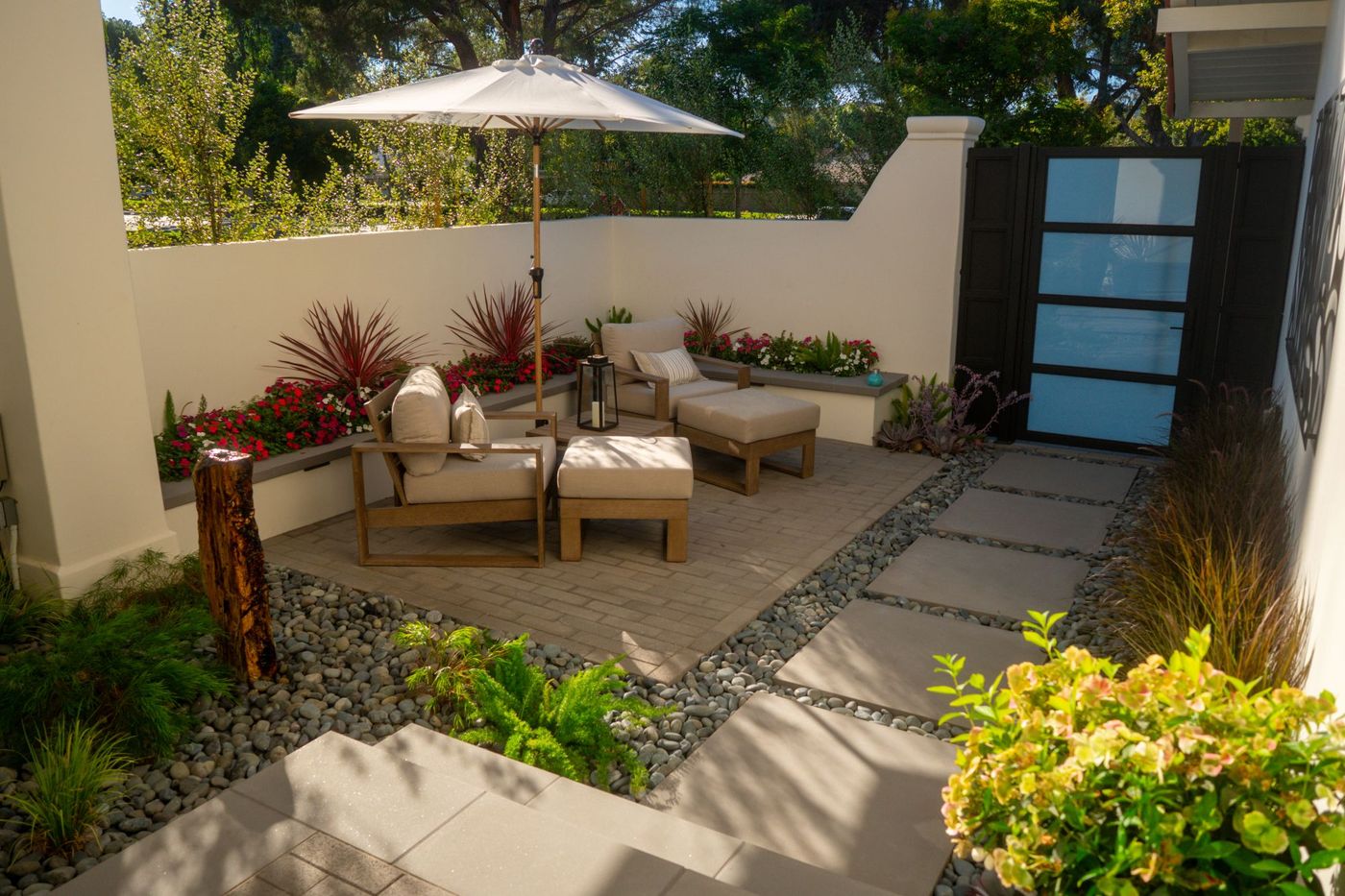
Designing for Small Spaces
No space is too small to transform
Whether you have a small backyard, an apartment terrace or a side yard, no space is too small for a landscape or hardscape transformation. The question is rarely whether something can be done, it is which two or three things are worth doing, because a compact yard cannot absorb a long list.
That is the discipline the whole style runs on. One well-proportioned terrace instead of three small zones. Built-in seating instead of bulky furniture. A plunge pool or spa instead of a full-size pool. And vertical elements, screens, trellis, a slim water feature, layered lighting, doing the work that floor area cannot.
Design Moves
A few elements that upgrade a small space
These are the moves that consistently earn their footprint. Most small-yard designs use two or three of them well rather than trying to fit all five.
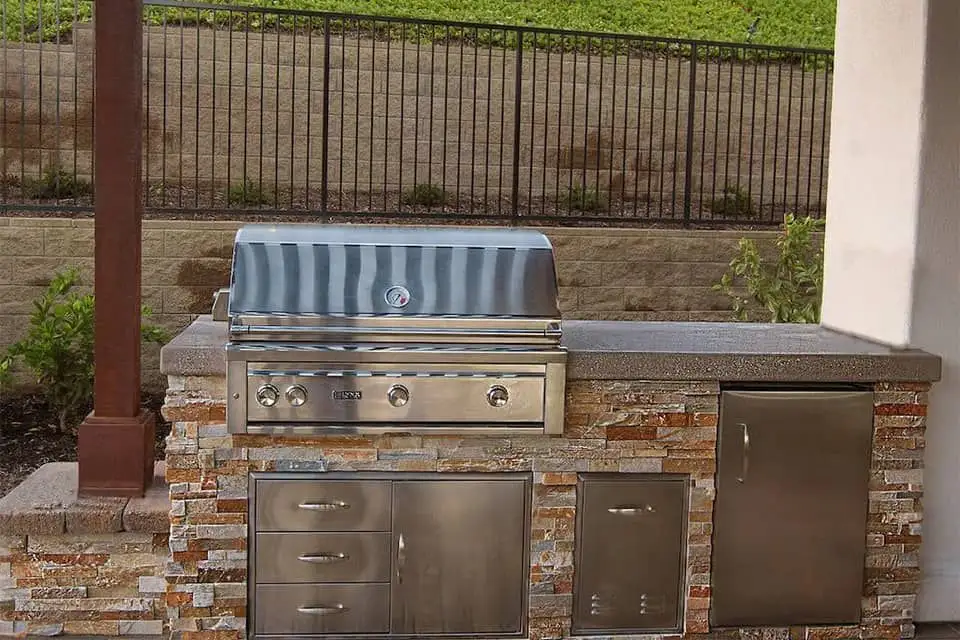
Outdoor Kitchen & Furniture
If comfort and usability are the goal, a compact grill run and real seating do it. A gas line for a built-in kitchen or fire pit, plus bistro lights overhead, gives a small yard genuine hosting capacity.
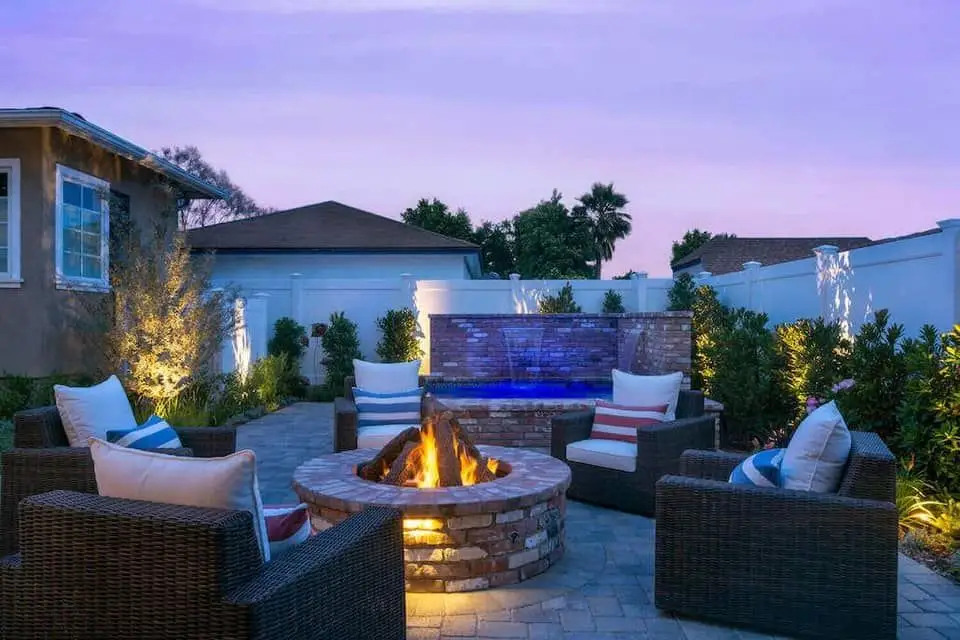
Fire Pits
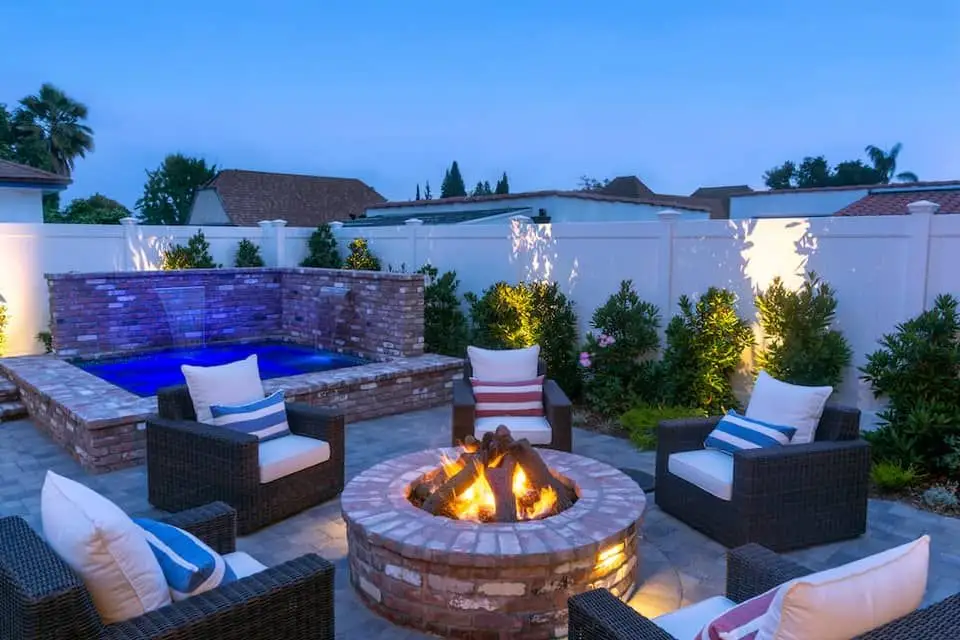
A fire pit turns a small patio into somewhere people stay after dark, and a built-in one with a surrounding seat wall uses far less space than a fire table with separate chairs.
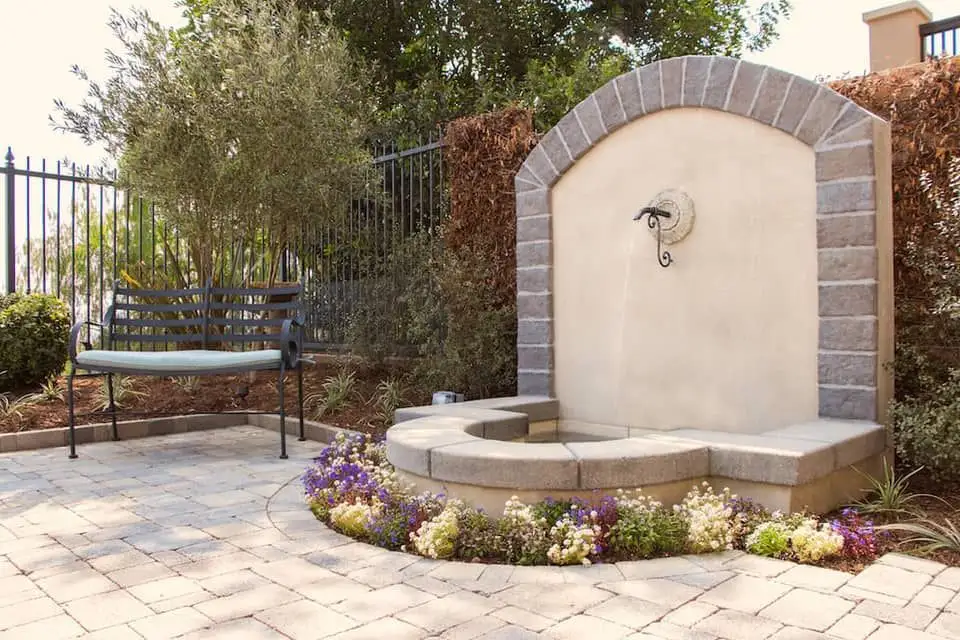
Water Features
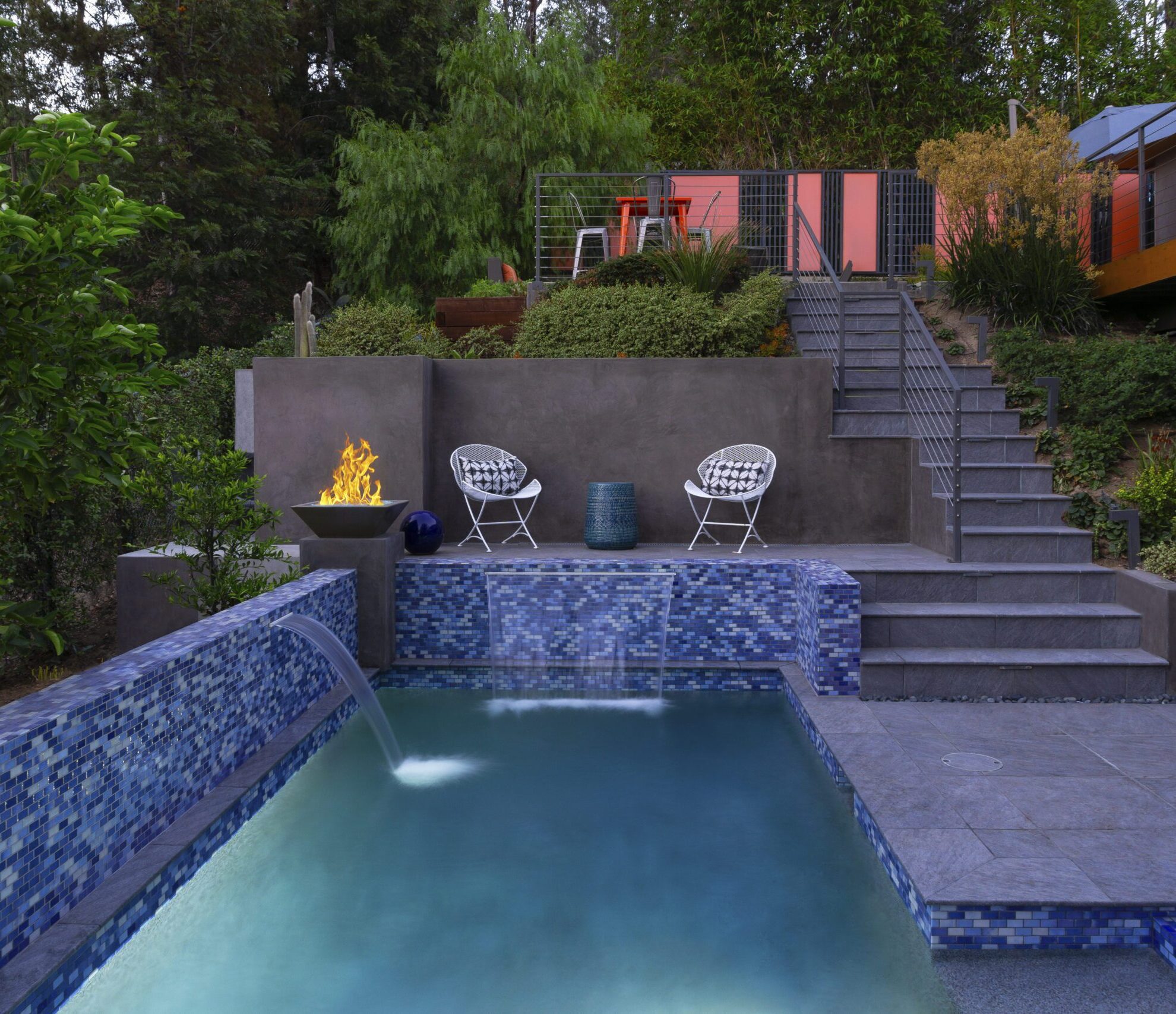
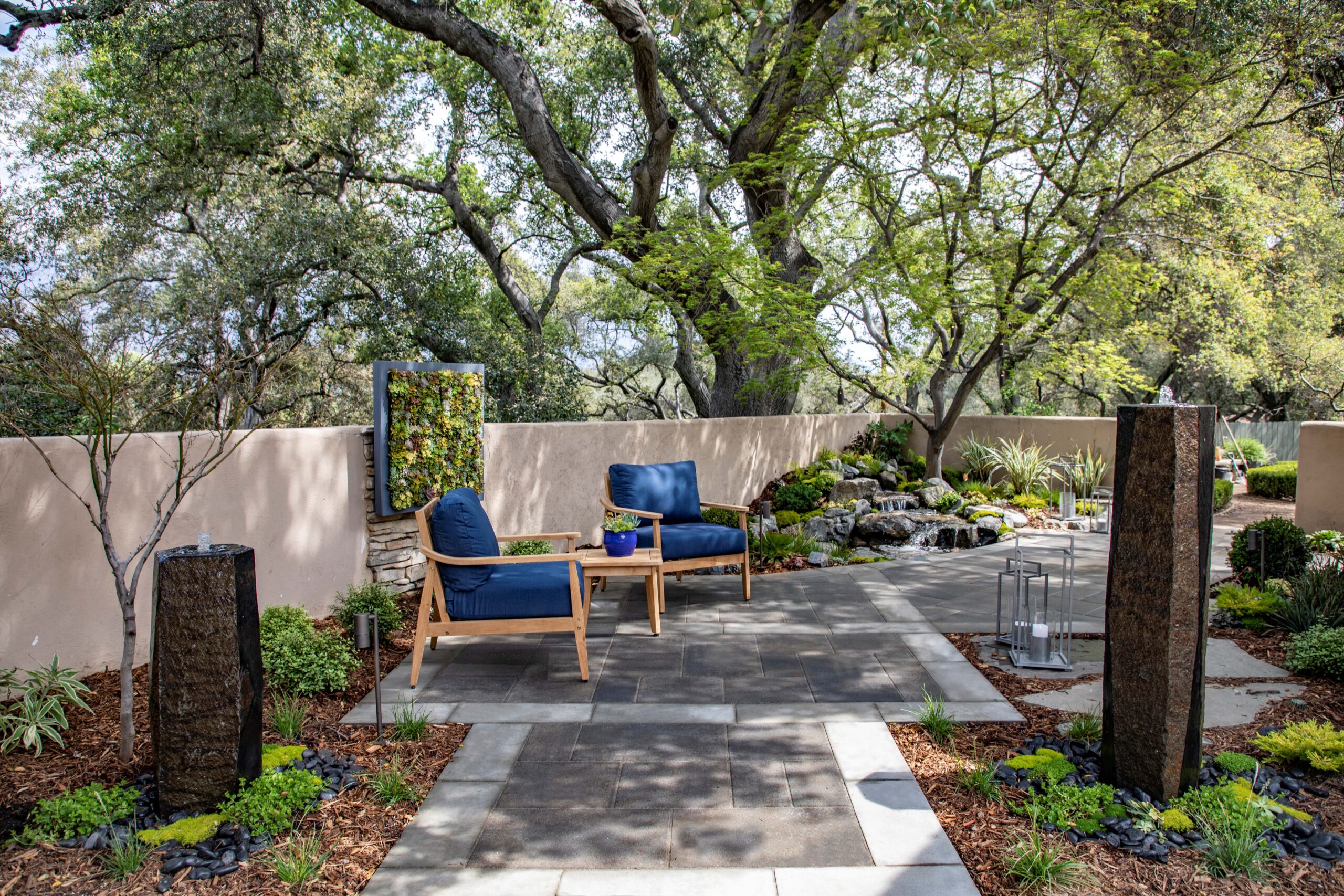
A water feature adds serenity and, because it draws the eye and adds depth, makes a space feel larger and fuller. A cascading wall fountain takes up almost no floor area while adding a relaxing soundscape.
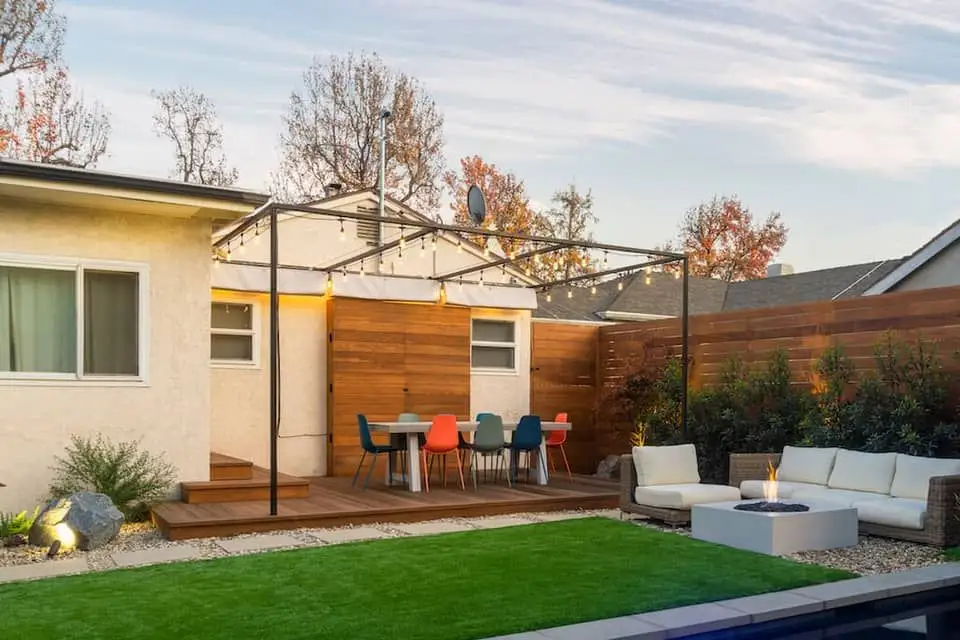
Artificial Turf
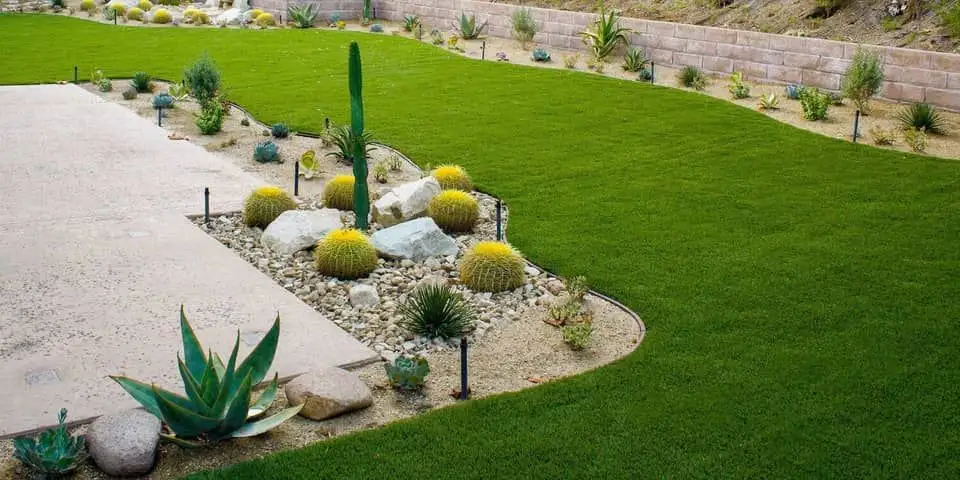
For small children or pets, artificial turf gives a soft, usable surface with minimal upkeep. It can be specified firm enough to take furniture and still have enough bounce for children to play on.
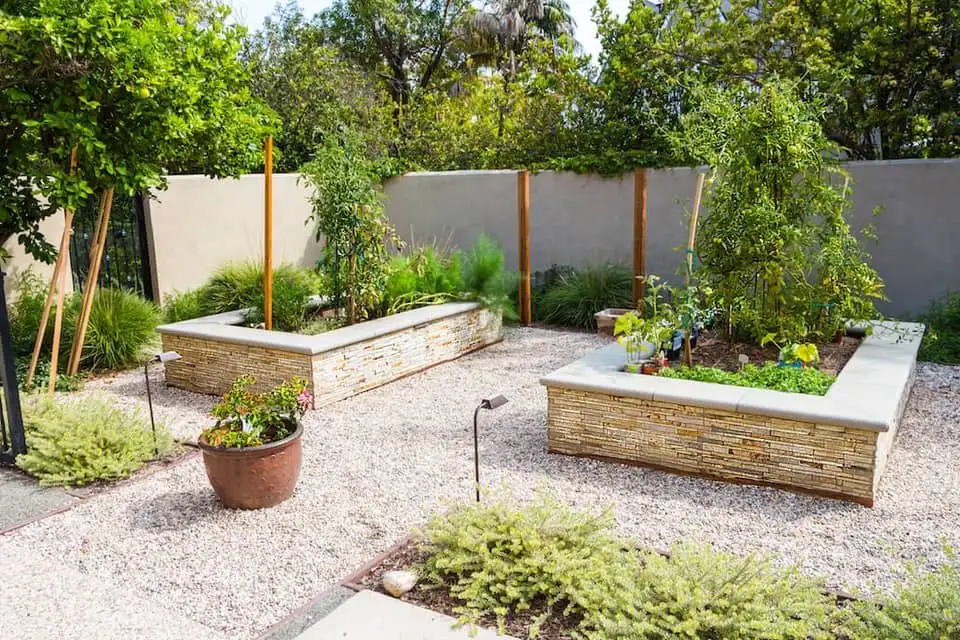
Vegetable Gardens
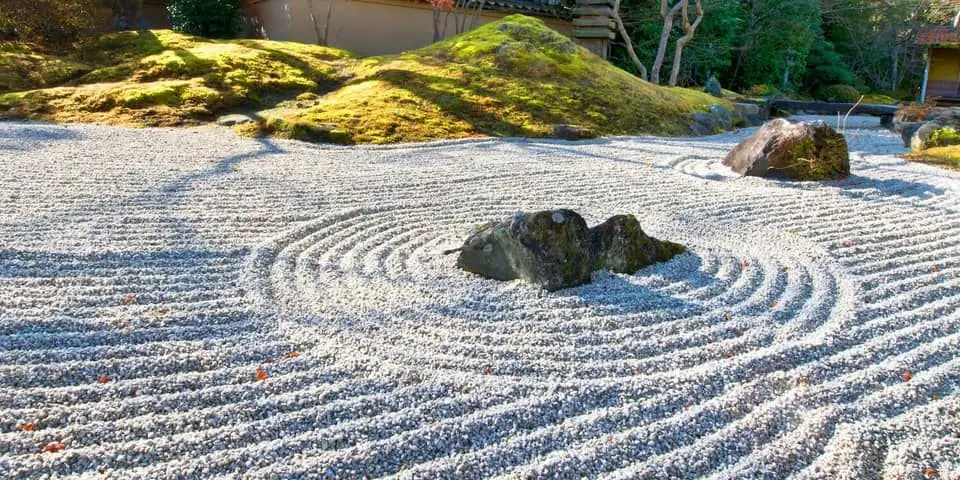
Planter boxes bring a small yard to life and add colour. On a sloped lot, a retaining garden wall doubles as growing space, and a compact Zen garden is the calmer alternative if growing is not the goal.
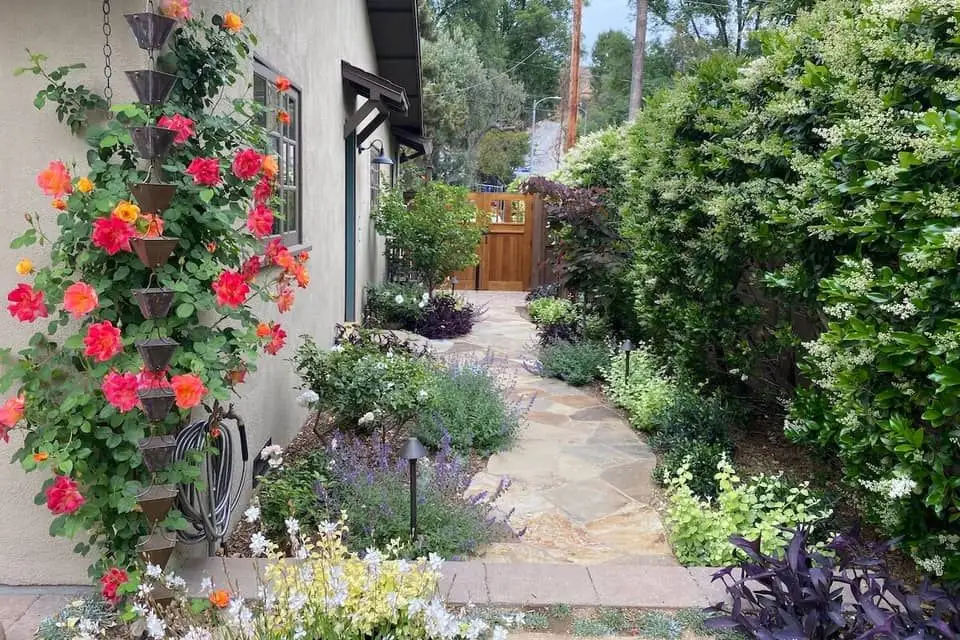
Side Yards
A side yard does not need to be a messy catch-all. Treated as an entry sequence, with materials chosen to look good and transition safely from front to back, it sets the tone for everything beyond it.
Why It Works Here
Small Yards Are the California Norm
Across much of California, and the San Fernando Valley in particular, a compact rear yard is simply what the housing stock provides. Older neighbourhoods were subdivided tightly, and more recently accessory dwelling units have taken a further bite out of yards that were already modest. Designing well for a small footprint is not a niche here; it is the common case.
The climate helps considerably. Mild winters mean a small terrace works as year-round living space rather than a few months of it, so square footage that would be seasonal elsewhere earns its keep all year. That is what justifies spending properly on a compact yard: you are extending the house, not decorating the perimeter.
An Outdoor Room, Not a Seasonal One
Mild winters mean a small, well-built terrace is usable most of the year, which changes the value calculation on a compact yard entirely.
Shade Decides Whether It Gets Used
A small paved yard with no overhead cover can be too hot to sit in by mid-afternoon. A pergola, sail or well-placed tree is usually the single highest-value item in the plan.
Where an ADU Shares the Yard
Circulation to the unit, privacy between the two dwellings, separate sitting areas and utility routing all have to be resolved on paper first, because a compact yard has no room to correct them later.
Less Planting, Chosen More Carefully
With fewer plants, each one is on show year-round. That favours species that hold their form and look presentable in every season over anything with a short peak and a long off-period.
Plant Selection Tied to the Property
The California Department of Water Resources recommends matching plant choices to a property's specific climate, soil and sun exposure before planting, the same approach your Designer takes during the Site Analysis.
Climate and plant-selection guidance sourced from the California Department of Water Resources and the LADWP California Friendly Landscaping program. CA DWR: Water-Efficient Plant Selection · LADWP: California Friendly Landscaping
Materials
Materials that make a small space feel larger
The material choices that work hardest in a compact yard are the ones that reduce visual clutter: fewer surfaces, larger units, and a consistent palette carried from the patio through to the side yard.
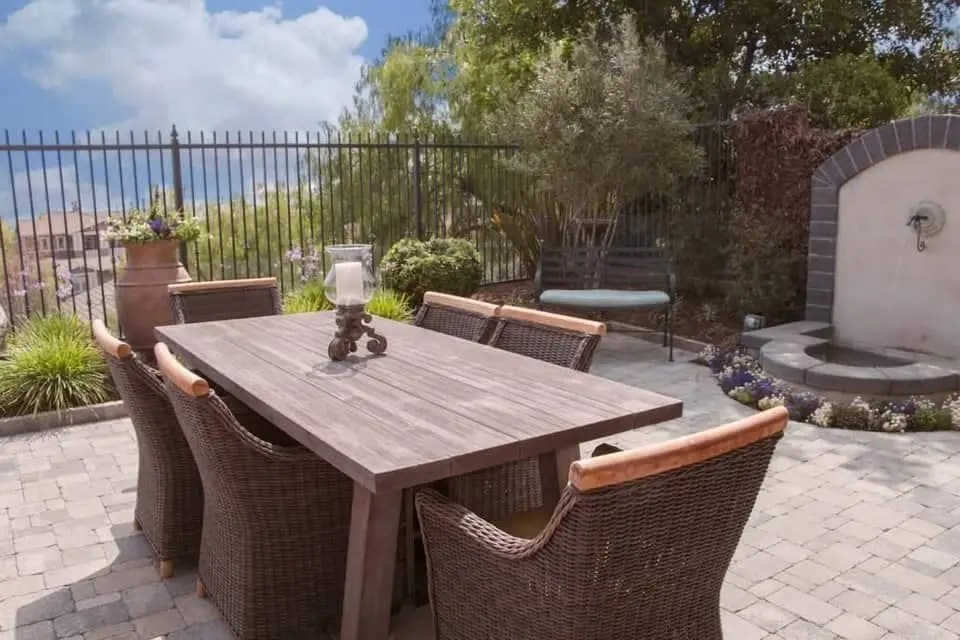
Large-Format Pavers
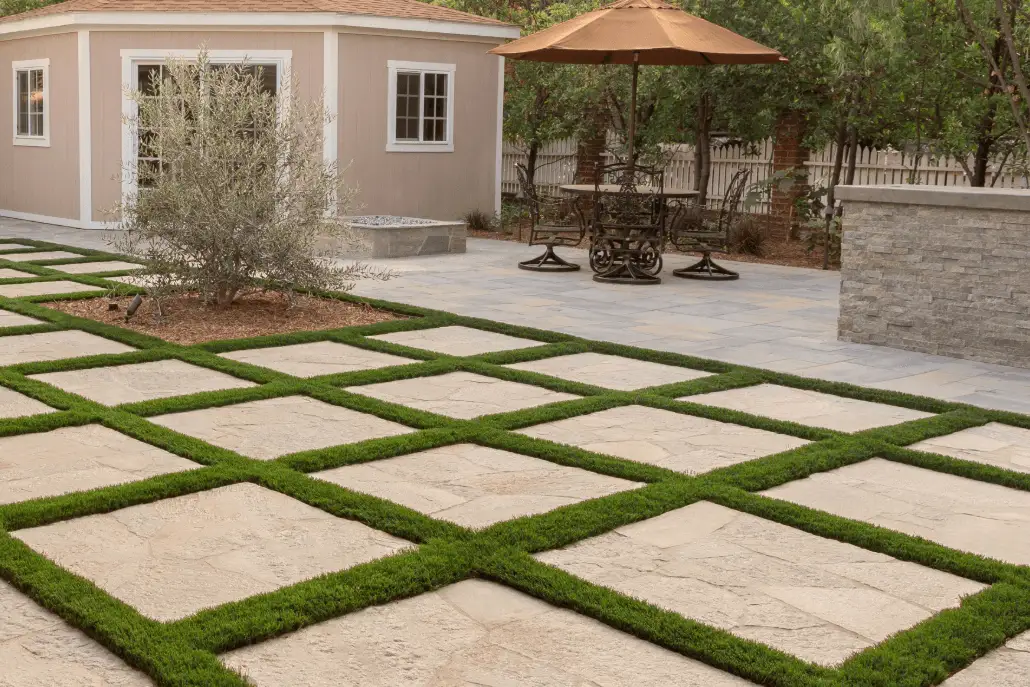
Fewer joint lines across a small area makes the surface read as bigger. Running the paving right to the edges, rather than framing it with a border, extends the space visually.
Artificial Turf
A durable green surface with minimal upkeep, specified firm enough for furniture and soft enough for children and pets, and green year-round in a yard where every surface is on show.
Wall Fountains
A cascading wall fountain occupies almost no floor area while adding depth, movement and sound, which is why it appears in so many small-space designs.
Raised Planters & Garden Walls
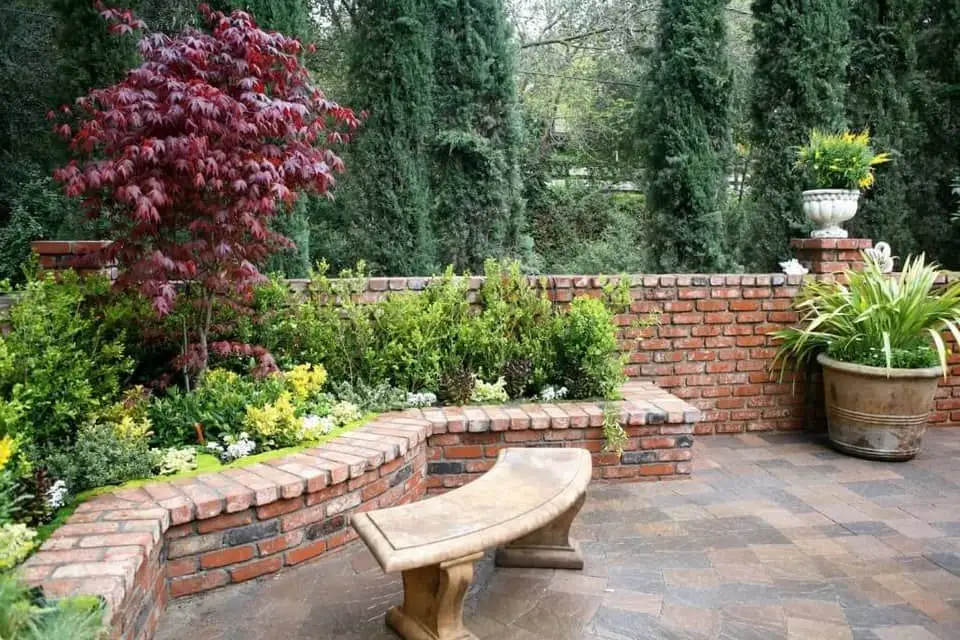
Raised beds and low retaining walls create growing space and seating in one element, and on a sloped lot they turn an unusable bank into a usable terrace.
Plunge Pools & Spas
A plunge pool, cocktail pool or spa fits where a full-size pool cannot, and in a mild climate it gets used far more often than its footprint suggests.
Stepping Stones & Walkways
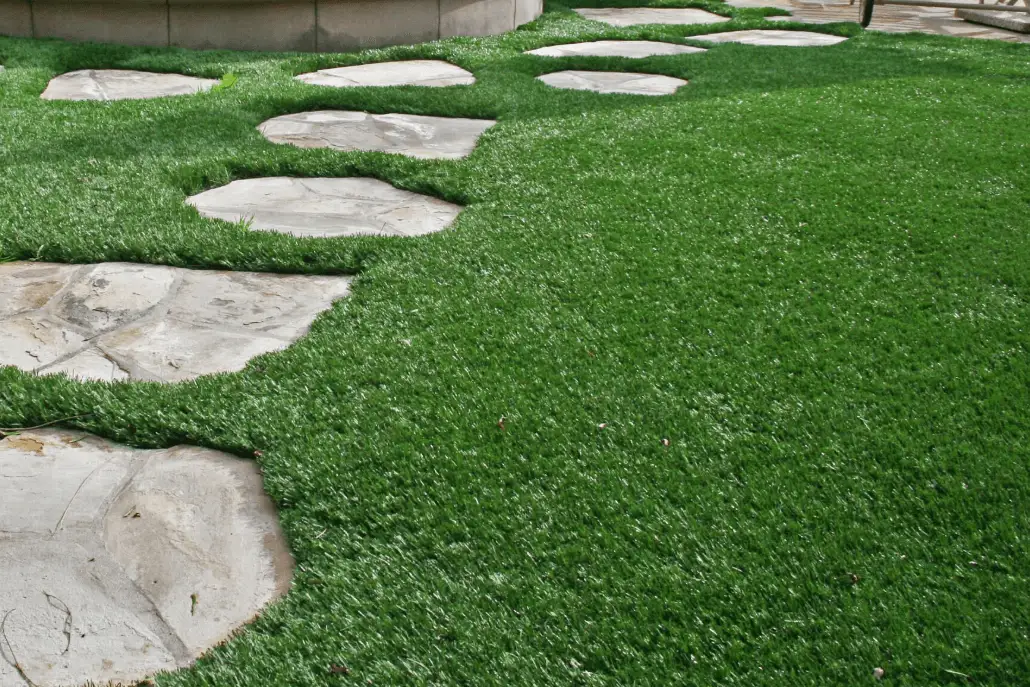
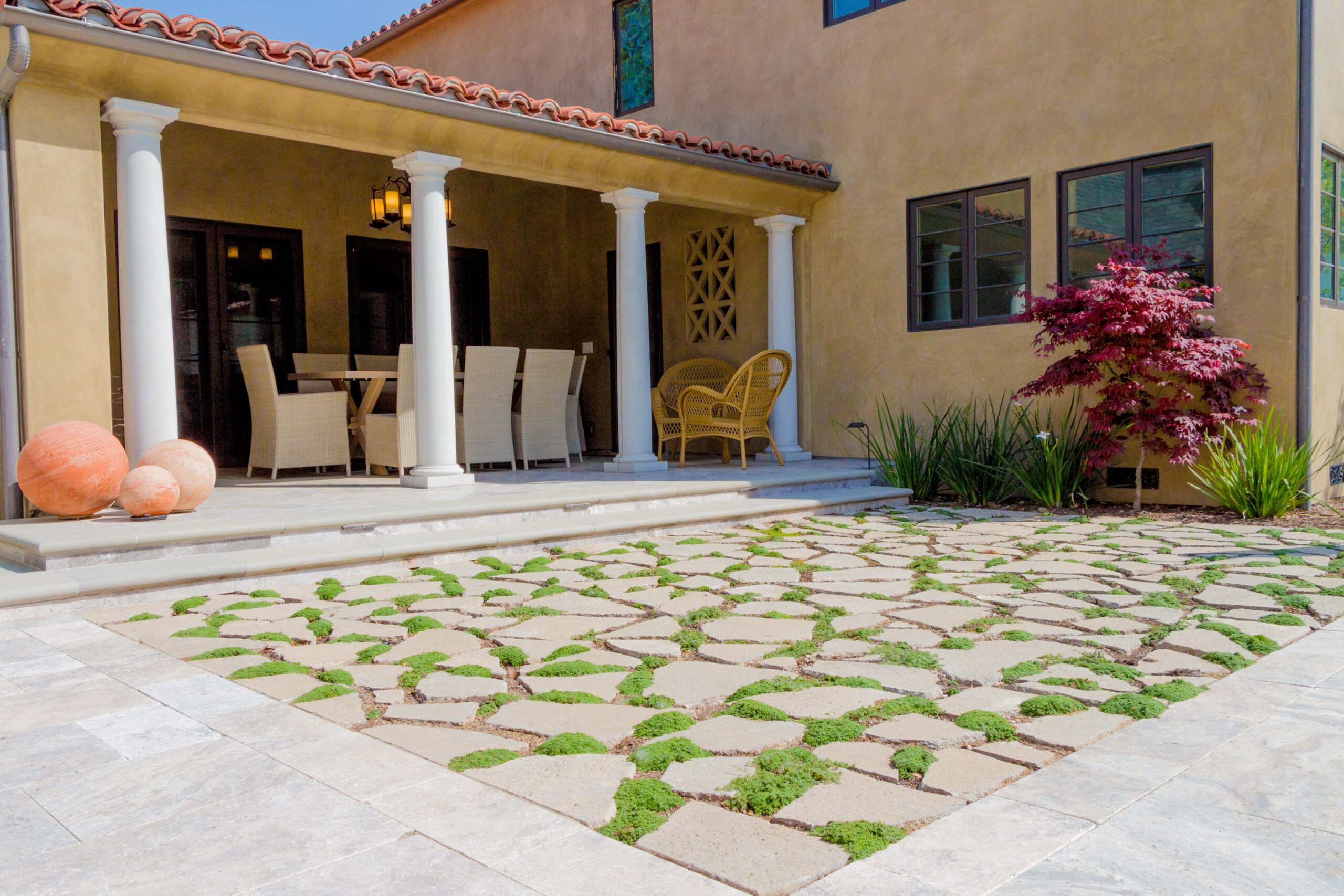
Through a side yard, well-set stepping stones or a narrow paved run handle the transition from front to back safely while keeping the route from feeling like a corridor.
Planting Palette
Planting for a compact yard
In a small space every plant is seen up close and year-round, so form and tidiness matter more than seasonal display. The categories below are a starting point for the conversation with your Designer, not a fixed list.
- Narrow & Columnar
- Italian cypress · Columnar hornbeam · Sky pencil holly
- Screening Without Bulk
- Clumping bamboo in a contained bed · Podocarpus · Espaliered citrus against a wall
- Vertical & Climbing
- Star jasmine · Bougainvillea · Creeping fig for a green wall
- Container & Raised Bed
- Dwarf citrus · Herbs · Compact succulents
- Low Groundcover
- Dymondia · Creeping thyme · Artificial turf where children or pets need a durable surface
- A Single Specimen
- Multi-trunk olive · Japanese maple in a sheltered courtyard · Strawberry tree
Final plant selections depend on your property's microclimate, sun exposure, irrigation setup, soil, pets and maintenance preferences, along with any local water-use requirements. In a small yard, mature size matters more than anything: a tree that outgrows the space becomes a problem quickly. Your Designer will confirm what's right for yours during the Site Analysis.
Planning a Small Space
What to consider before you start
Small-space design is mostly a sequence of trade-offs, and making them deliberately is what separates a yard that works from one that feels crowded. A few worth thinking through before your Site Analysis:
Pick one primary use
Dining, lounging, play, growing, or swimming. A compact yard can genuinely support one of these plus a secondary use. Trying to fit four is the single most common reason a small yard ends up feeling cramped and unusable.
Build the seating in
A seat wall or bench built into the perimeter seats more people in less space than loose furniture, needs no storage, and keeps the middle of the yard open. It is usually the highest-value structural decision in a small plan.
Go up, not out
Trellis, screen planting, a wall fountain, vertical planters and layered lighting all add depth and interest without consuming floor area. In a small yard the walls are as much a design surface as the ground is.
Access decides what is buildable
On a tight lot the real constraint is often how a mini excavator, a concrete truck or a pallet of pavers reaches the back yard. Narrow side yards and close neighbours shape the plan more than budget does, and that gets worked out first.
Fewer materials, larger format
Two materials rather than five, and larger paving units rather than small ones, both make a compact space read as bigger. Busy patterns and lots of edges chop up an area that is already short on room.
Water in a small footprint
A full-size pool rarely fits well, but a plunge pool, spa or cocktail pool often does, and delivers most of what people actually want. A wall fountain gives the sound and the calm for a fraction of the space and cost.
 Featured Transformation
 Real Project
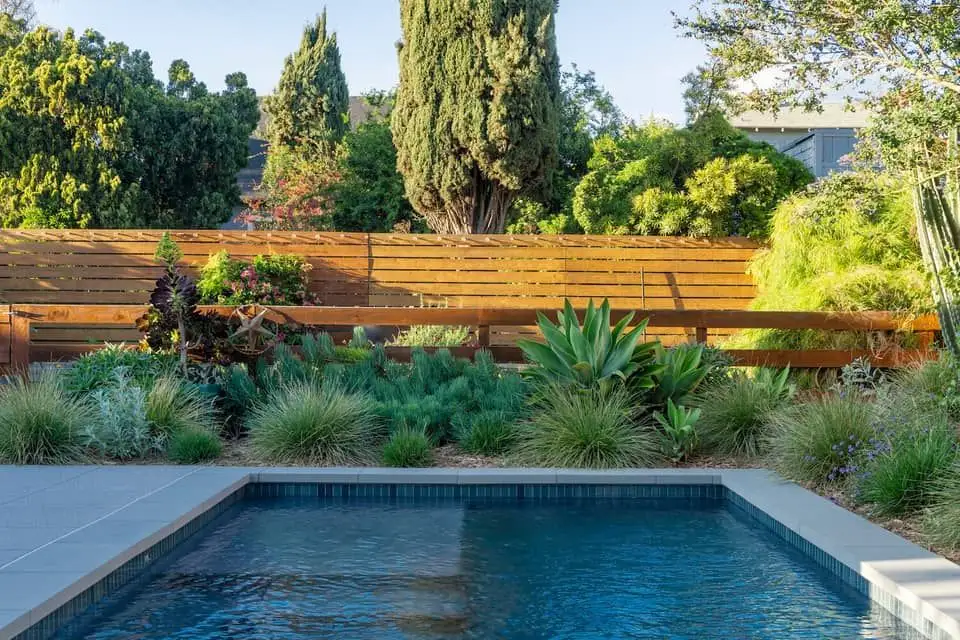
Small Space Oasis · Los Angeles
The Goal
A compact backyard that was not being used, with the usual small-lot constraints: close neighbours, limited access, and no obvious place to sit.
The Approach
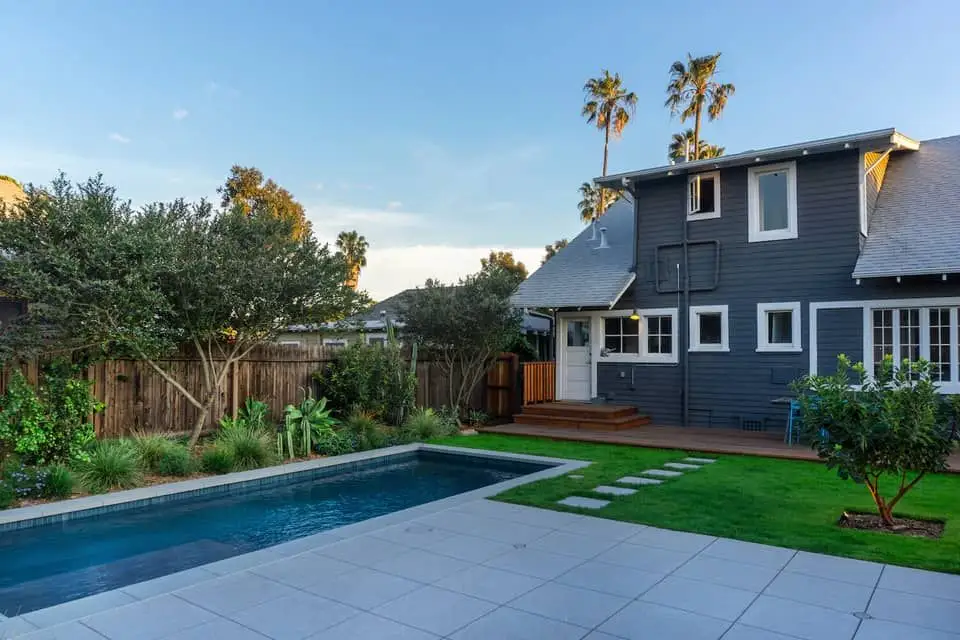
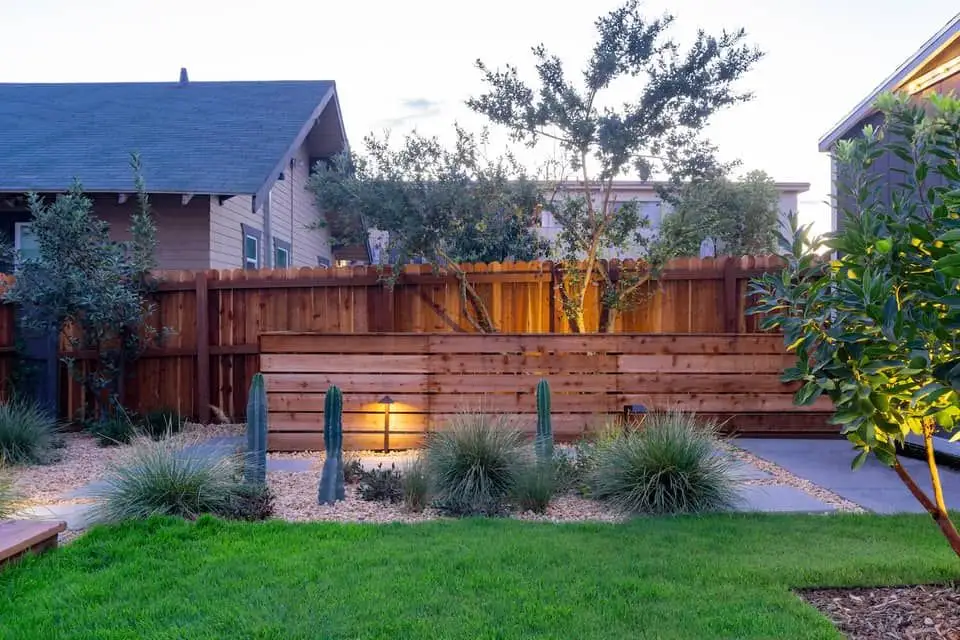
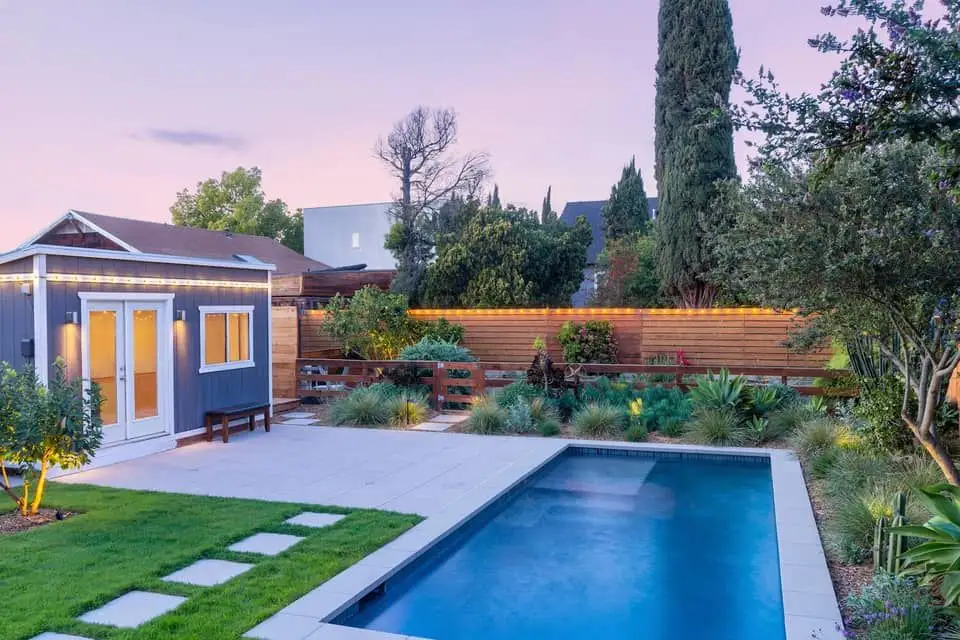
Rather than divide the space into several small zones, the design commits the footprint to one properly proportioned outdoor room, with planting and vertical elements doing the work that floor area could not.
The Build
Built by our own crews, which matters more on a tight site than a large one: fewer trades on a narrow street, and a sequence that keeps the only access route clear.
The Result
A small yard that functions as an extension of the house rather than a leftover strip behind it, and gets used year-round.
Common Questions
Small Space Landscape Design, Answered
Almost certainly not. A small yard often delivers more per square foot than a large one, because everything in it gets used daily. What changes is the approach: one properly proportioned space rather than several small ones, built-in seating rather than loose furniture, and vertical elements doing the work that floor area cannot.
A full-size pool rarely sits well in a compact yard, but a plunge pool, cocktail pool or spa often does and delivers most of what people actually want from one. Setbacks, equipment location and construction access decide what is possible, and those get resolved during the Site Analysis rather than assumed.
Layered rather than a single tall fence, which can make a small yard feel boxed in. Screen planting, a trellis with a climbing vine, and a slatted screen at the specific sightline that matters usually solve the problem while keeping light in and the space feeling open.
Fewer materials, larger paving units, running surfaces to the edges instead of framing them with borders, and keeping the centre of the yard clear. Depth cues help too: a water feature or a specimen plant at the far end draws the eye through the space rather than stopping it at the fence.
Not usually, and it is often the best-value part of a small property. It is a narrow run of paving, some screening and lighting, and it changes the experience of getting from the front to the back. Because it is small, upgrading to a better material there costs very little.
It is the first thing we work out, before design rather than after. How a mini excavator, a concrete truck and pallets of material reach the back decides what is realistically buildable on a narrow lot, more often than budget does. Our own crews handle the work, which keeps the truck count on a tight street down.
The best Southern California landscaping balances aesthetics, climate, function, and maintenance. Drought tolerant landscaping, Mediterranean planting, and California natives handle long dry summers well, and fire-conscious plant choices matter in hillside and canyon neighborhoods. We weigh plant selection, water efficiency, sun exposure, architectural style, and how you will use each space, so the landscape suits both the house and Southern California living.
Thoughtfully designed landscaping can increase home value by improving curb appeal and adding usable outdoor living space, which in Southern California works like an extra room for most of the year. Financial returns vary with the market and the project, so no honest contractor can promise a number. We believe the greatest value comes from creating spaces homeowners genuinely enjoy spending time in.
Landscape Styles
Explore Other Landscape Styles

Start With Your Property
Start With Your Site Analysis
On a small lot the Site Analysis matters more, not less: setbacks, access, drainage and where the sun actually falls decide what will fit and what will get used. Designed Right, Built Right, on time and on budget.
No pressure. Just expert guidance from a local design-build team.