
English Garden Landscape Design and Buildfor California
Sweeping greenery, brick and stone underfoot, and layered flowering beds that soften a property year after year, adapted to the water and sun a California garden actually gets.
The English Garden Style
Escape into the beauty of nature
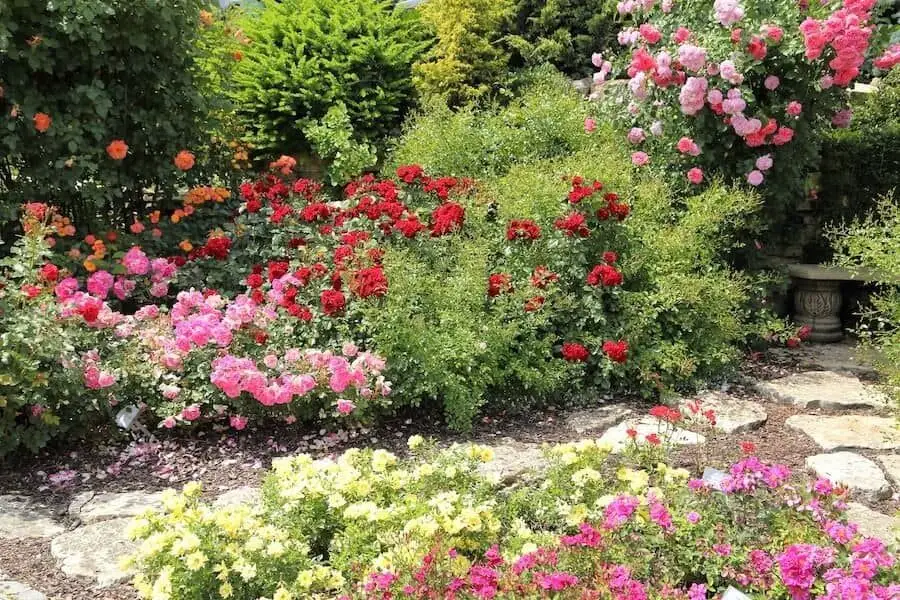
English Garden landscape design is full of sweeping greenery, geometric shapes, and a mixture of natural and man-made elements. Plenty of brickwork, rustic wood, and flowers make up an English garden. Integrating those features into your property provides an escape into a natural setting, away from the hustle of the working world and into a place of beauty.
What separates it from a purely formal garden is the tension between the two halves. The bones are structured, clipped hedges, a brick path, a symmetrical axis, while the planting is allowed to spill over and blur those edges. That contrast is the whole style: order underneath, abundance on top.
Signature Elements
The details that make a garden read as English
A handful of features show up in almost every English garden. Used together, they give a property the sense of something that has been tended for decades rather than installed in a season.
Brick Walls & Accents
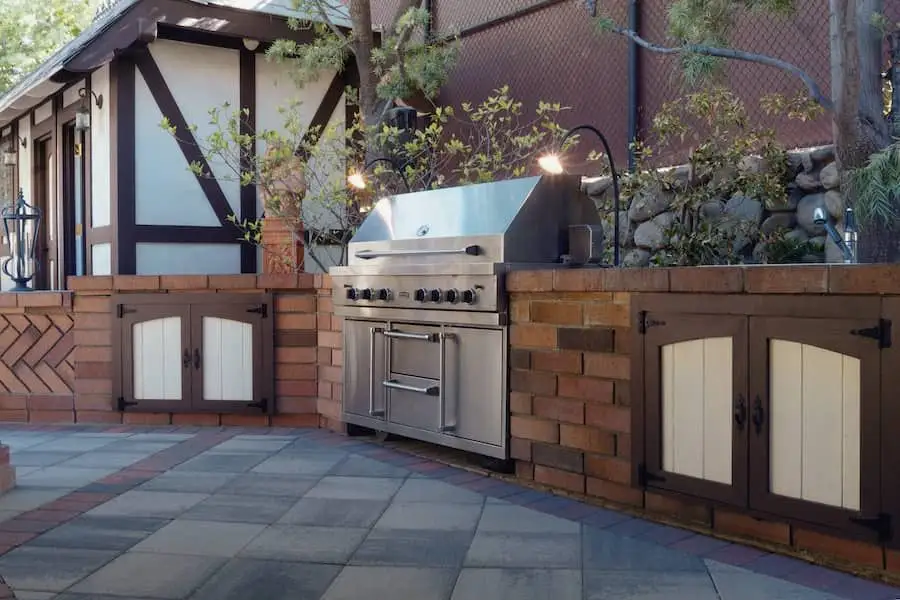
Brick is the material the style is built on. A low garden wall, a raised bed edge, or a run of brick along a path gives the planting something warm and solid to grow against.
Clipped Hedges
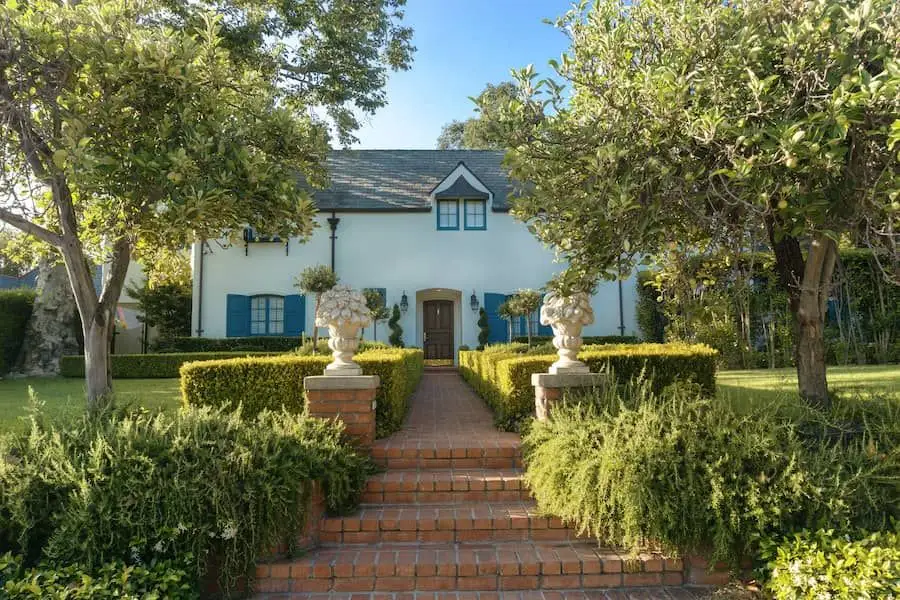
Hedging supplies the geometry. Clipped boxwood or privet defines a room, frames a view, or lines a walk, and it stays green through the months when the flowering layer has gone quiet.
Rose Gardens
Roses are the flower most associated with the style, and California grows them exceptionally well. A dedicated bed, or roses worked through a mixed border, carries colour from spring into late fall here.
Seating Areas
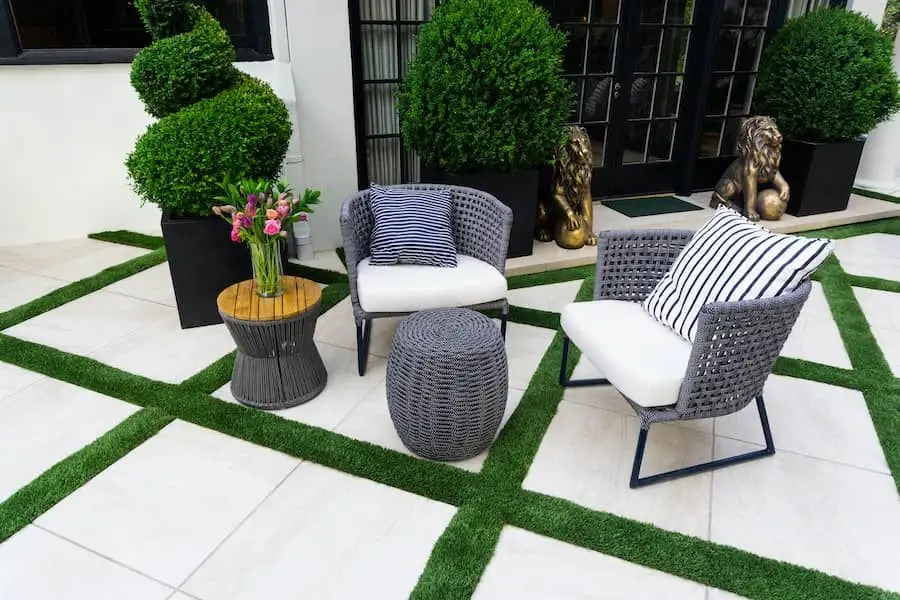
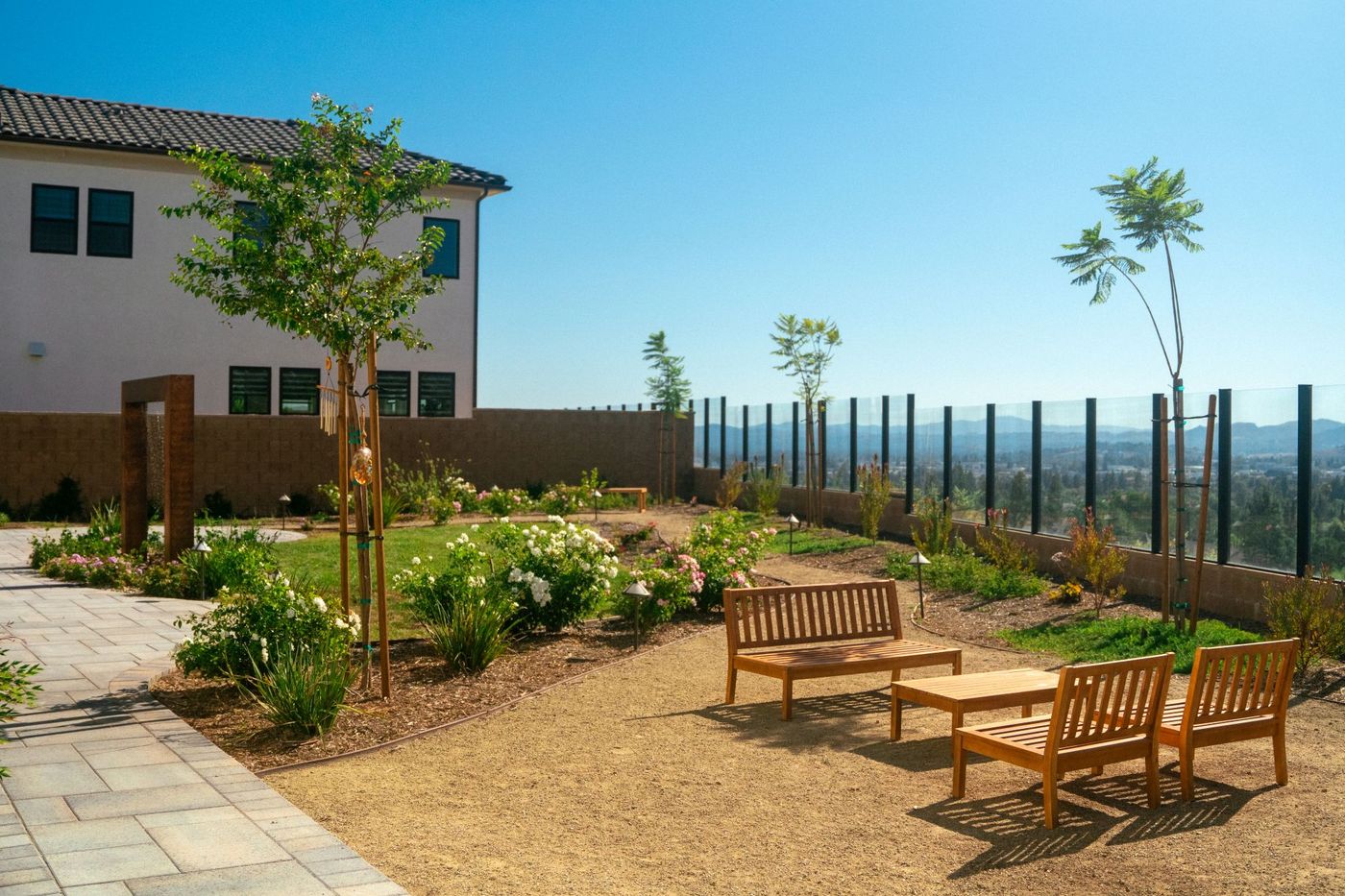
An English garden is meant to be sat in, not just looked at. A bench at the end of a path or a small terrace tucked into the planting gives the garden a destination.
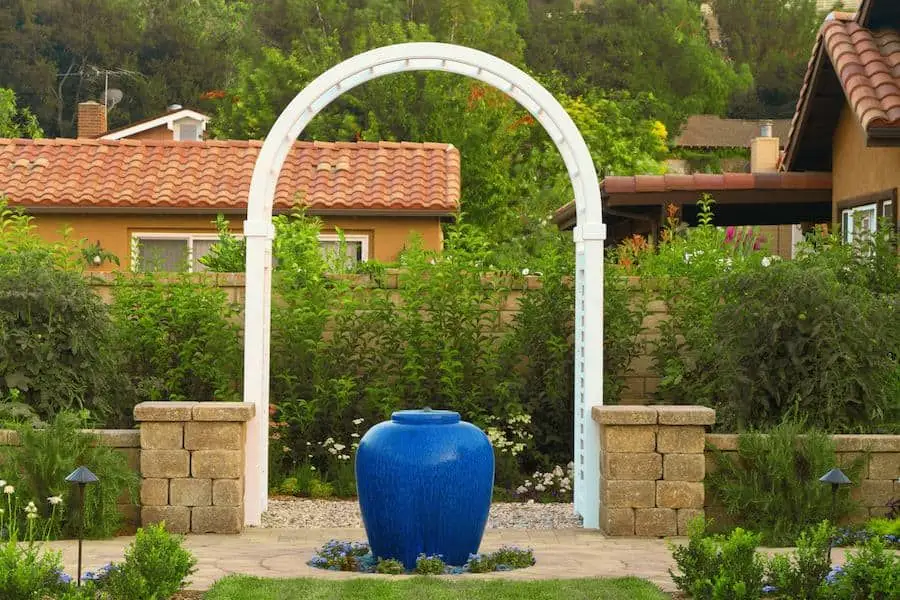
Fountains & Water
Water in an English garden is usually a still or gently moving centrepiece, a basin, a birdbath, a low fountain on an axis, rather than a dramatic feature competing with the planting.
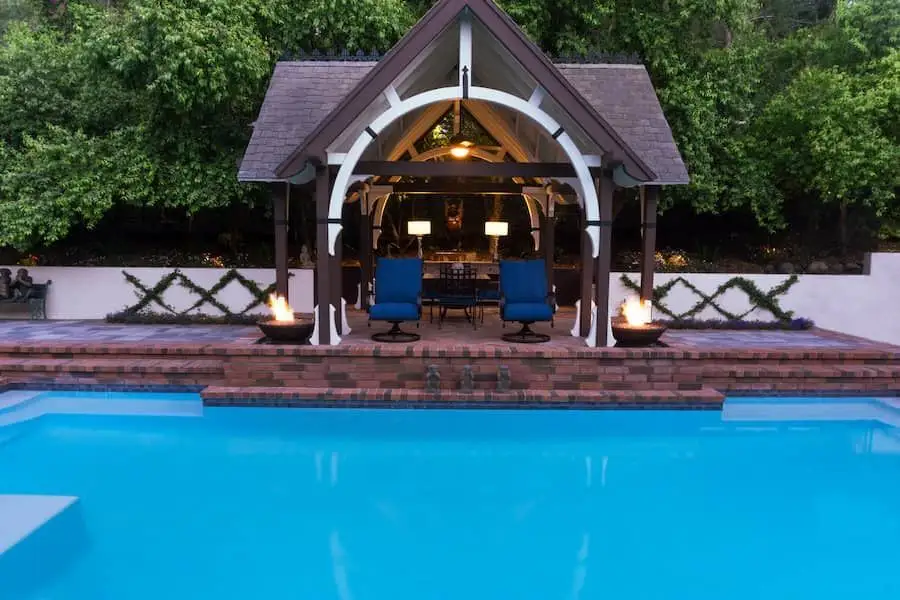
Tiled Rooflines
The roofline sets the palette a garden gets built around. English gardens sit under flat clay or slate tile rather than the barrel tile of a Mediterranean property, which keeps the overall colour cooler.
Why It Works Here
Adapting an English Garden to a California Climate
England has cool summers and rain spread across the year. California has warm, dry summers and a wet season squeezed into winter. That is the honest starting point: this is the one style on this list that did not come from a climate like ours, and the design has to account for that rather than ignore it.
It adapts well anyway, because the structure of an English garden, the brick, the hedging, the geometry, the seating, is climate-neutral. What changes is the planting layer and the irrigation behind it. Swap in species that give the same soft, layered, abundant look without asking for English rainfall, and the garden reads correctly through a California August.
The Bones Travel. The Planting Adapts.
Brick paths, clipped hedging, a symmetrical axis, and garden seating behave the same in any climate. It is the flowering layer that needs rethinking, and that is where a designer earns their fee on this style.
Roses Genuinely Thrive Here
The flower most identified with the style is one California grows better than England does. Long warm seasons and low humidity give roses a longer bloom window and less disease pressure.
Hydrozoning Does the Heavy Lifting
Grouping the thirstier ornamental beds together, close to the house where they are seen most, and letting the outer garden run on far less water, is what keeps an English-inspired garden practical on a California water budget.
Shade Changes What Is Possible
A garden under mature canopy can hold a much closer approximation of an English planting palette than one in open full sun. Existing trees on your property are an asset for this style, not an obstacle.
Plant Selection Tied to the Property
The California Department of Water Resources recommends matching plant choices to a property's specific climate, soil and sun exposure before planting, the same approach your Designer takes during the Site Analysis.
Climate and plant-selection guidance sourced from the California Department of Water Resources and the LADWP California Friendly Landscaping program. CA DWR: Water-Efficient Plant Selection · LADWP: California Friendly Landscaping
Materials
The materials that carry an English garden
English Garden landscape design uses a lot of materials traditionally found in England: brick and cobblestone underfoot, wrought iron for gates, and flagstone and slate for paving. Together they weather into the garden instead of standing apart from it.

Brick
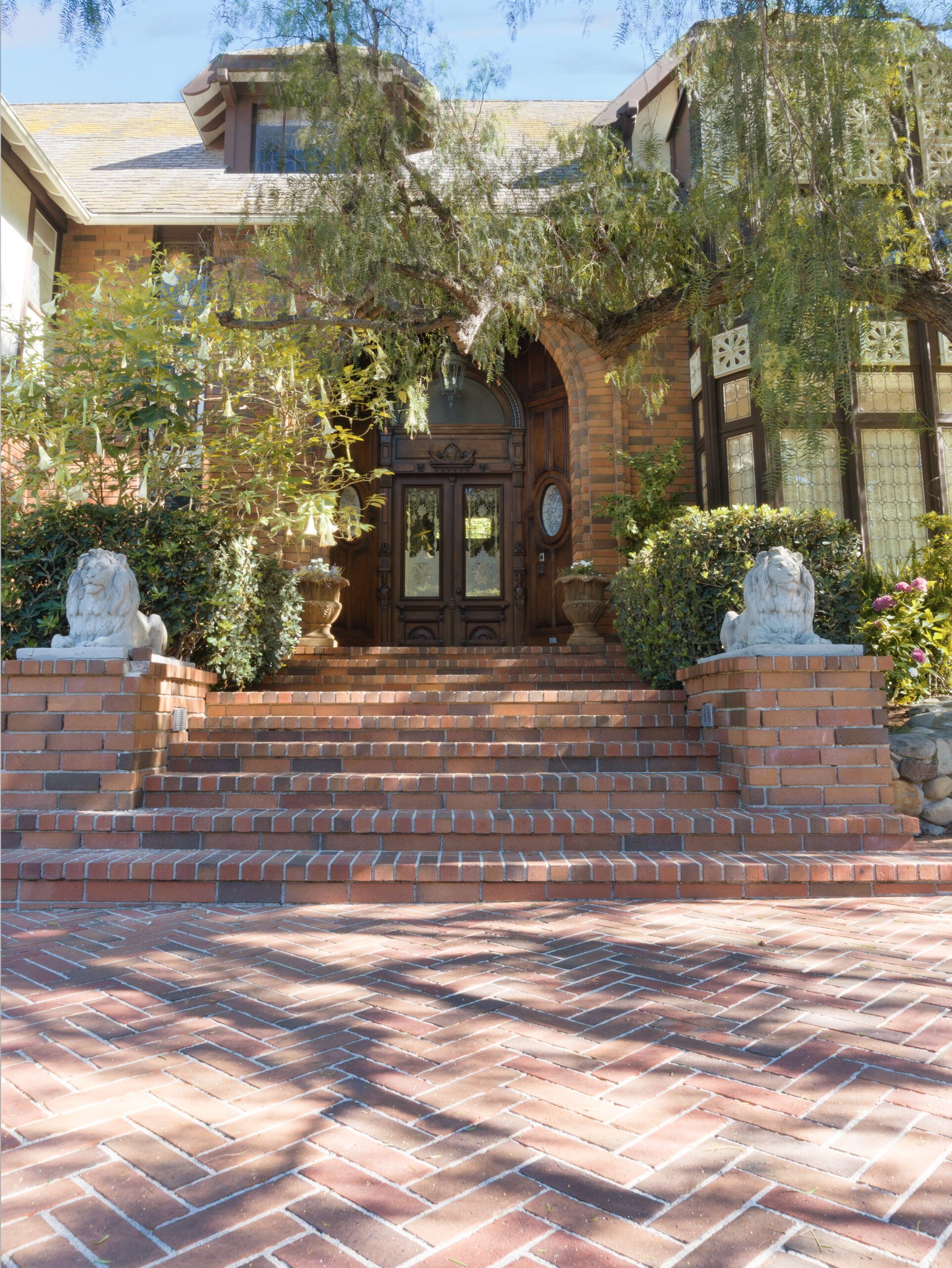
The defining material of the style. Used for walls, raised bed edging and paths, brick brings warmth and takes on moss and patina in a way that makes a garden look older than it is.

Cobblestone
An irregular, hand-laid surface for drives, edging and courtyard paving that reads as historic rather than new the day it goes in.

Flagstone
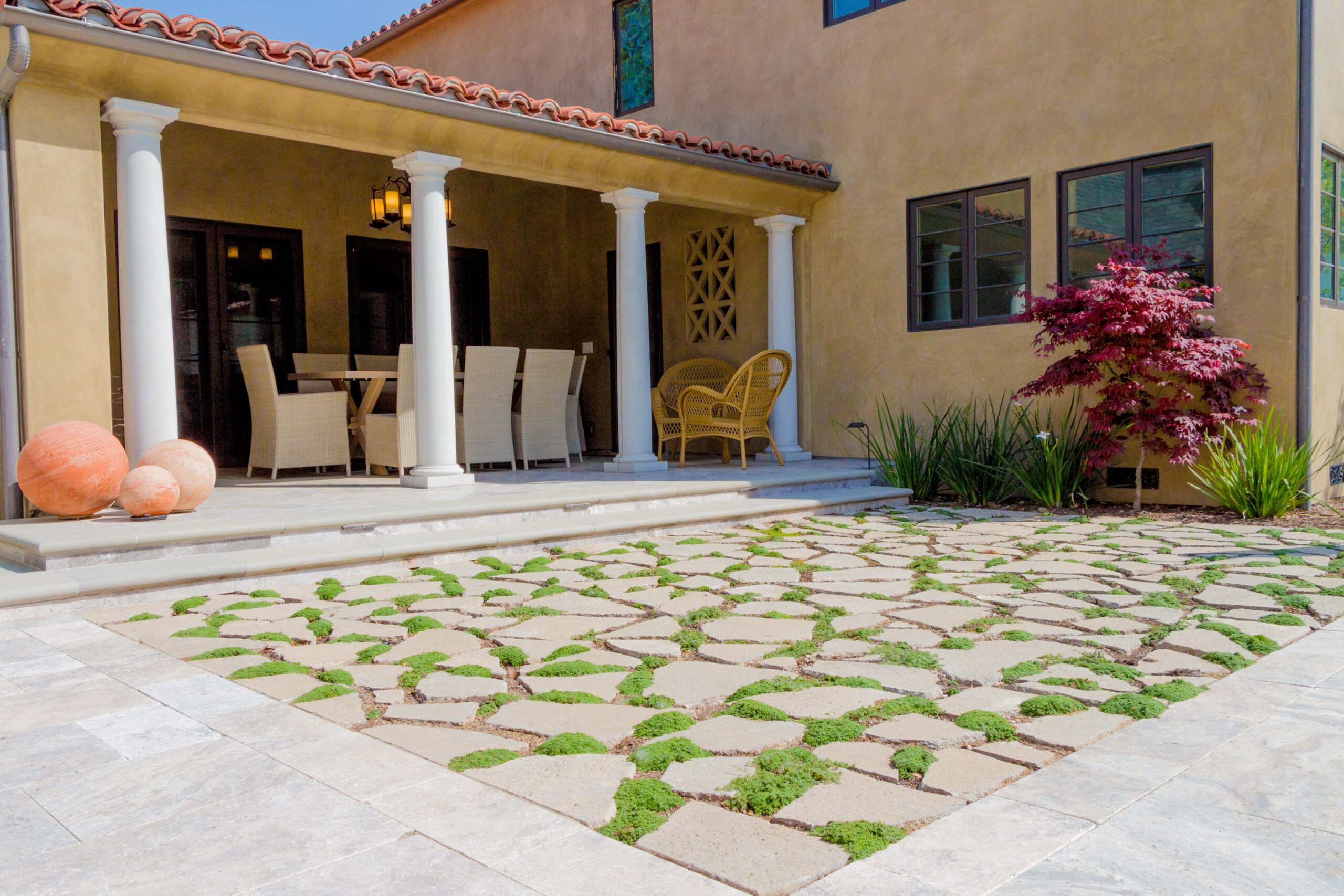
Broad, flat, irregular stone for terraces and stepping paths. Set with planted joints, it lets groundcover creep between the stones and soften the edges.
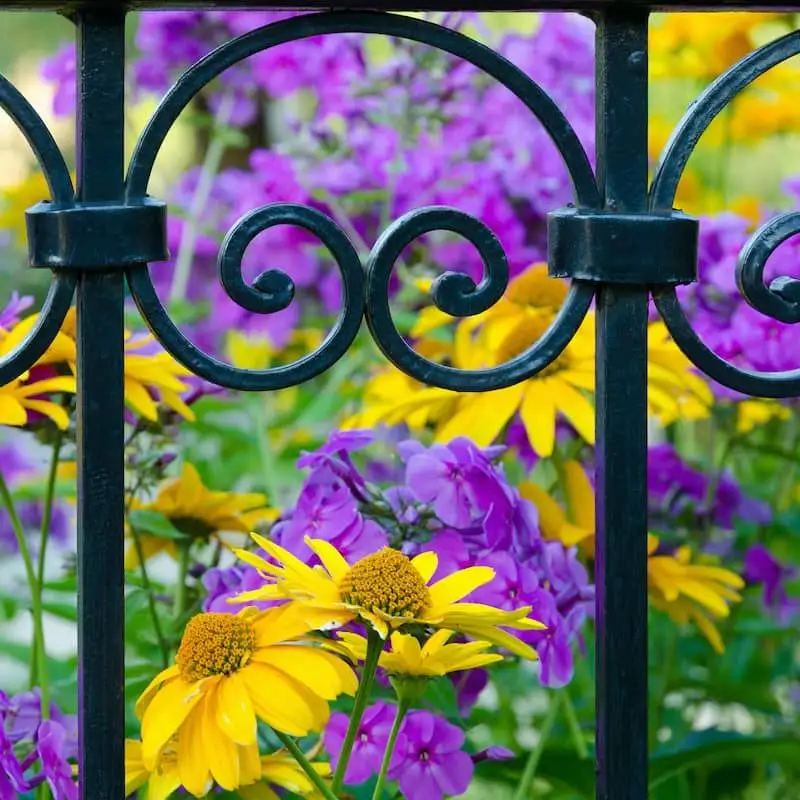
Wrought Iron
Gates, arbours, railings and furniture in wrought iron give the garden its vertical structure and a place for climbing roses to take hold.
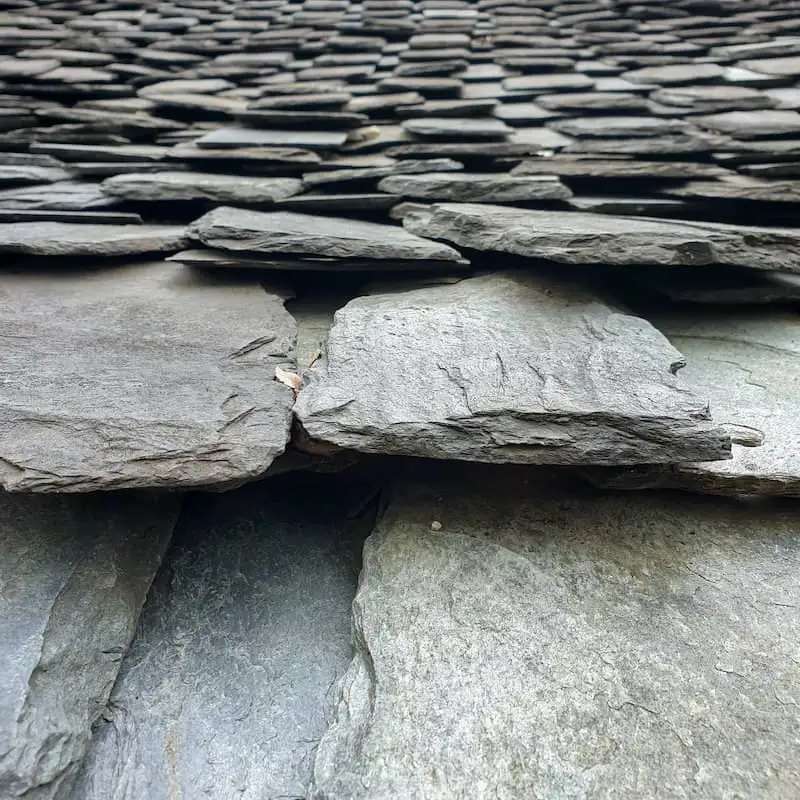
Slate
A cooler, more refined paving stone than flagstone, slate suits a formal terrace or an entry sequence where a crisper edge is wanted.

Rustic Wood
Weathered timber for arbours, pergolas, raised beds and fencing adds the informal counterweight that keeps an English garden from feeling purely formal.
Planting Palette
An English garden planting palette for California
The look depends on layering: something structural, something billowing, something flowering, and a groundcover knitting it together. The categories below are a starting point for the conversation with your Designer, not a fixed list.
- Structure & Hedging
- Boxwood · Privet · Pittosporum (a tougher boxwood substitute here)
- Roses & Flowering Shrubs
- Shrub and climbing roses · Hydrangea (in shade or morning sun) · Camellia
- Perennial Border
- Salvia · Penstemon · Yarrow · Catmint
- Vertical & Climbing
- Climbing rose · Clematis · Star jasmine
- Shade & Woodland Layer
- Ferns · Hellebore · Foxglove
- Groundcovers
- Creeping thyme · Ajuga · Dymondia (a low-water lawn alternative between pavers)
Final plant selections depend on your property's microclimate, sun exposure, irrigation setup, soil, pets and maintenance preferences, along with any local water-use requirements. Several classic English border plants are short-lived or struggle in California heat; your Designer will confirm what's right for your yard during the Site Analysis.
Is This Style Right for You?
What to consider before choosing an English garden
English Garden design rewards a particular kind of homeowner and a particular kind of property. A few things worth thinking through before your Site Analysis:
You want a garden, not just a yard
This is the most plant-driven style on the list. If the appeal of an outdoor space is the planting itself, the seasons turning over, something new coming into flower, this style is built for that. If you mainly want durable surfaces to entertain on, another style will serve you better.
Maintenance is ongoing, not occasional
Hedges need clipping to hold their line, roses need pruning and deadheading, and borders need editing as plants fill in. It is pleasant work if you enjoy it and a real commitment if you do not. Budget for a gardener if you are not going to do it yourself.
Water use has to be designed for
An English-inspired planting palette is thirstier than a Mediterranean or drought-tolerant one. That is manageable with hydrozoning, drip irrigation and smart controllers, and it is worth being clear-eyed about it at the start rather than surprised by a summer water bill.
Architecture that pairs naturally
Traditional, Colonial, Tudor and Craftsman homes take to this style without translation. On a mid-century or contemporary house, an English garden can still work if it is treated as a distinct garden room rather than wrapped around the whole property.
Give it time to look right
An English garden is the style that most rewards patience. Hedges need a few seasons to knit together and borders need a year or two to fill. A design that looks slightly sparse on day one is usually a design that will look correct in year three.
Sun and shade both work
Full sun suits roses and the classic border. Dappled shade under existing trees suits a woodland-garden interpretation with ferns, hydrangea and hellebore. Both are legitimately English; the site decides which one you get.
Common Questions
English Garden Landscape Design, Answered
Yes, with the planting layer adapted. The structure of the style, brick, hedging, geometry, seating, works anywhere. The flowering layer is where substitutions happen: species that give the same soft, layered look without needing English rainfall. Done that way the garden reads correctly through a California summer instead of struggling through it.
More than a Mediterranean or drought-tolerant design, and less than people expect once it is hydrozoned properly. The usual approach is to concentrate the thirstier ornamental beds near the house where they are seen every day and let the outer garden run on considerably less. Drip irrigation and a smart controller do most of the rest.
It is the most hands-on style we design. Hedges need clipping to hold their line, roses need pruning and deadheading, and borders need editing as plants fill in and crowd each other. Homeowners who enjoy gardening love it. If you would rather not do that work yourself, budget for a regular gardener from the start.
Two to three seasons for the borders to fill and a few years for hedging to knit into a solid line. This is the style that most rewards patience. A planting plan that looks slightly sparse on installation day is usually the one that looks right in year three; planting too densely to force an instant effect causes crowding problems later.
It pairs most naturally with Traditional, Colonial, Tudor and Craftsman architecture. On a contemporary or mid-century home it can still work well when treated as a defined garden room, an enclosed courtyard or a rear garden, rather than wrapped around the entire property where it would argue with the architecture.
Absolutely, and it is often the better choice. Roses worked through a mixed border give you the flower and the fragrance while the surrounding planting covers for them during pruning season, when a dedicated rose bed can look bare. Your Designer will suggest which approach suits your space.
Landscape Styles
Explore Other Landscape Styles


Start With Your Property
Start With Your Site Analysis
An English garden depends on getting the planting right for your specific light, soil and water, and that starts with the Site Analysis: measurements, sun exposure, grading and drainage, before a single plant is specified. Designed Right, Built Right, on time and on budget.
No pressure. Just expert guidance from a local design-build team.