
What shapes the investment
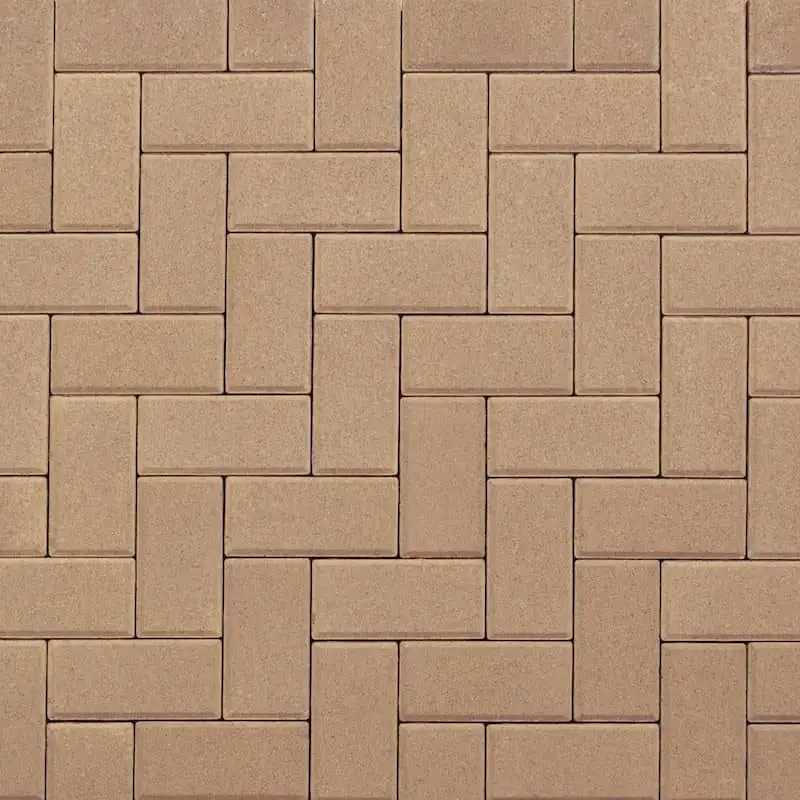
- Groundcover material chosen (DG, gravel, turf, or concrete)
- Plant selection and quantity
- Drip irrigation system design
- Site grading and drainage work
- Integration with existing hardscape
Drought-Tolerant Landscapes
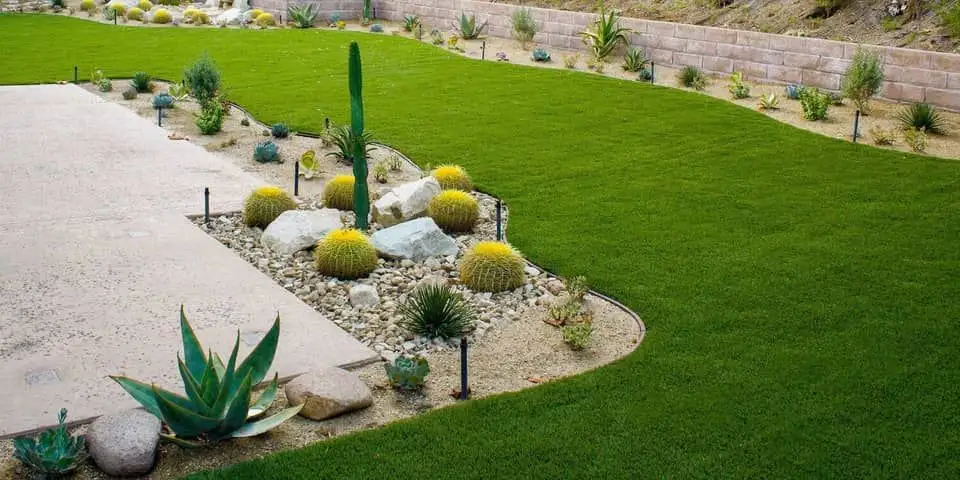
Drought-tolerant landscape design uses low water-usage plants and greenery to create a design that looks beautiful and requires little to no water to maintain, helping you do your part in keeping the water shortage under control.
Start here
The right approach follows how you want to use the space. Pick what you're actually after below, and the materials and layout mostly follow from it. Every project shown was built here in Southern California, so the choices are suited to this climate.
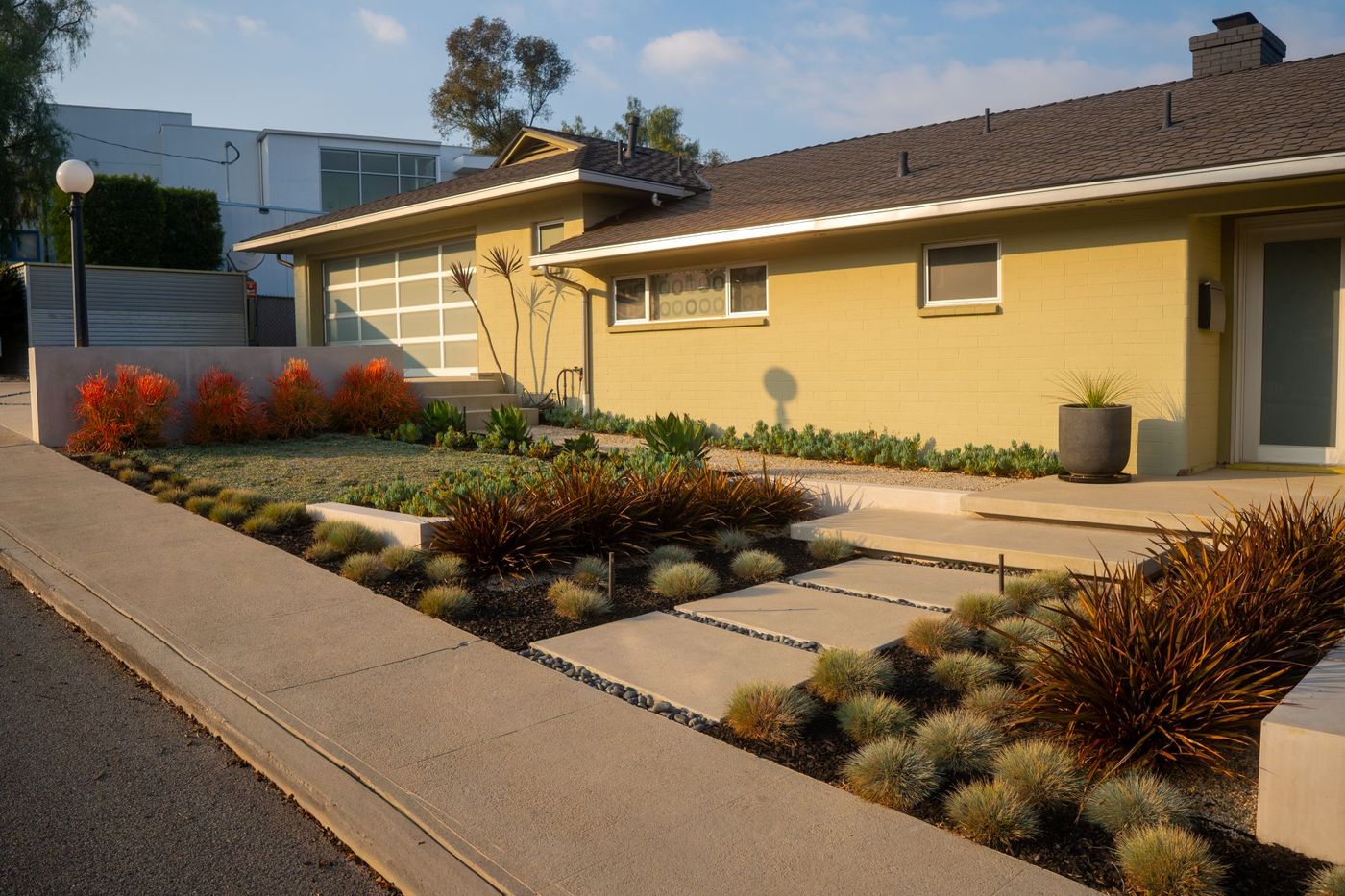
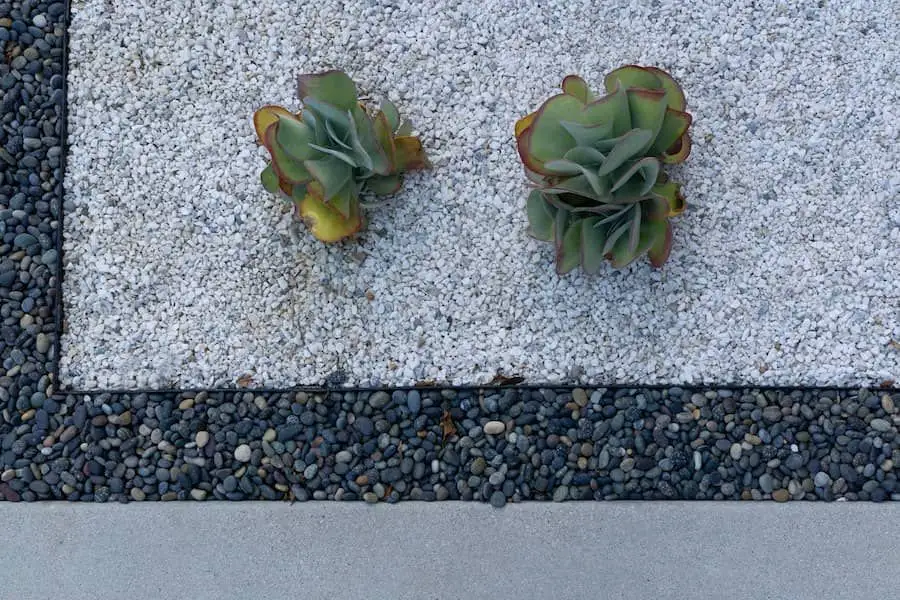 01 A yard that needs little water Low water-usage plants and greenery cut irrigation without leaving the yard looking bare. See drought-tolerant yards
 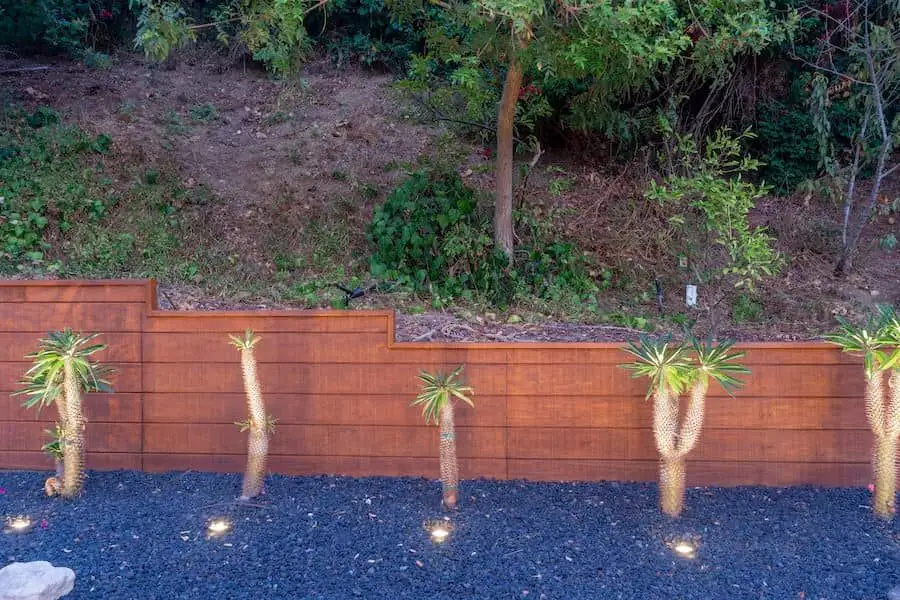 02 Structure without a lawn Cactus and other architectural plants give a front yard presence and shape without relying on turf. See architectural planting
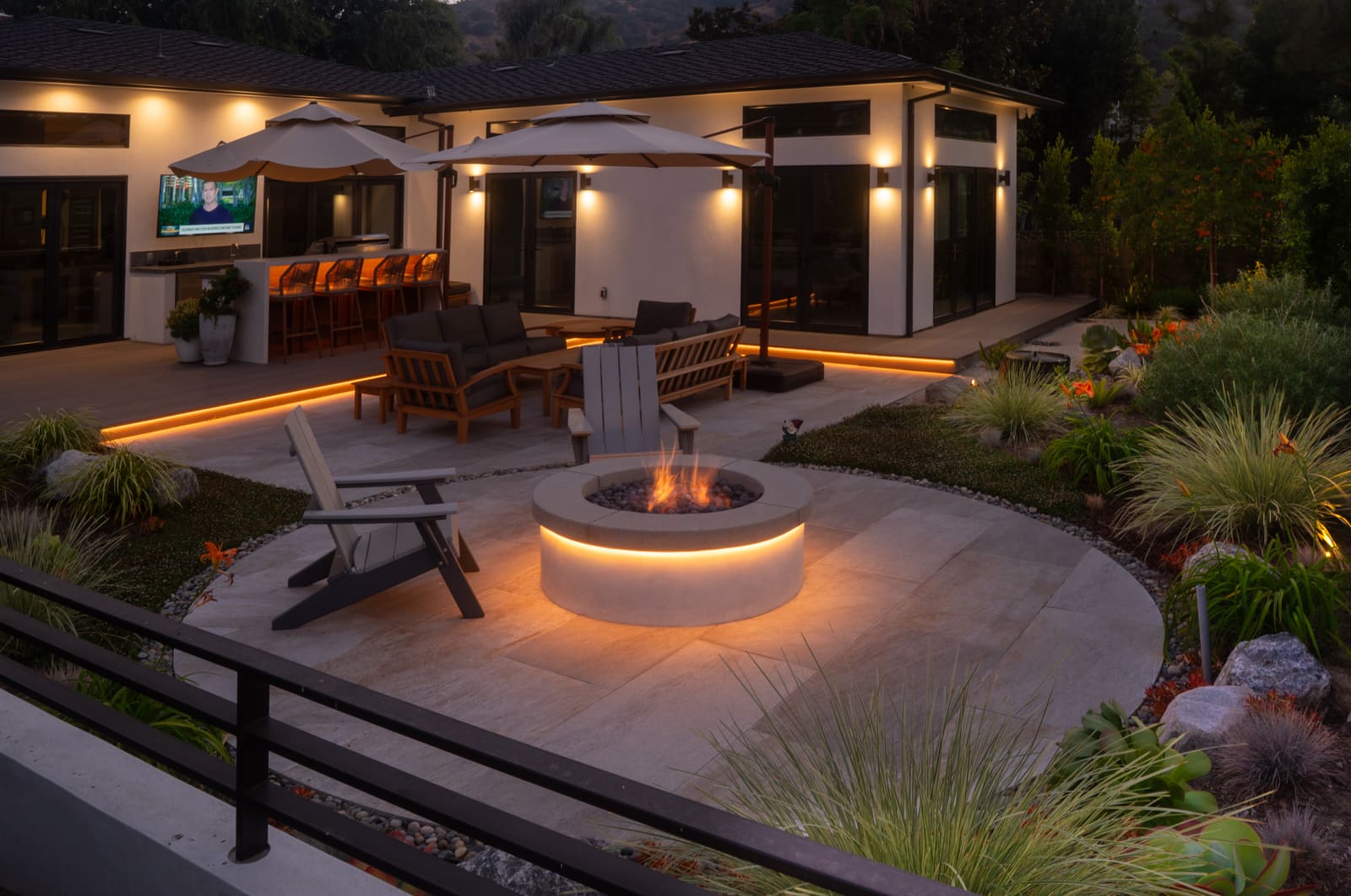
 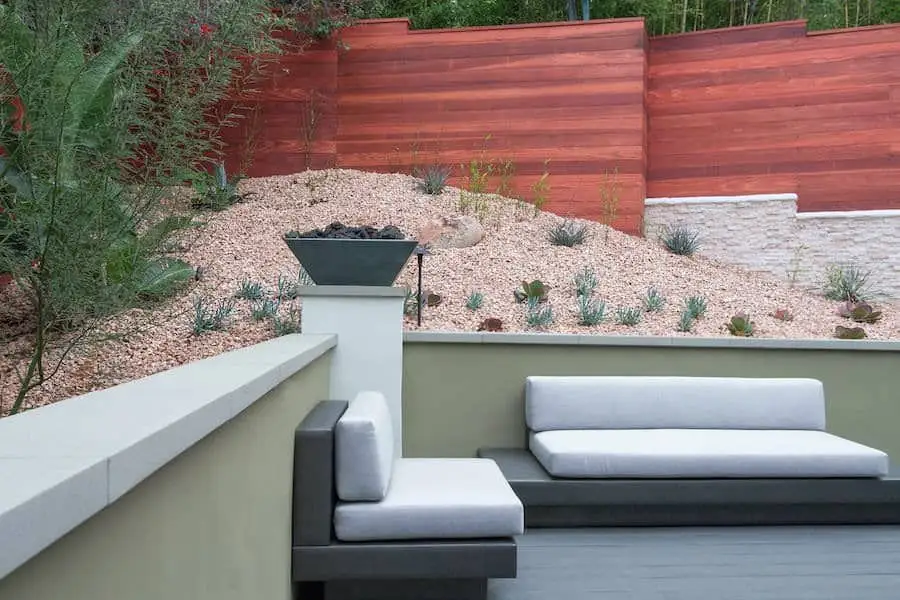 03 A patio that fits the palette Hardscape materials are chosen to match the drought-tolerant plant palette, not fight against it. See patios
 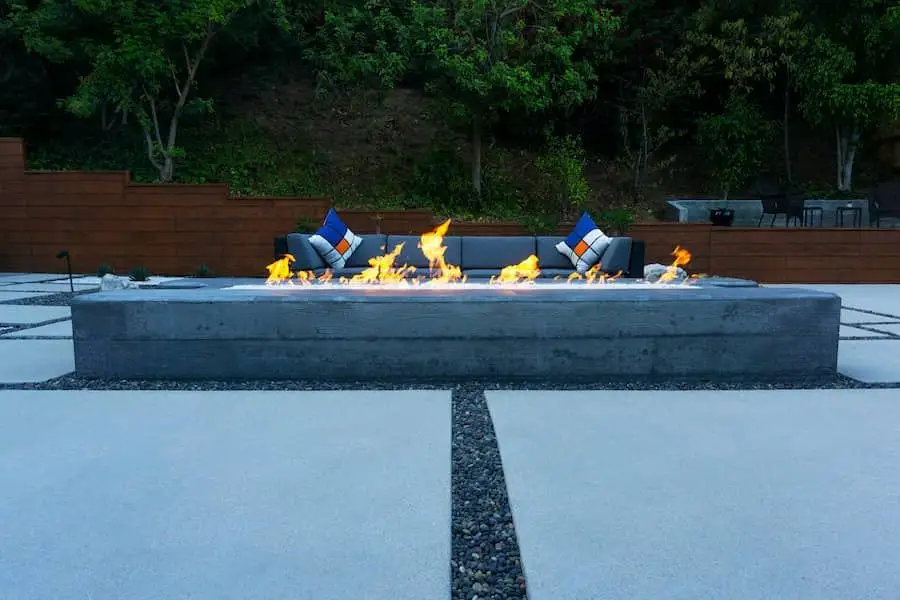 04 A fire feature as the focal point A fire feature set into decomposed granite or gravel becomes the gathering place in a low-water yard. See fire features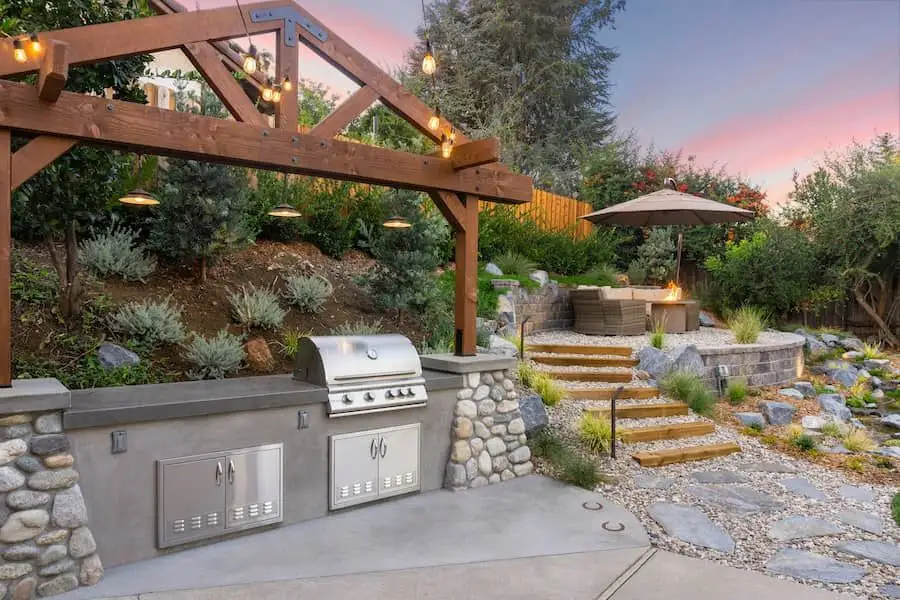
Best for Anyone who wants a natural, informal surface that drains well and needs no water.
On your property Needs occasional raking and re-compaction. Best contained with edging so it does not migrate onto walkways.
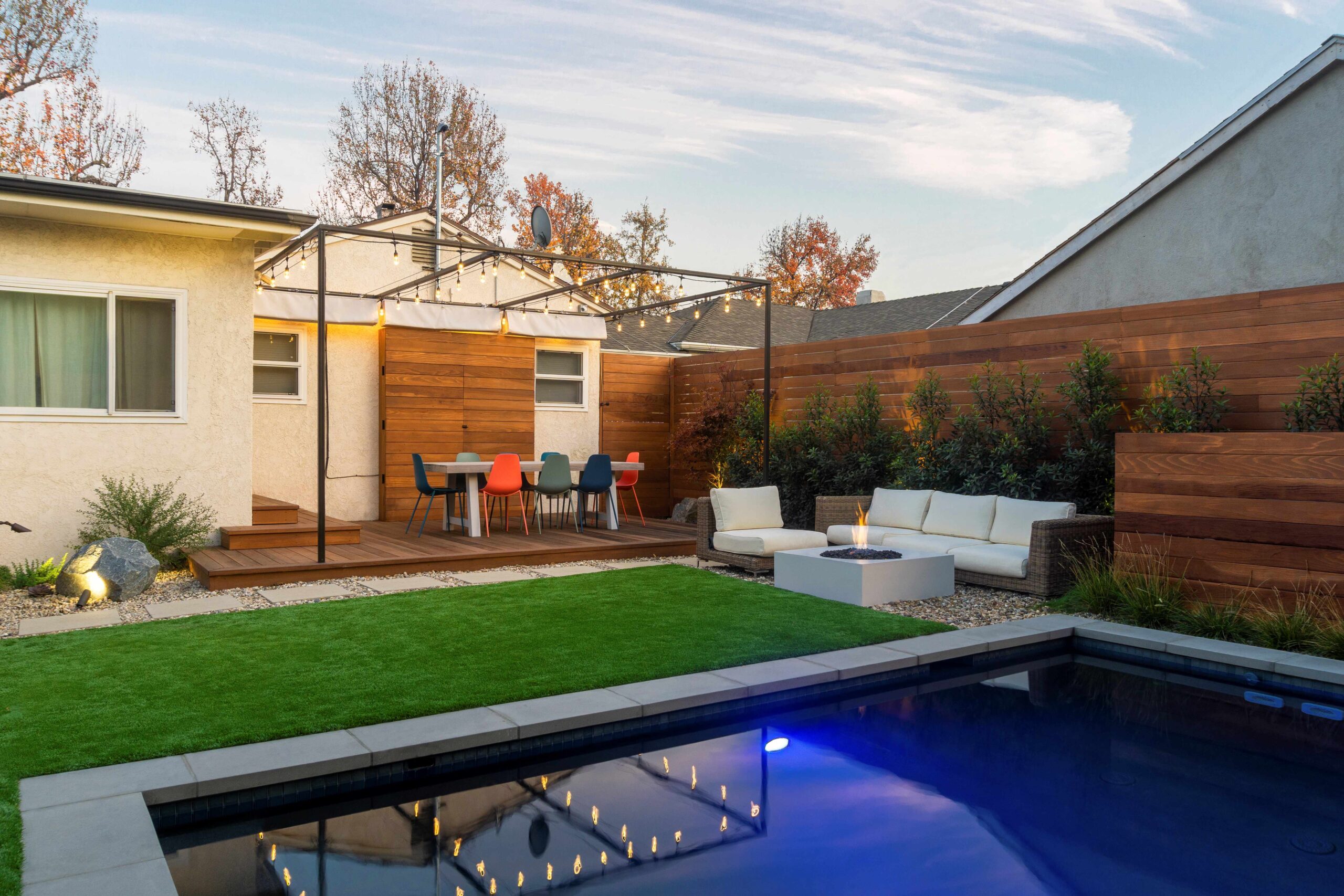
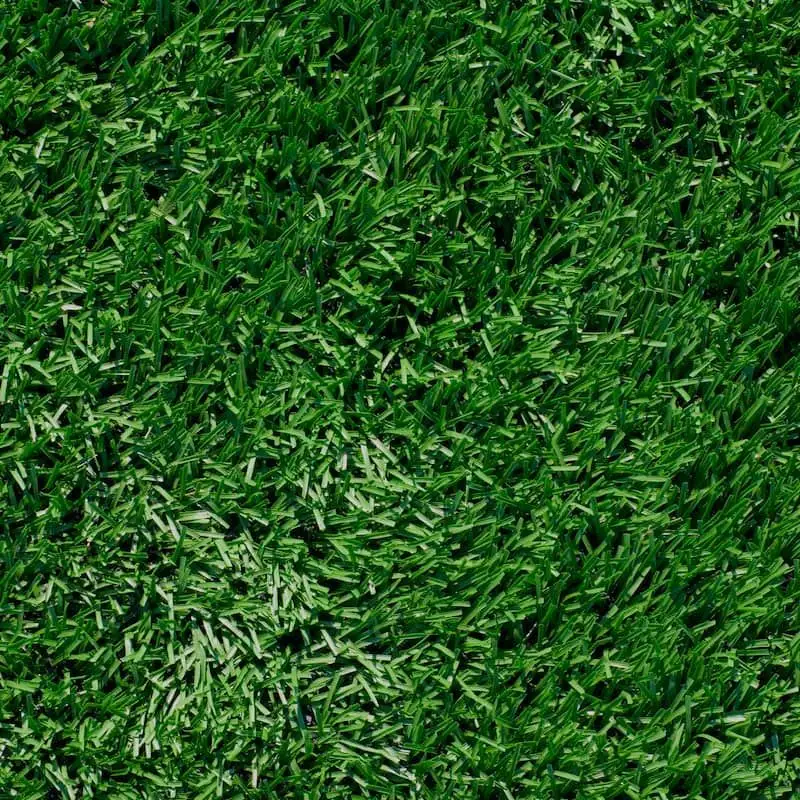
Best for Anyone who wants the look of a lawn without the water bill.
On your property Surface temperature runs hotter than real grass in direct sun. Needs a compacted base for proper drainage.
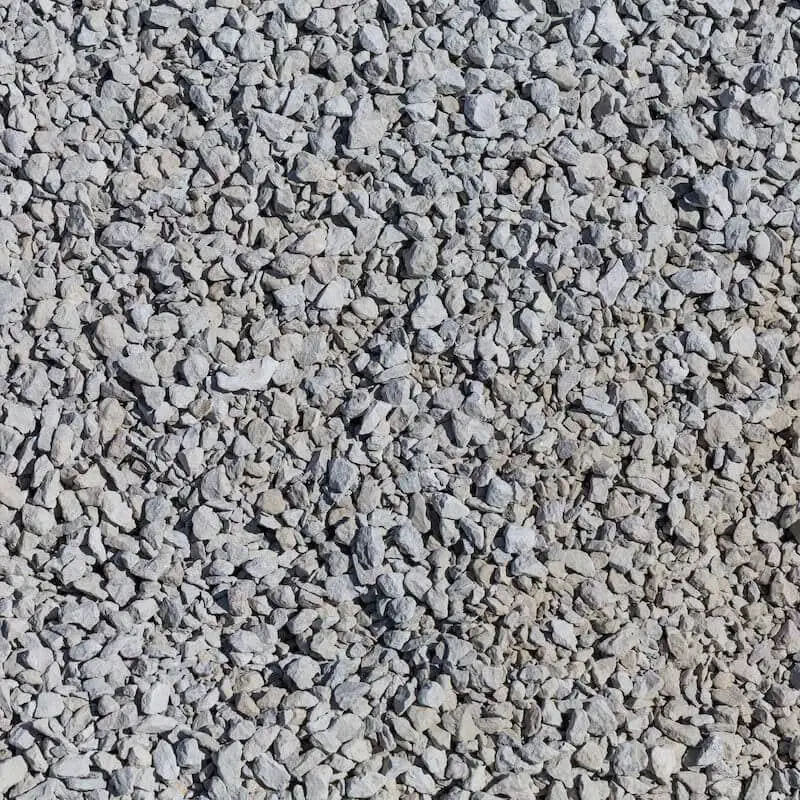
Best for Anyone who wants texture and drainage between planting beds and hardscape.
On your property Loose gravel can migrate without edging. Beach pebbles cost more than standard gravel.
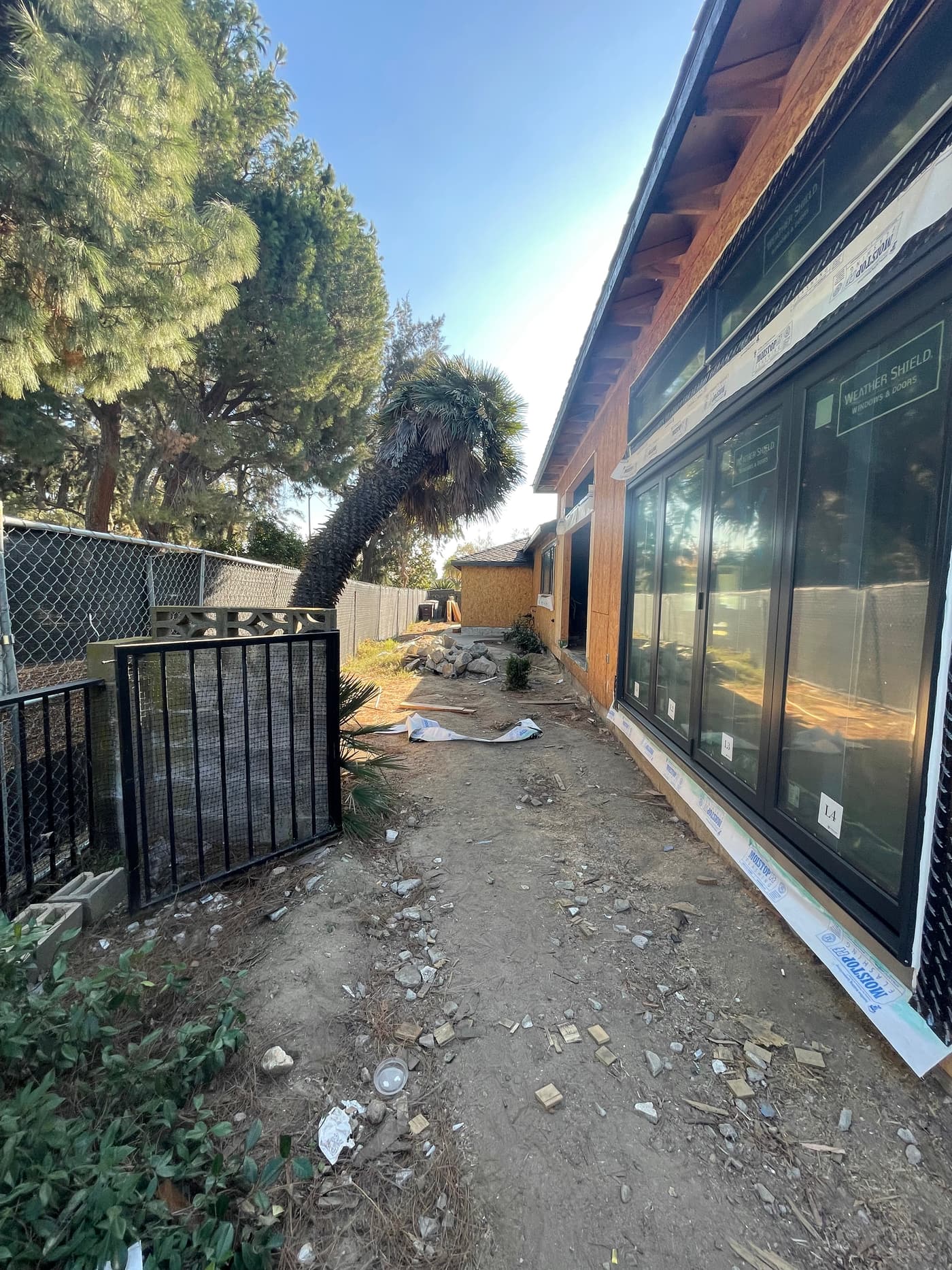 Before
 We assess sunlight, drainage, soil, and existing plants to determine which drought-tolerant species will actually thrive.
 Selection
 Cactus, succulents, and native plants are chosen alongside groundcover materials like decomposed granite or gravel.
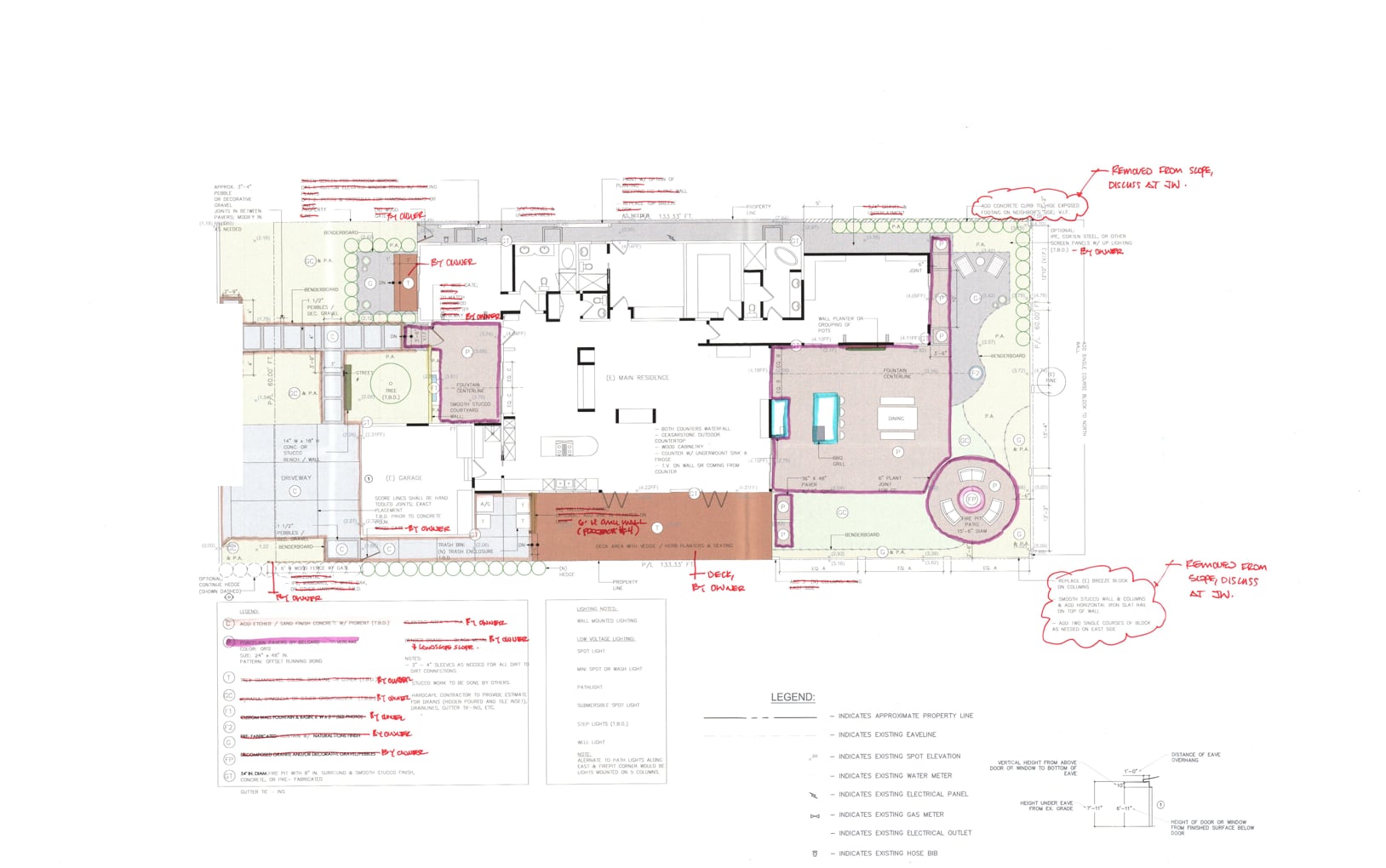 Design plan
 Concrete, decomposed granite, gravel, or turf is installed over a properly graded and compacted base.
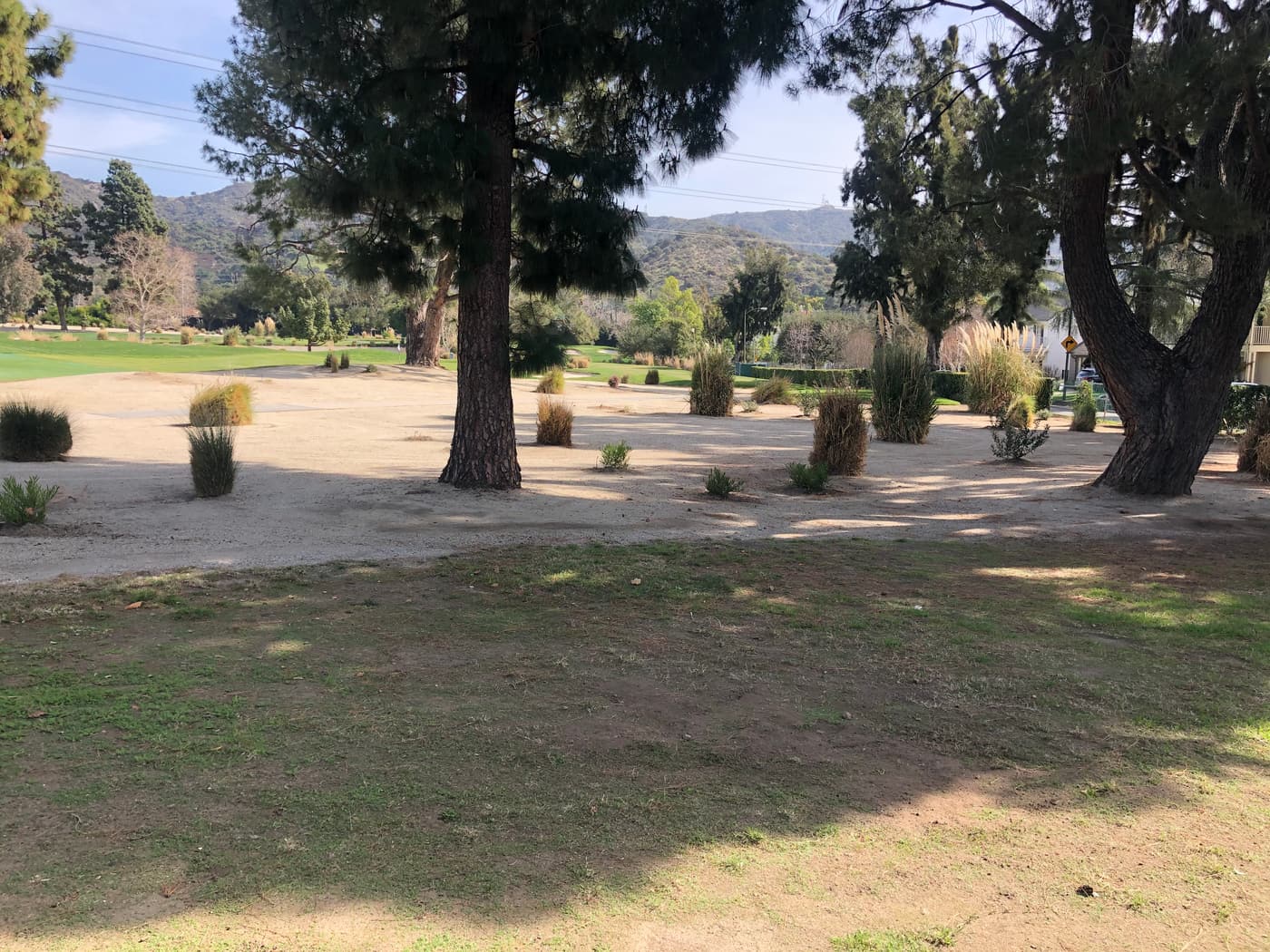 Before: existing conditions
 Targeted drip irrigation is installed only where plants need it, rather than broadcast sprinklers.
 Finished
 Plants go in, stone and pebble accents are placed, and the bed is finished and ready to establish.
Things worth knowing before a first consultation.
Decomposed granite, gravel, artificial turf, and concrete each drain and look different. The choice affects cost and maintenance.
Cactus and succulents give a bold, structural look. Native perennials read softer but still need minimal water.
Drip irrigation targets water at the root zone, cutting waste compared to broadcast sprinklers.
Patios, fire features, and pathways should be planned alongside the plant and groundcover palette, not added after.
Decomposed granite needs occasional raking. Artificial turf needs almost none. Gravel can migrate without edging.
A well-designed drought-tolerant yard can look as complete as a traditional lawn while using a fraction of the water.
No quote written off a photograph can account for what your property is like.
Decking, drainage, utilities, planting, shade and lighting all bear on where a feature goes and how it gets built. Settling them on one set of drawings is what keeps conduit out of the wrong trench and stops paving being cut to fit afterward.
Access, engineering, permits, finishes and scope vary a lot from one property to the next, so the investment and the schedule for your project are set once we have seen the site and the design is settled.
Tell us about the property and what you want the space to do. We will walk through the design, site and permitting factors likely to shape it.
I've done several projects with Pacific Outdoor Living and they are always so easy to work with. Their project managers are knowledgeable and in constant communication throughout the project.
Having been in our home for some time we knew about numerous issues that needed to be addressed. The team walked us through every option before we decided.
It depends on plant selection and irrigation design, but replacing a traditional lawn with drought-tolerant plants and groundcover cuts outdoor water use substantially, since most water use goes to lawn irrigation.
No. Drought-tolerant design uses cactus, succulents, and native plants that need little water once established, along with groundcover like decomposed granite, gravel, or artificial turf.
Yes. Many designs keep a small turf area for kids or pets while replacing the rest of the lawn with low-water planting and groundcover.
Most drought-tolerant plants need regular water for the first year while roots establish, then need much less once mature.
Schedule a consultation with one of our designers to discuss your project goals and explore what's possible on your property.
What happens next: we set up a visit, measure the property and talk through what you want the space to do. Then you get a design to look at before you commit to anything.