What shapes the investment
- Type of water feature (koi pond, fountain, pondless)
- Size and depth
- Excavation difficulty and site prep
- Liner quality and installation
- Pump and filtration system
- Edge treatment and landscaping
Water Features
Water brings life to a landscape. The sound of flowing water, the movement, and the reflective surface all enhance outdoor spaces. We design water features that integrate with your landscape, support aquatic life when desired, and become the focal point of your outdoor room.
Start here
The right approach follows how you want to use the space. Pick what you're actually after below, and the materials and layout mostly follow from it. Every project shown was built here in Southern California, so the choices are suited to this climate.
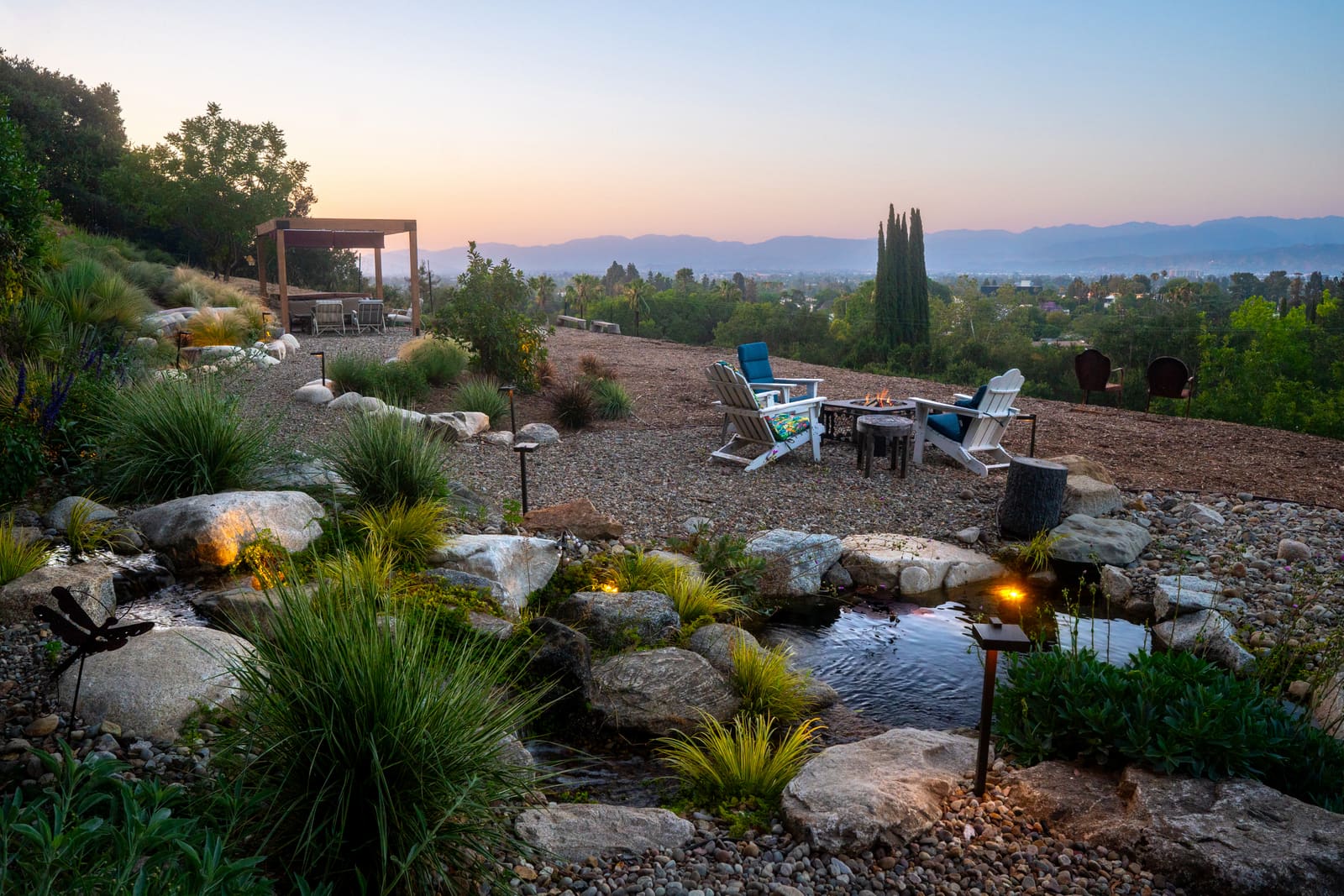
01 A focal point and gathering place Water features anchor landscapes and become the eye-catching feature of any yard. See water features
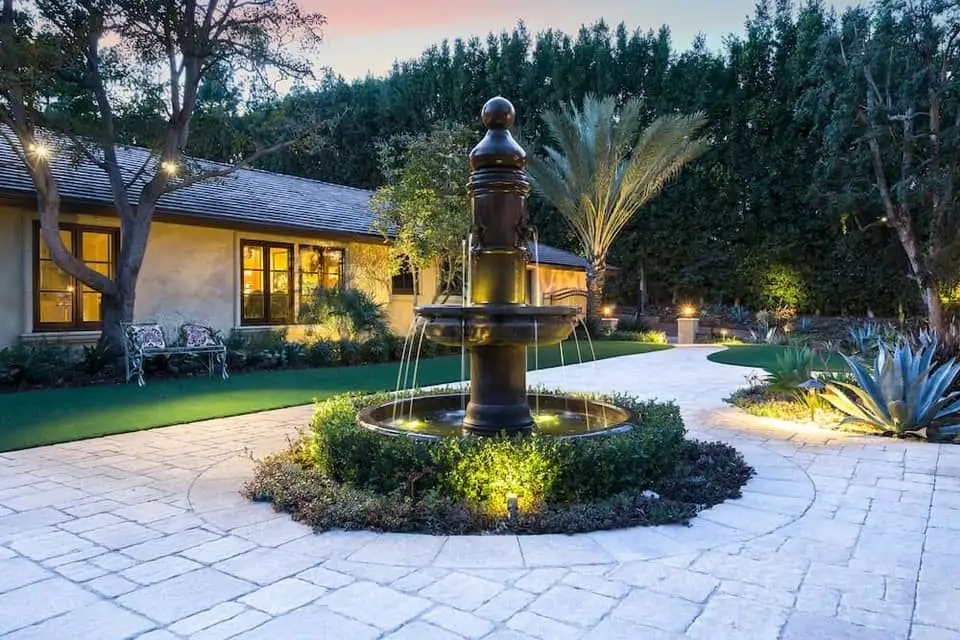
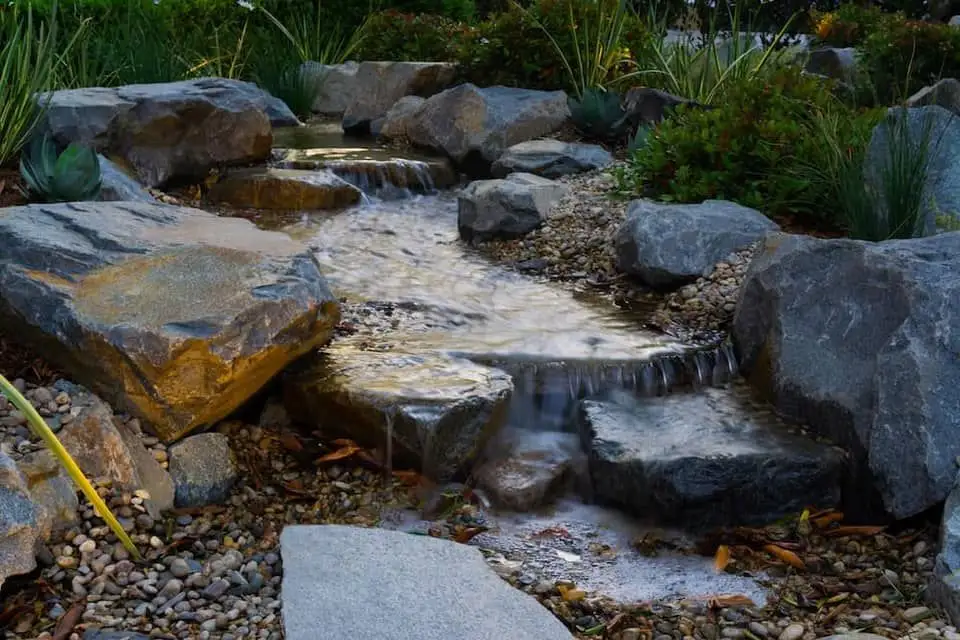
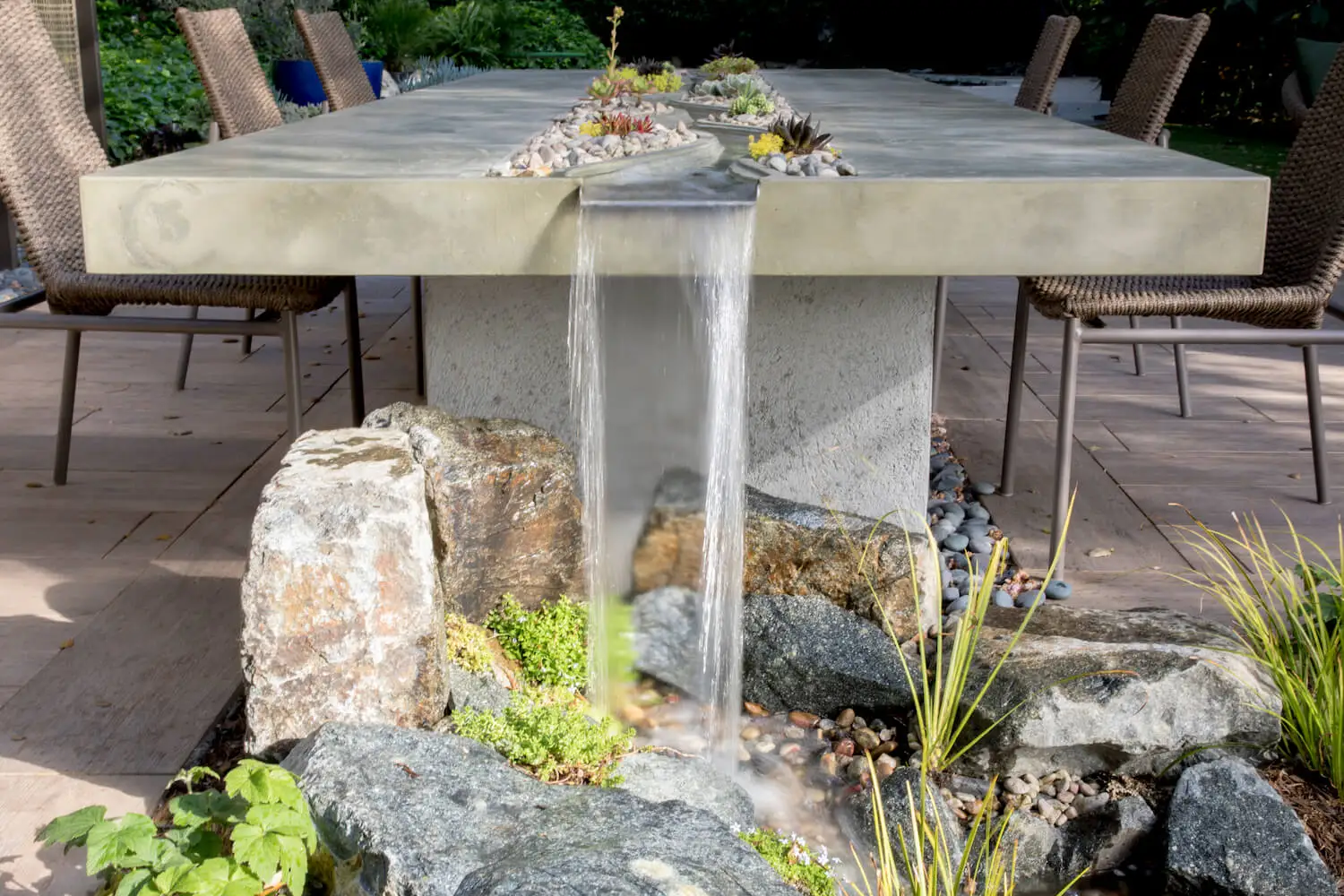
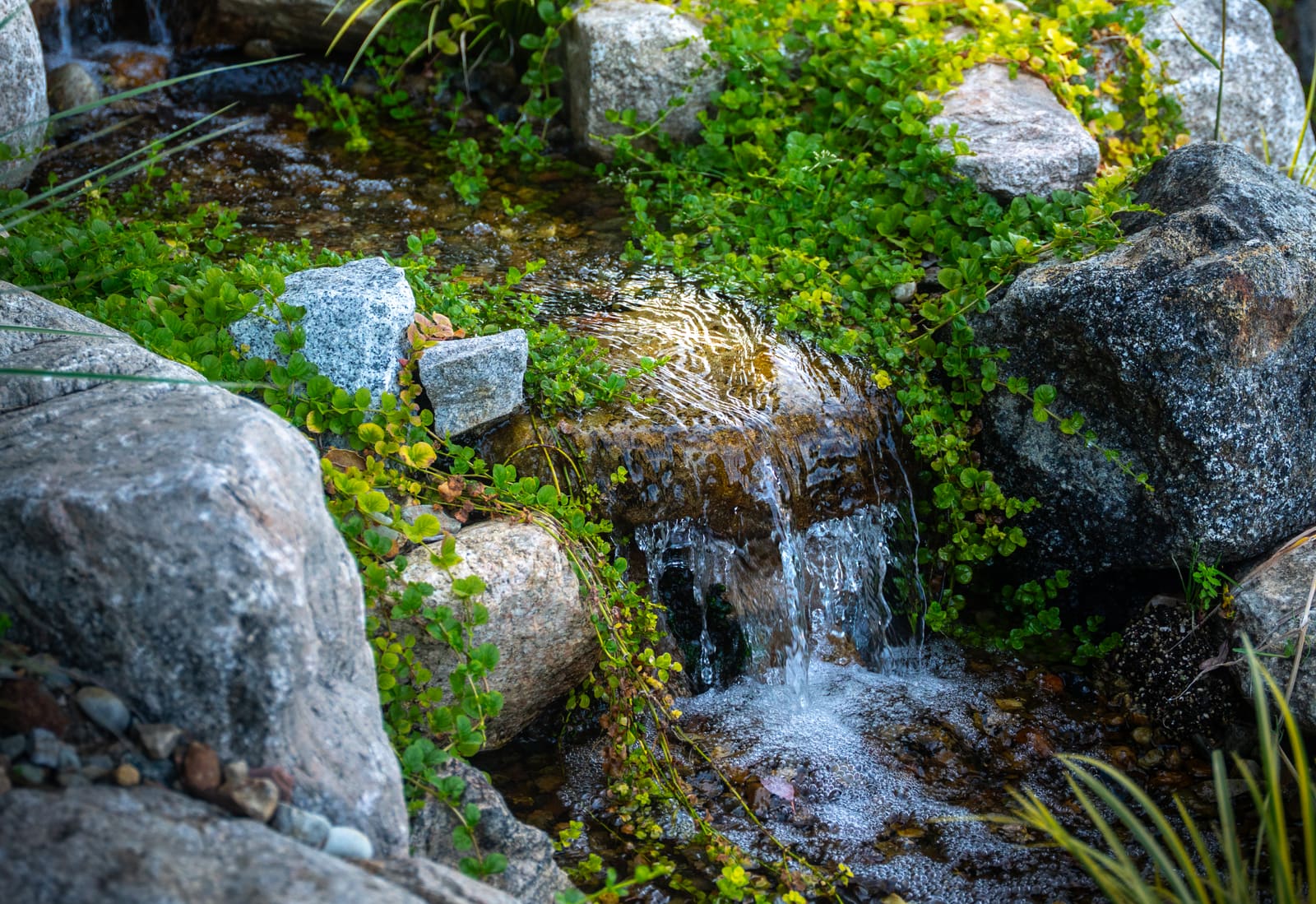
02 Sound and movement Flowing water creates soothing sound and visual interest. Fountains and waterfalls engage the senses. See fountain designs
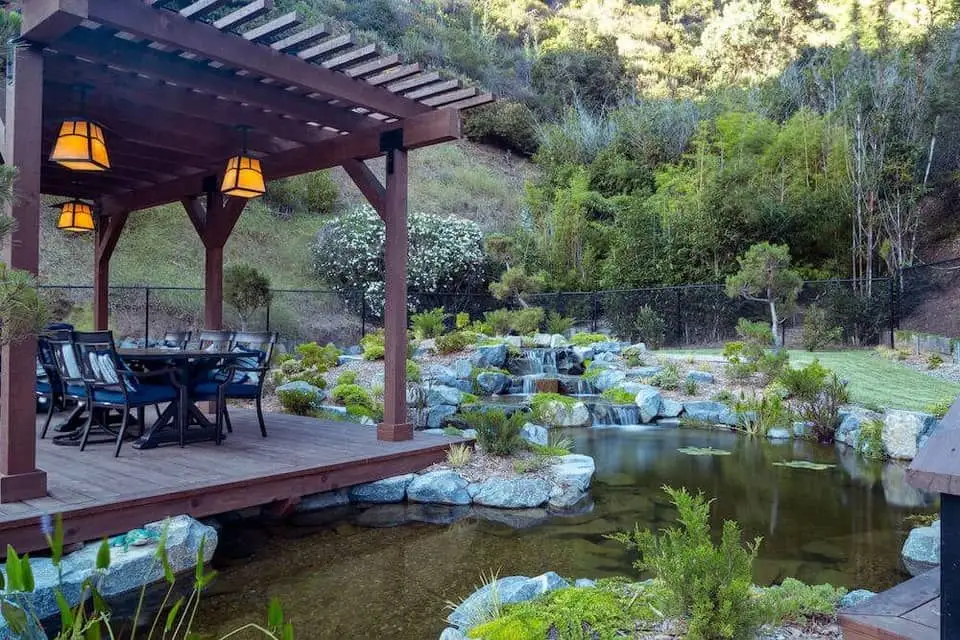
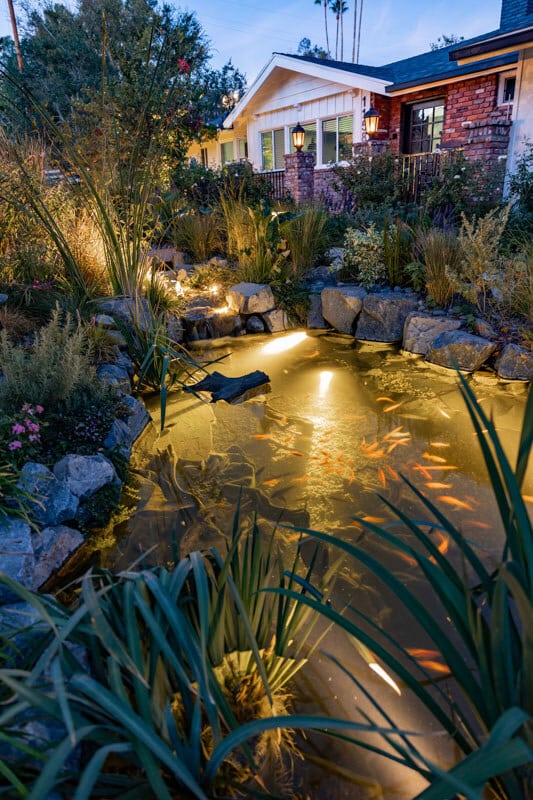
03 Habitat and aquatic life Koi ponds support fish and aquatic plants. Water features attract birds, butterflies, and create living ecosystems. See koi ponds Los Angeles Area
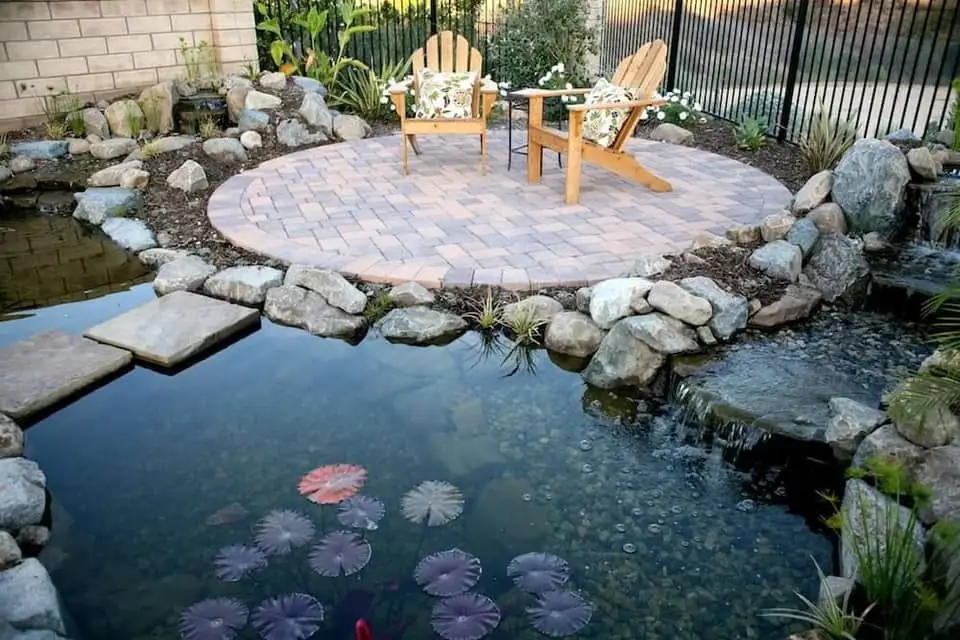
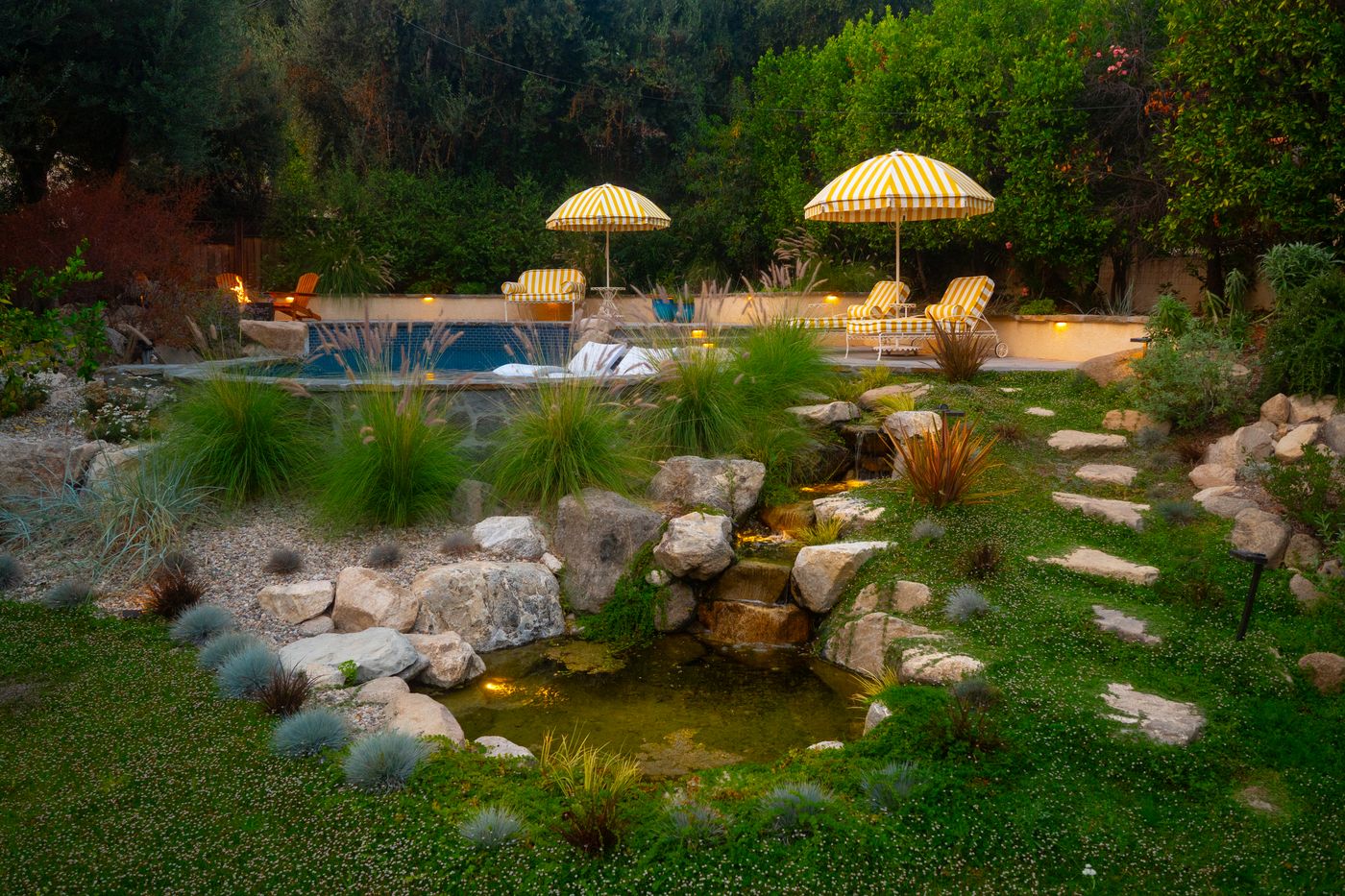
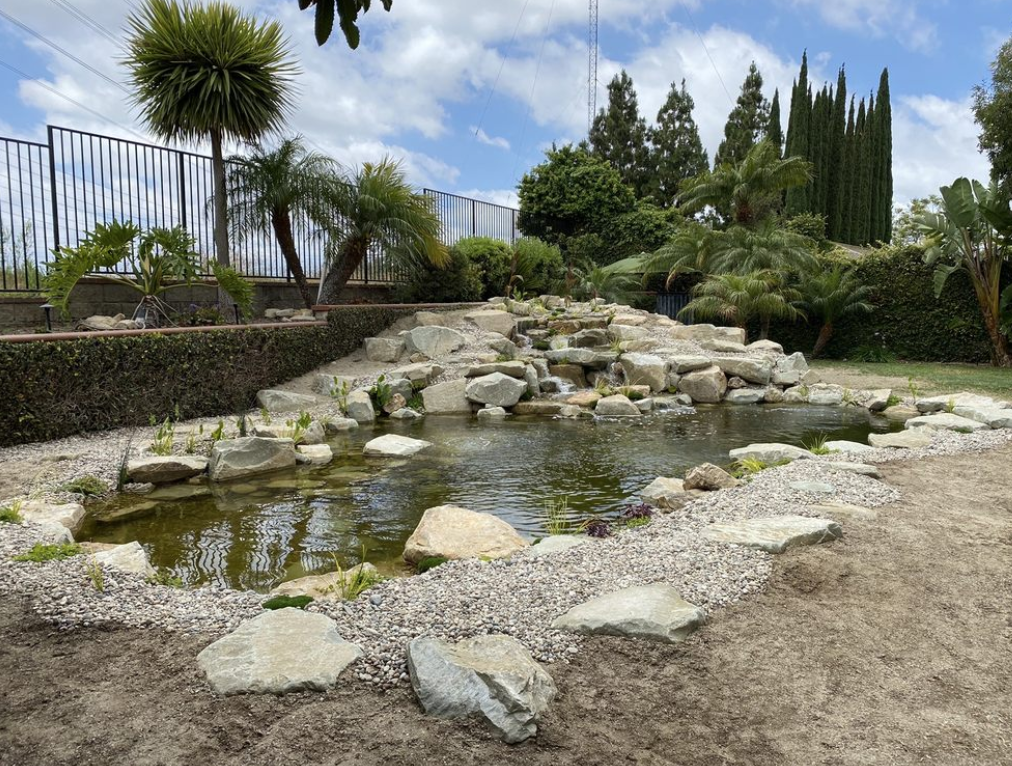
Shown: Complete Koi Pond Installation, Los Angeles Area
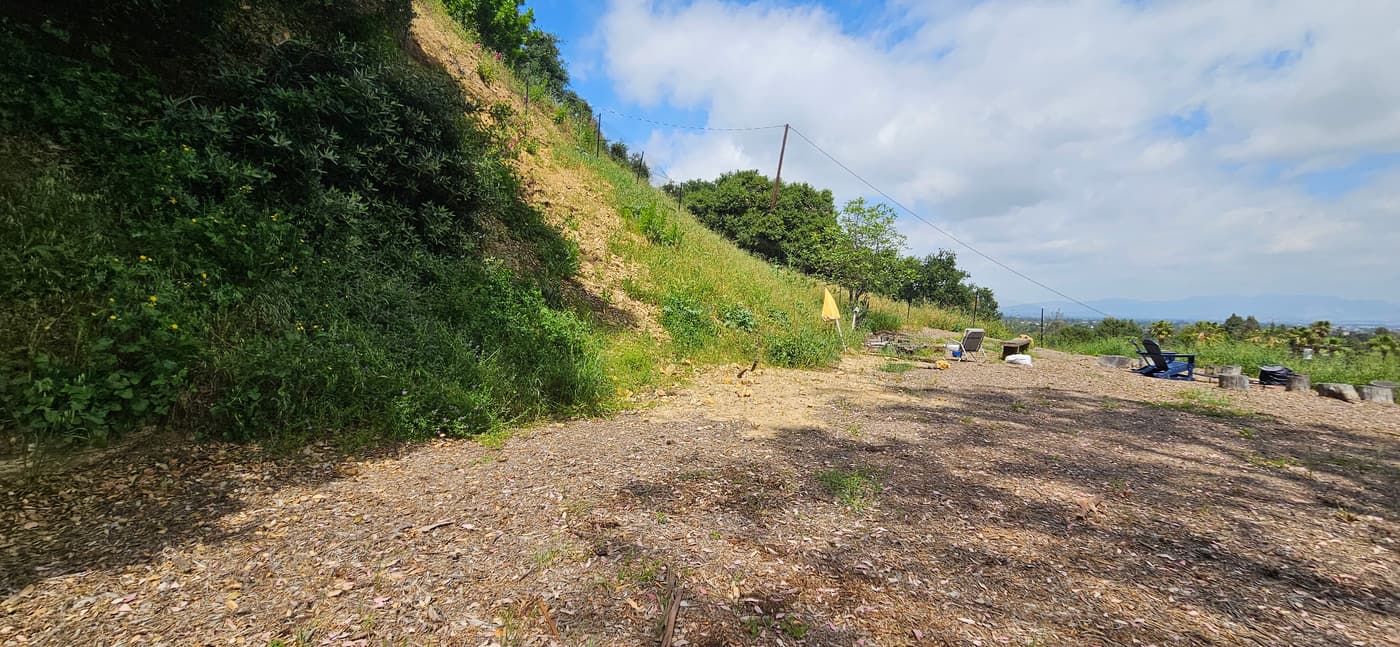
Before: the slope We assess sunlight, drainage, slope, and views. Location is critical for success.
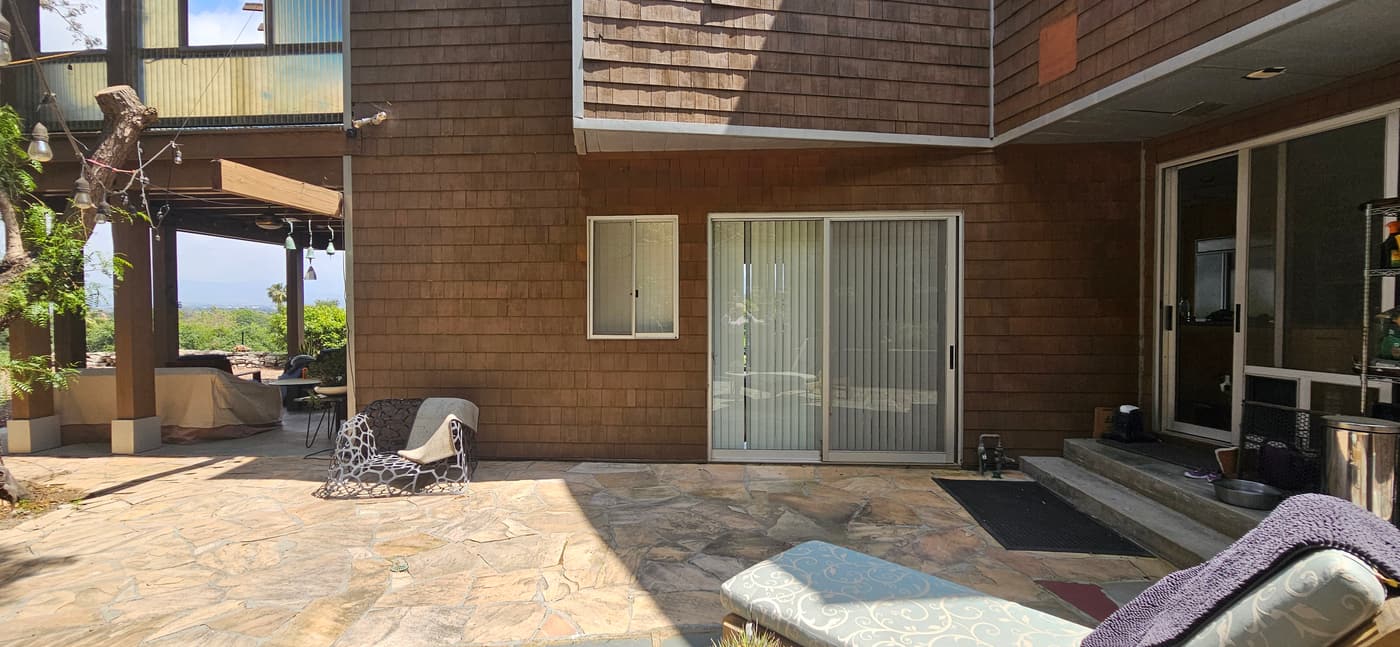
Before: existing patio Digging to proper depth (18 inches minimum for koi). Removing rocks and roots, preparing stable base.
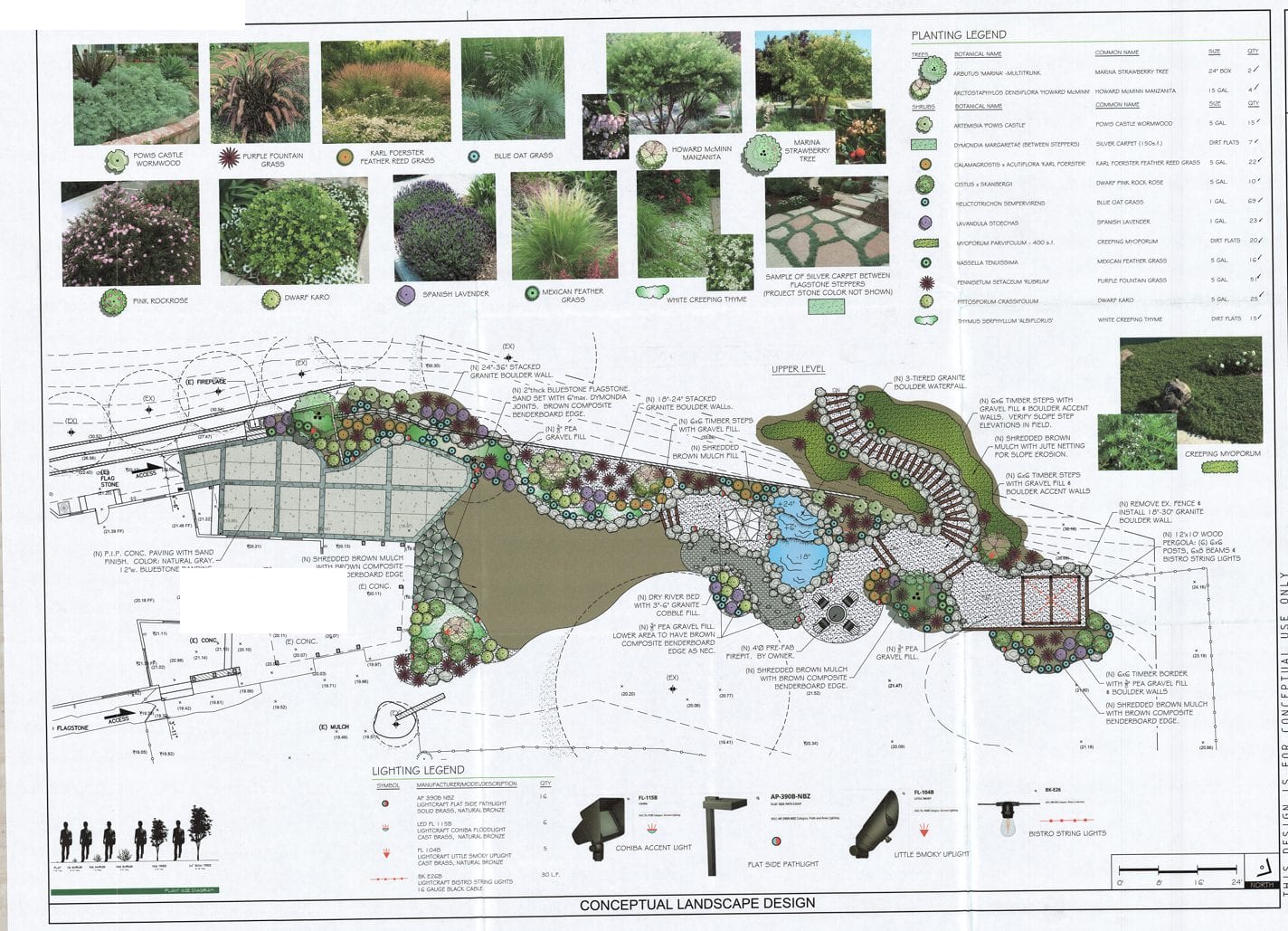
Design plan High-quality EPDM or concrete liner creates watertight basin. Careful installation prevents leaks.
Equipment Pump, filter, and skimmer installed and tested. For koi ponds, filtration is critical to water quality.
Finished Stone edges, aquatic plants, and edge landscaping complete the feature. Water is conditioned and stocked.
Things worth knowing before a first consultation.
Koi ponds need maintenance but support life. Fountains are lower maintenance. Pondless waterfalls offer water sound without standing water.
Koi ponds should be 18+ inches deep (deeper in cold climates). Size affects maintenance and cost.
Koi are beautiful but require good filtration. Goldfish are easier. Fountains need no fish.
Fish ponds prefer 4-6 hours partial shade. Too much sun causes algae. Too little limits plant growth.
Good pump and filtration keep koi healthy. Fountains just need circulation. Pondless systems need hidden basins.
Water features should be focal points but integrated naturally with plants, stone, and hardscape.
No quote written off a photograph can account for what your property is like.
Decking, drainage, utilities, planting, shade and lighting all bear on where a feature goes and how it gets built. Settling them on one set of drawings is what keeps conduit out of the wrong trench and stops paving being cut to fit afterward.
Access, engineering, permits, finishes and scope vary a lot from one property to the next, so the investment and the schedule for your project are set once we have seen the site and the design is settled.
Tell us about the property and what you want the space to do. We will walk through the design, site and permitting factors likely to shape it.
The water feature completely changed our backyard. We love watching the koi and listening to the water. It's become a gathering place for family and friends.
Professional design and excellent workmanship. Our water feature looks like it belongs there, not like an afterthought. The team explained fish care and maintenance thoroughly.
At least 18 inches, ideally 24-36 inches. Deeper ponds maintain stable water temperature and give koi room to escape predators.
Daily feeding, weekly water checks, and seasonal filter cleaning. A well-designed system with good filtration requires 30 minutes per week.
Koi ponds prefer 4-6 hours of partial shade. Full sun causes excessive algae. Fountains and pondless features work in any sunlight.
Some cities require permits for ponds over a certain depth. We handle all permitting and safety compliance.
Schedule a consultation with one of our designers to discuss your project goals and explore what's possible on your property.
What happens next: we set up a visit, measure the property and talk through what you want the space to do. Then you get a design to look at before you commit to anything.