
What moves the cost
- Raised or flush, and the stone or tile on it
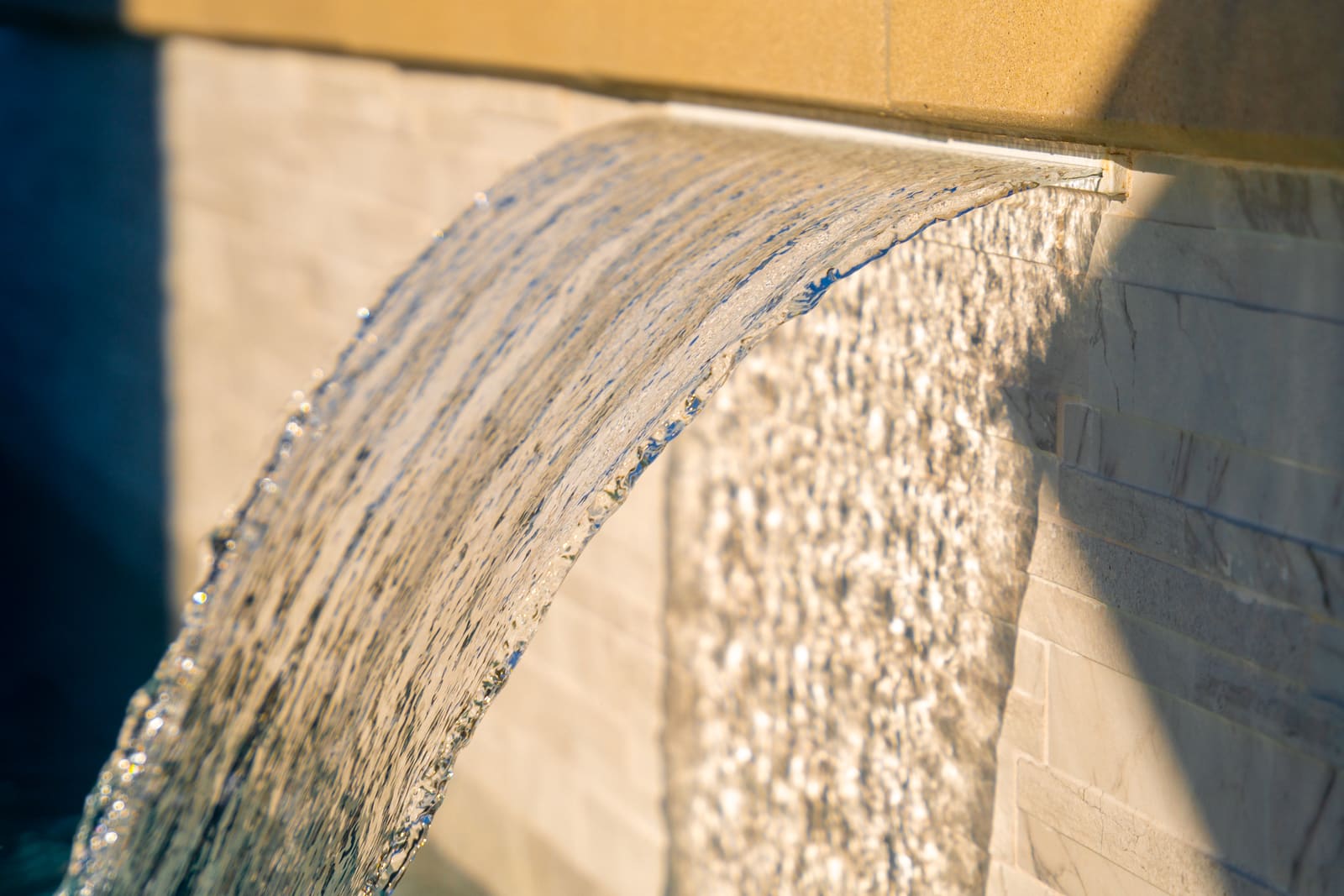
- A spillway, sheer descent or other water feature
- Shared pool equipment or its own
- Gas and electrical runs to the equipment
- Automation and covers
- The paving and planting around it
Spas & Hot Tubs
A spa is what keeps a Los Angeles yard in use from November to March. We design and build raised, flush and standalone spas into the yard, with the pool when there is one, and when a portable hot tub is the better answer we will tell you so.
The short answer
Build the spa in when you have or are building a pool, want it to look like part of the yard, or want it to last as long as the house. A built-in spa shares the pool's equipment and plumbing, so it costs less to build and to run than a separate hot tub, but its structure has to be designed with the pool from the start. A portable hot tub is the quicker, lower-cost answer when there is no pool and you mostly want a soak.
Adding a built-in spa to a new concrete pool typically adds about $15,000 to $30,000 in Los Angeles, more for a raised spa in stone or tile with a spillway. Published 2026 guides put a portable hot tub at about $3,000 to $12,000 installed, including its dedicated 240-volt circuit. These are typical Los Angeles market ranges, not a quote, and pricing varies from project to project.
Options
Four ways to get hot water into a Los Angeles yard, and what each one asks of the budget and the site.
| Option | Typical cost | Best for | Keep in mind |
|---|---|---|---|
| Spa attached to a new pool | About $15,000 to $30,000 added | Most pool projects | Shares the pool's pump, filter and heater; designed in from the start |
| Raised spa with a spillway | More than a flush spa | A built edge, the sound of water and a wall to sit on | More structure, plus the stone or tile and the spillway detail |
| Standalone in-ground spa | Priced as its own project | Courtyards and smaller yards without room for a pool | Needs its own heater and pump, so it costs more than the same spa sharing a pool's |
| Portable hot tub | About $3,000 to $12,000 installed | A quick soak with no pool | Needs a level pad, delivery access and a dedicated 240-volt circuit |
These are typical Los Angeles market ranges, not a quote, and pricing varies from project to project. Hot tub figures are national installed ranges from published 2026 guides.
Spas we have built
Real projects from across Greater Los Angeles. Each card opens the full project.
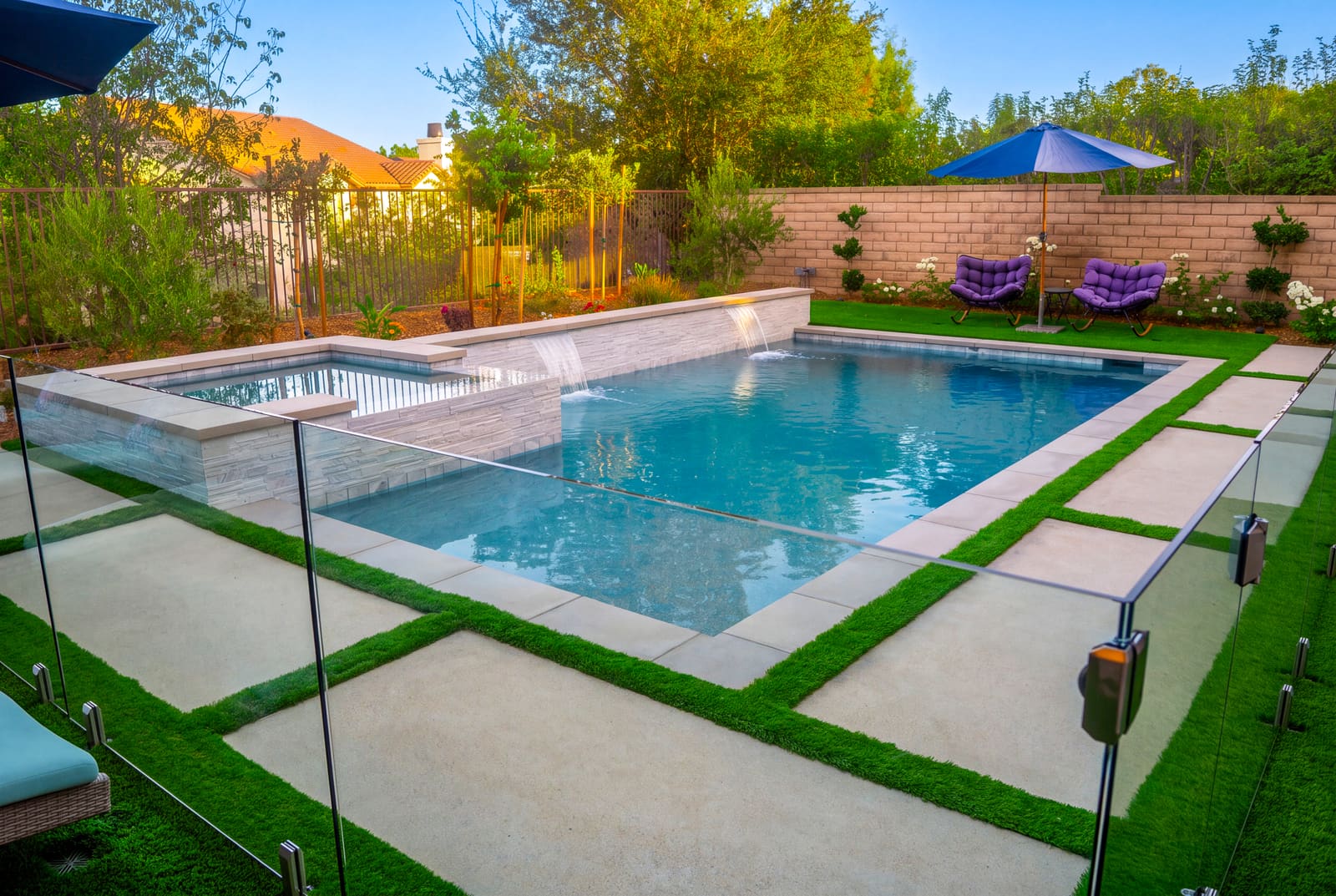 01 Raised, in stacked stone Entertainer's Cabana, Simi Valley: a seven-foot raised spa clad in stacked stone, spilling into the pool. See the project
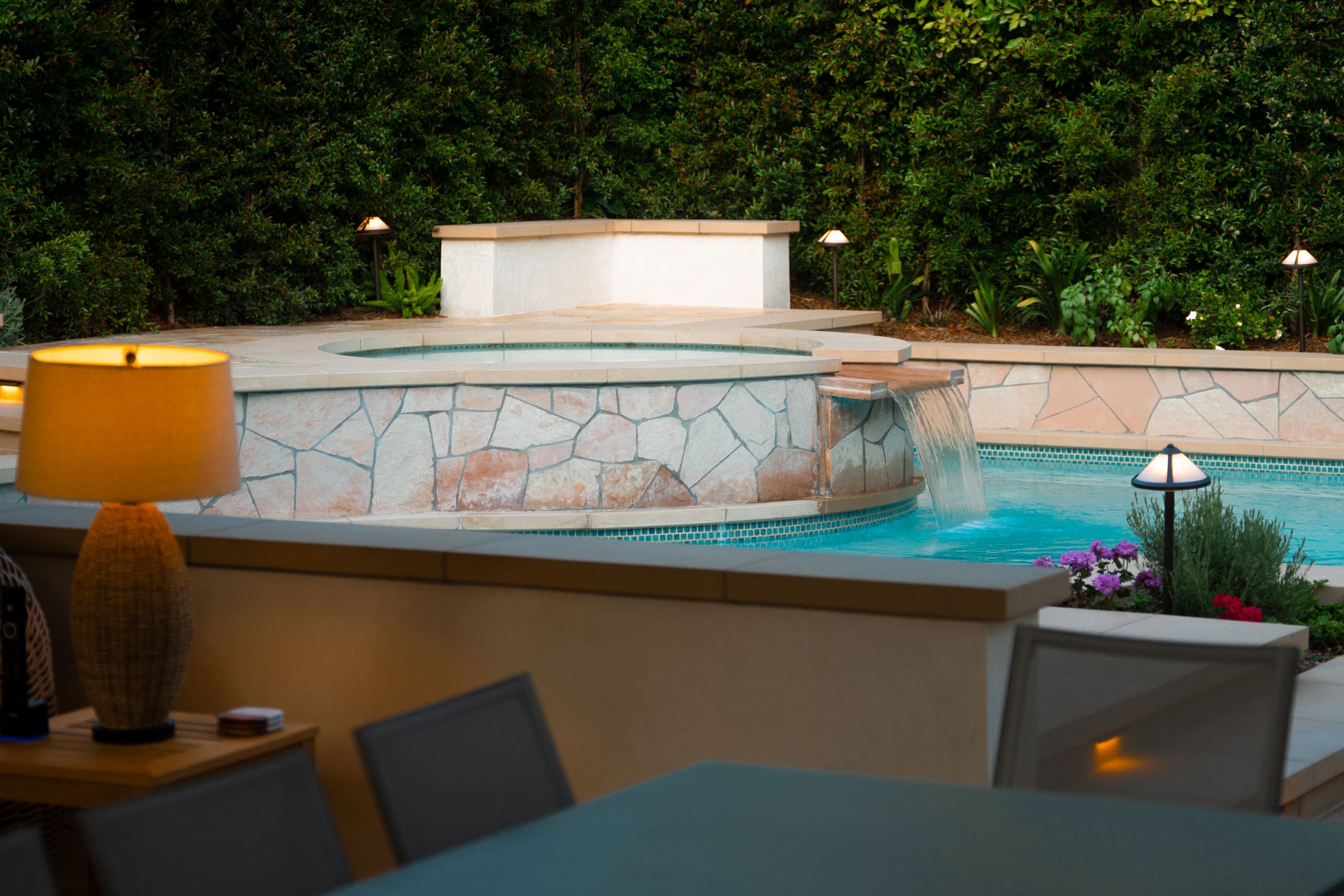 02 Natural stone, remodeled Poolside Paradise: a natural stone spa raised above the pool and spilling into it, remodeled with new tile, coping and plaster. See the project
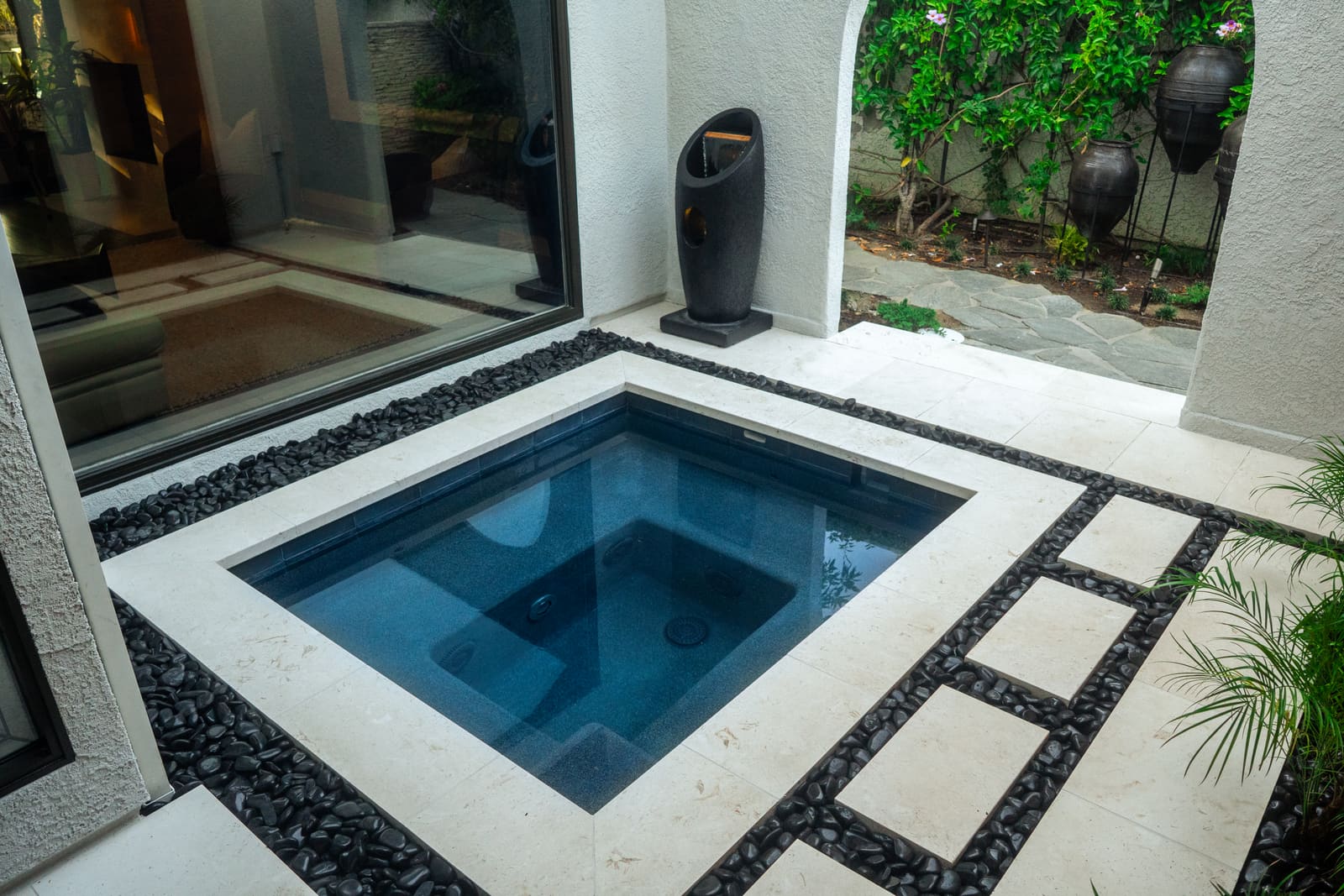 03 A spa without a pool Black Pebble Courtyard: a six-by-six-and-a-half-foot spa centered on the window, on a compact lot with little room for anything larger. See the project
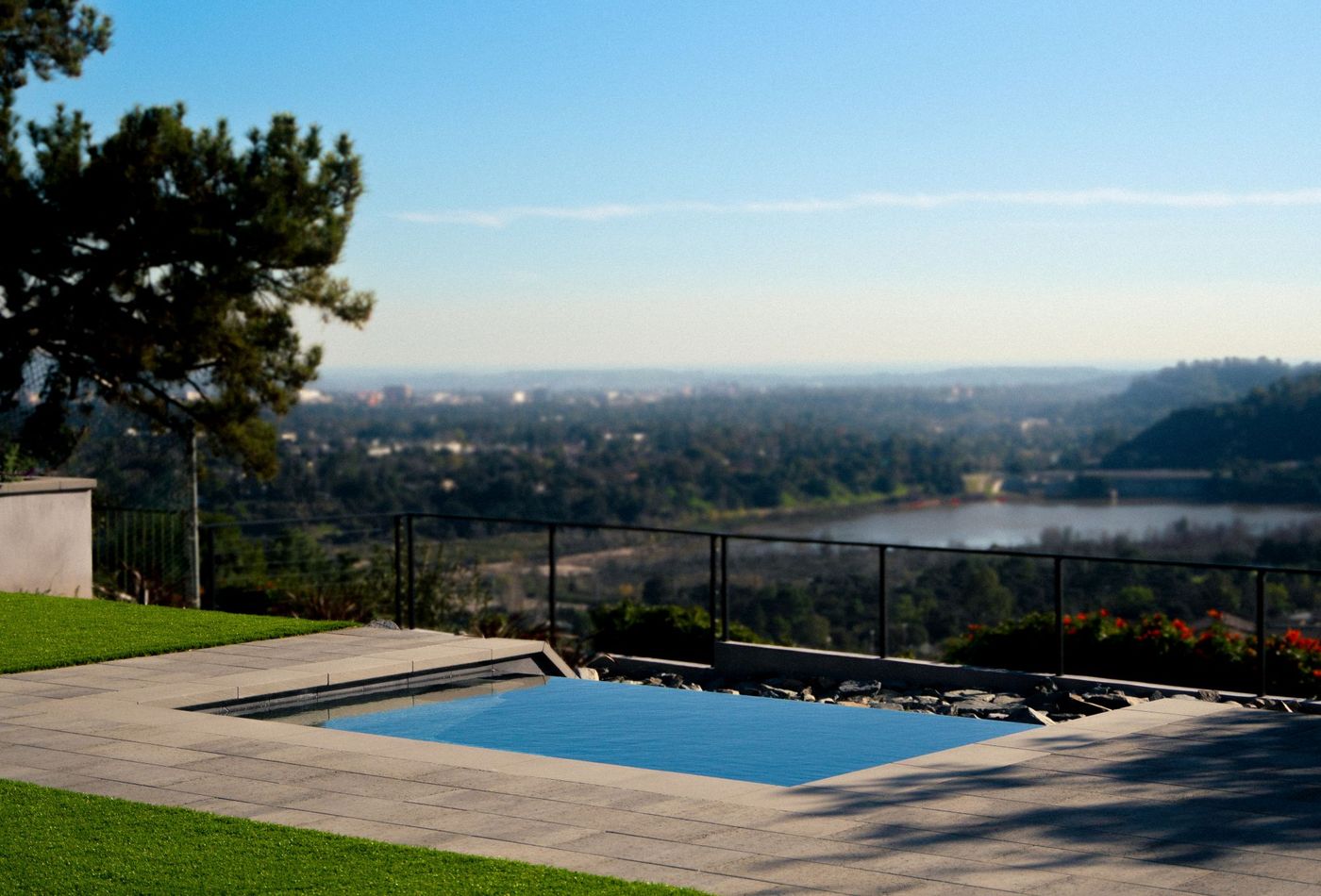 04 A spa with the view Spa Serenity: a tiered hillside yard turned spa-first, with a linear fire feature and a clear look out across the valley. See the project
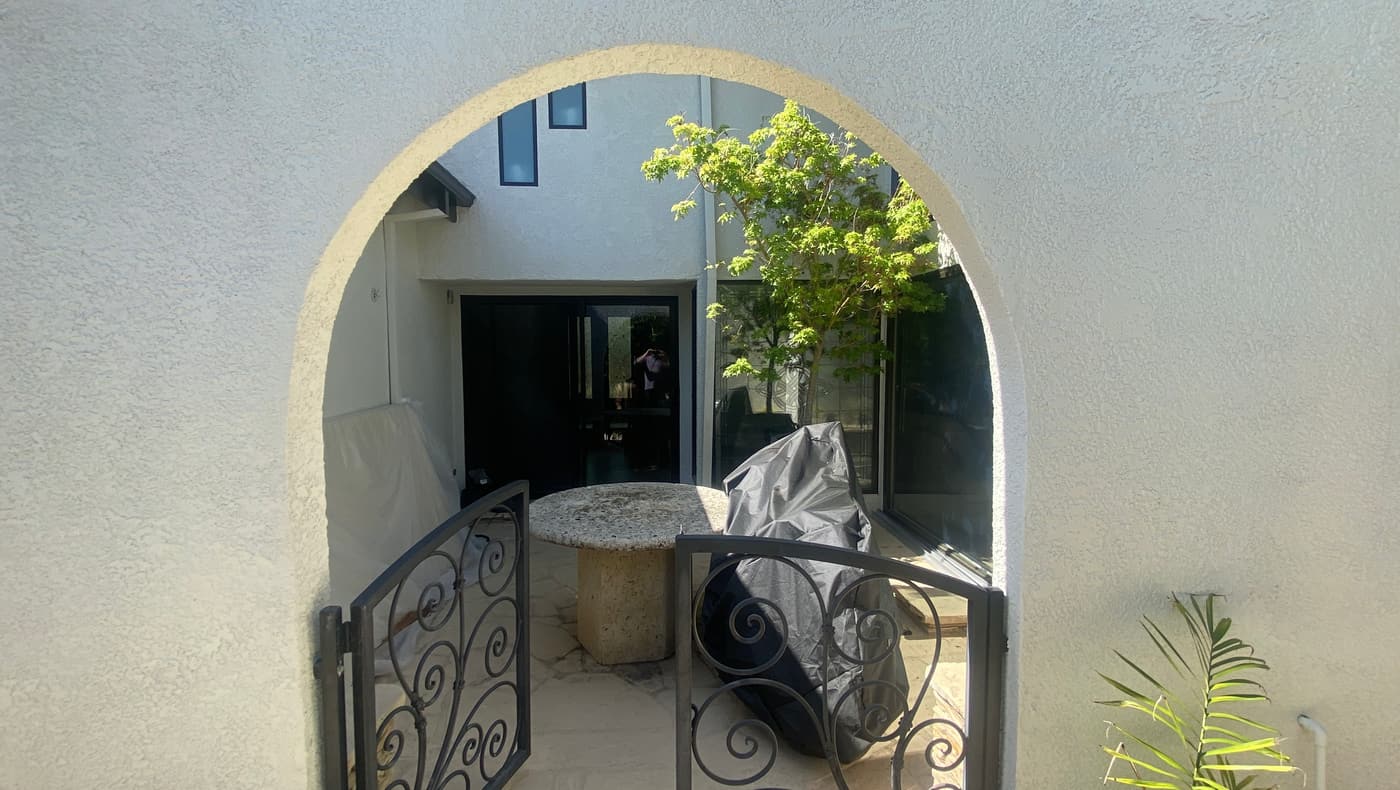 Before: Black Pebble Courtyard as we found it
A spa gets used when it is close to the door and lines up with something worth looking at. On Black Pebble Courtyard the spa is centered on the existing window, so the water lines up with the view from inside.
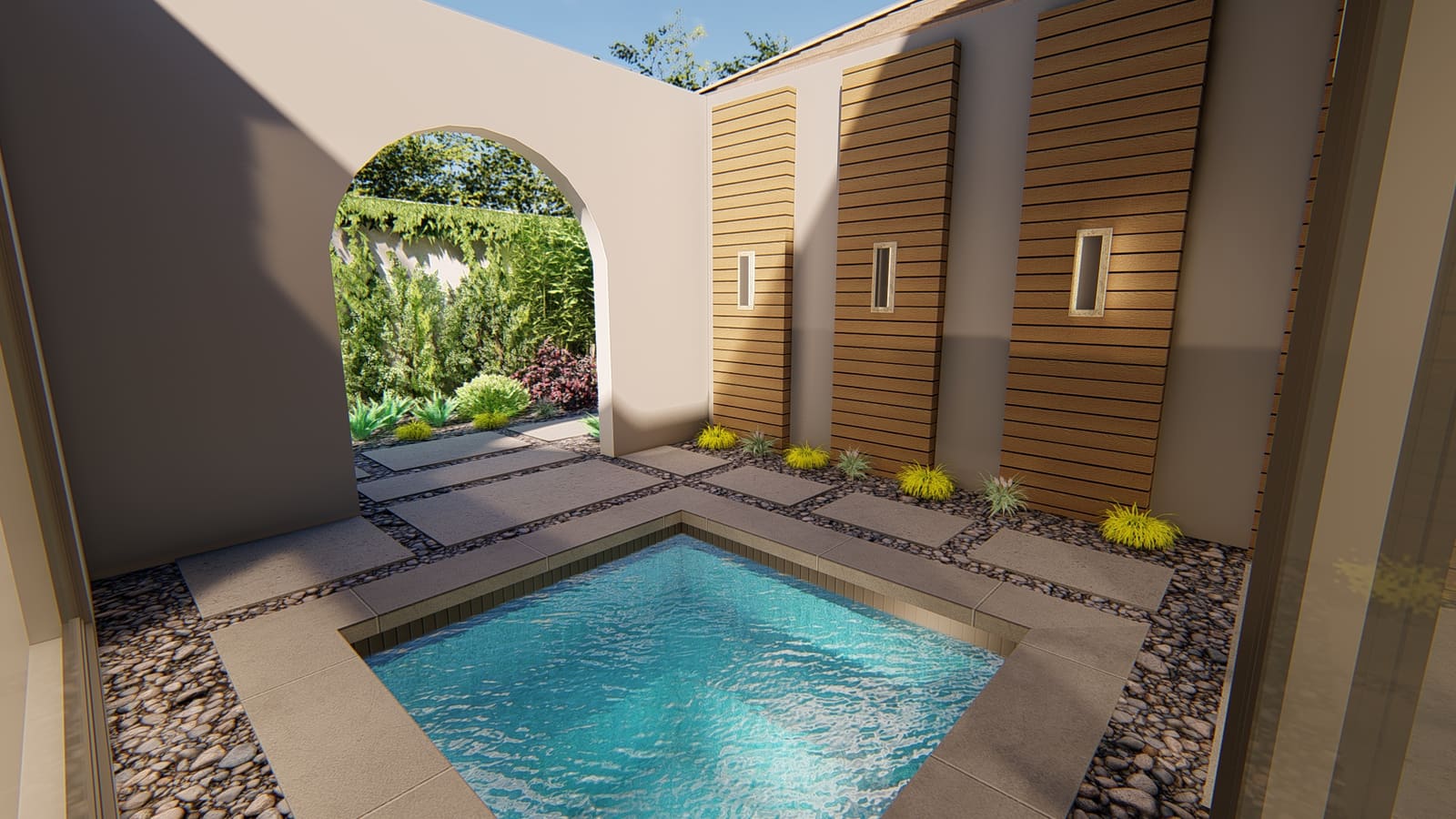 The rendering for the same courtyard
The heater, pump, gas line and electrical are sized and placed in the design, with the equipment where it is quiet and easy to service.
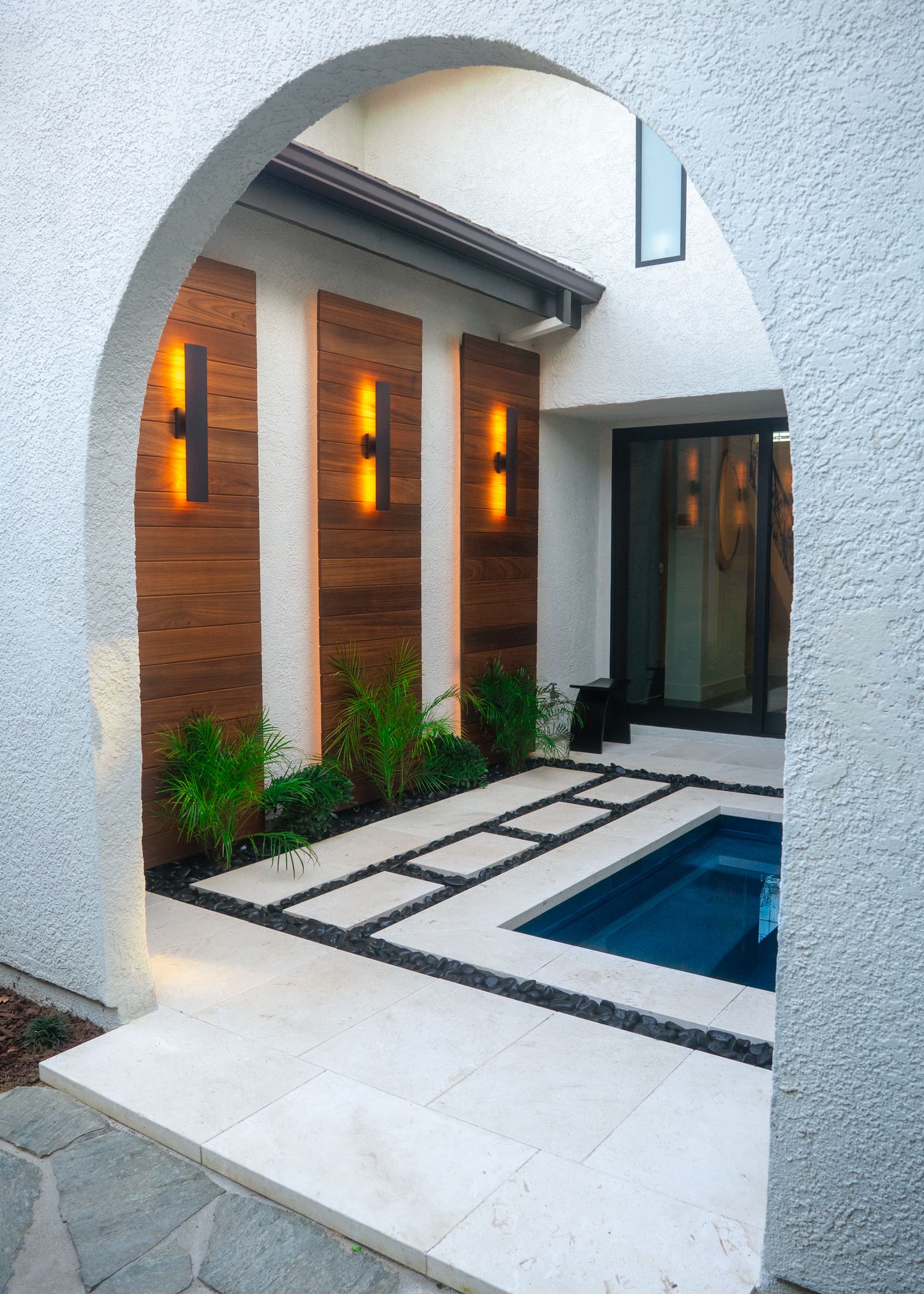 Finished: Black Pebble Courtyard
The shell, tile, coping, paving and planting go in as one project, so the spa looks like it was always there.
Things worth knowing before a first consultation.
A raised spa gives the pool a built edge, a wall to sit on and the sound of a spillway. A flush spa keeps the sightlines open and reads quieter. On a sloped yard a raised spa often comes straight out of the grade.
Seats at different depths, a place to lie back and a step you can sit on matter more to how often a spa gets used than the number of jets.
A gas heater brings a spa up to temperature fastest; a heat pump costs less to run but heats more slowly. A good cover and automation you can start from your phone do the most for the bill.
A spa that shares the pool's pump, filter and heater costs less to build and run. A standalone spa needs its own, which is why it costs more than the same spa attached to a pool.
A spa needs the same barrier as a pool, a lockable cover when it is not in use and compliant drain covers. We design those in rather than adding them at the end.
A portable hot tub needs a level, reinforced pad, a dedicated 240-volt circuit and a way to get it into the yard. Planned with the yard, it stops looking like an appliance on the patio.
No quote written off a photograph can account for what your property is like.
Access, engineering, permits, finishes and scope vary a lot from one property to the next, so the investment and the schedule for your project are set once we have seen the site and the design is settled.
Tell us about the property and what you want the space to do. We will walk through the design, site and permitting factors likely to shape it.
They completely remodeled our pool, added a hot tub, and handled all the lighting and landscaping. Our project supervisor, Juan, demonstrated great communication and meticulous attention to detail, taking extra care to ensure that every aspect was safe for our kids and our puppy. This is clearly a company that takes genuine pride in their work.
We are thrilled with our new backyard. Our pool, spa, and firepit feel like a resort, and the work was professional, clean, on time, and priced well. The entire POL team made the construction process easy and manageable, keeping us informed every step of the way. We couldn't have asked for a better experience.
The pool, spa, and patio renovation turned out beautifully, and the custom waterslide became a favorite feature for the family. Our kids absolutely love it, and it's become the gathering spot for our entire neighborhood. The quality of the work and attention to creating a family-friendly space was exceptional.
Adding a built-in spa to a new concrete pool typically adds about $15,000 to $30,000 in Los Angeles, and more for a raised spa clad in stone or tile with a spillway. Adding one to an existing pool usually costs more, because the shell, plumbing and equipment have to be reworked. These are typical Los Angeles market ranges, not a quote, and pricing varies from project to project.
For most pool owners, yes: a built-in spa shares the pool's equipment, costs less to run than a separate hot tub and lasts as long as the pool. A portable hot tub is the better choice when there is no pool, the budget is tight or you want to take it with you when you move.
Published 2026 guides put a portable hot tub at about $3,000 to $12,000 installed, including a dedicated 240-volt circuit, which on its own usually runs about $500 to $2,500. A level pad and delivery access add to that. Pricing varies from project to project.
Yes. A standalone in-ground spa works well in courtyards and smaller yards. On Black Pebble Courtyard, a six-by-six-and-a-half-foot spa sits centered on the window so the water lines up with the view from inside. It needs its own heater and pump, so it costs more than the same spa attached to a pool.
Heating is most of it. A spa that shares a pool's equipment and is heated only when you use it, with a good cover and automation, costs much less to run than a hot tub kept hot all the time; published estimates put a portable hot tub at roughly $40 to $110 a month including chemicals.
Raise it when you want a built edge, a spillway and a wall to sit on; keep it flush when you want open sightlines and a quieter look. On a sloped yard the raised spa is often the natural answer.
A built-in spa is permitted like a pool, with building, plumbing, electrical and gas permits as the work requires. A portable hot tub usually needs an electrical permit for its dedicated circuit. We handle the permits our work needs.
Schedule a consultation with one of our designers to discuss your project goals and explore what's possible on your property.
What happens next: we set up a visit, measure the property and talk through what you want the space to do. Then you get a design to look at before you commit to anything.