
What moves the cost
- What the soils report calls for
- Piers, caissons and retaining walls
- Soil export and access to the site
- A vanishing edge, its catch basin and its pump
- The spa, the deck and the terraces
- Engineering, plan check and hillside review
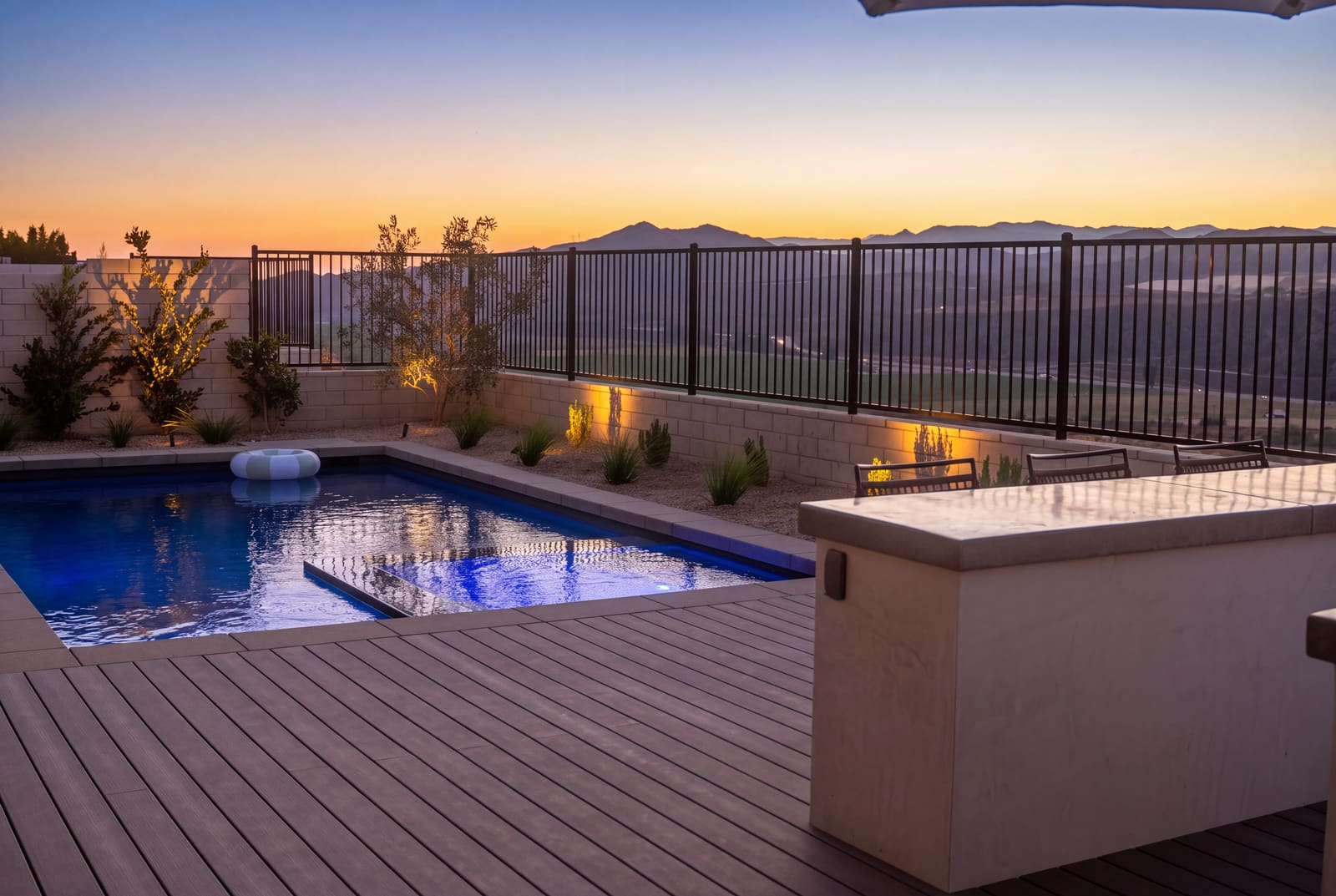
Infinity-Edge & Hillside Pools
A slope is where a pool gets its view, and where it gets its engineering. We design the pool, the structure under it and the terraces around it as one set of drawings, take it through soils, structural and hillside review, and build it with our own crews.
The short answer
A hillside pool needs a soils (geotechnical) report, a structure engineered to it, usually piers or caissons and retaining, and a permit path that includes hillside grading review. In the City of Los Angeles, a lot in the Hillside Grading Area needs a grading pre-inspection, and the soils or geology report has to be approved by LADBS before the pool permit is issued.
Cost follows the slope. Infinity-edge and hillside pools usually land at the top of the $120,000 to $250,000 range for high-end custom pools with spas in Los Angeles, and complex hillside builds can reach $400,000 or more. These are typical Los Angeles market ranges, not a quote, and pricing varies from project to project.
Costs
On a flat lot the pool is most of the cost. On a hillside, the parts you never see after it is built often cost as much as the pool.
| Item | Typical LA range | Why it matters |
|---|---|---|
| Soils or geotechnical report | About $1,500 to $5,000 | Sets the foundation: how deep, how many piers and what retaining the pool needs |
| Hillside engineering and design | About $5,000 to $15,000 or more | Structural drawings for the shell, piers, retaining walls and any vanishing edge |
| Piers, caissons and retaining | Set by the soils report and the slope | Often the largest line on a steep lot, and the part nobody sees afterward |
| Grading, soil export and access | Set by the site | Hauling soil off a hillside, and getting equipment and concrete up or down to it |
| Vanishing edge | Added to the pool | A dead-level weir, a catch basin, a pump for the edge and more water to manage |
| The whole pool | $120,000 to $250,000; complex hillside builds $400,000 or more | High-end custom pools with spas in Los Angeles |
These are typical Los Angeles market ranges, not a quote, and pricing varies from project to project. Report and engineering figures are typical for hillside lots in the Los Angeles area; your soils engineer and structural engineer price their own work.
Built on a slope
Real projects on sloped and hillside lots in Greater Los Angeles. Each card opens the full project.
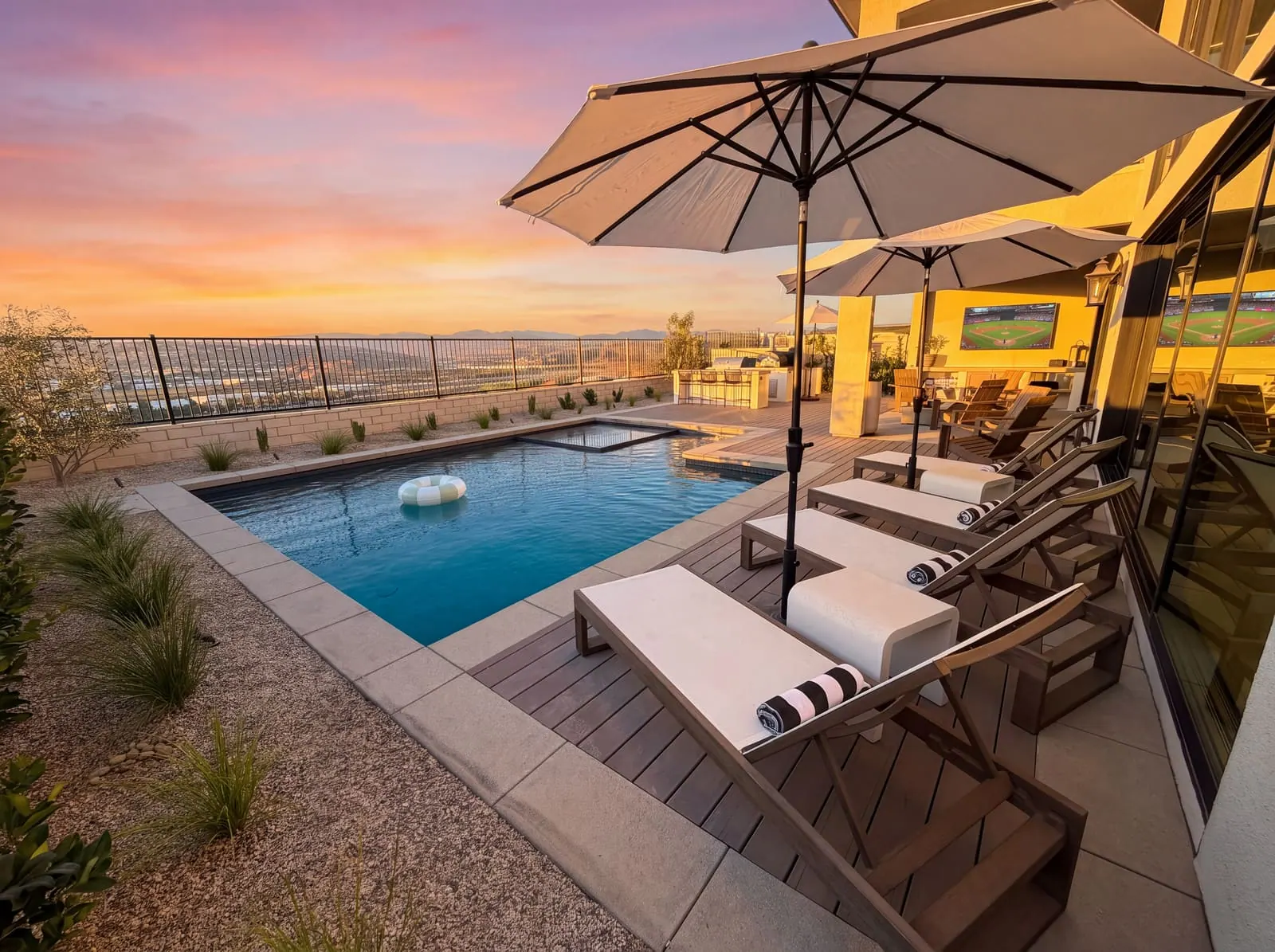 01 Above the valley Hilltop Horizon Sanctuary, Santa Clarita: a hillside estate with a geometric pool and raised spa and a sunset-facing deck. See the project
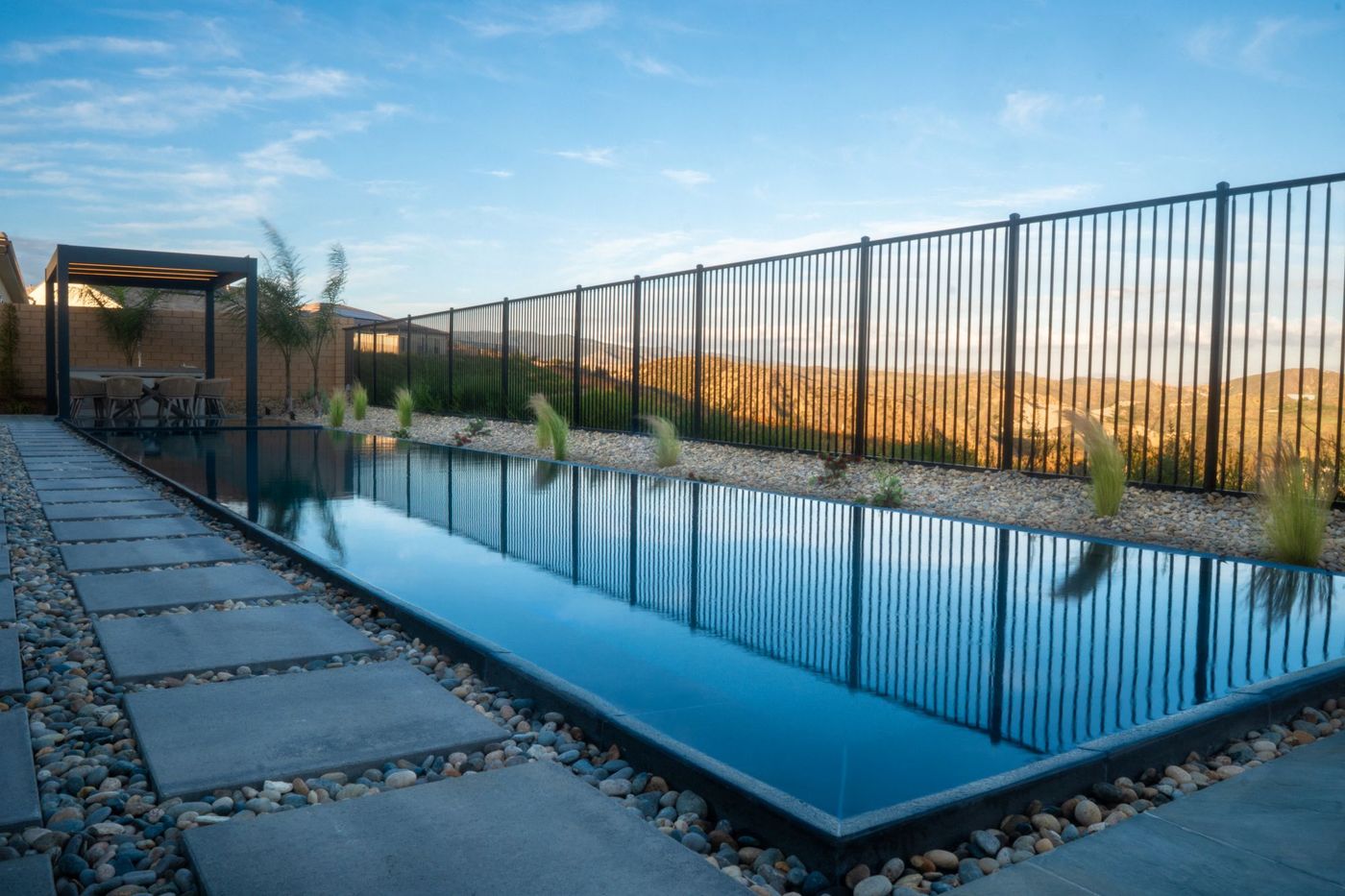 02 A zero edge on a slope Zero-Edge Chic: a bare sloped yard rebuilt around a reflecting pool with the water level to the paving. See the project
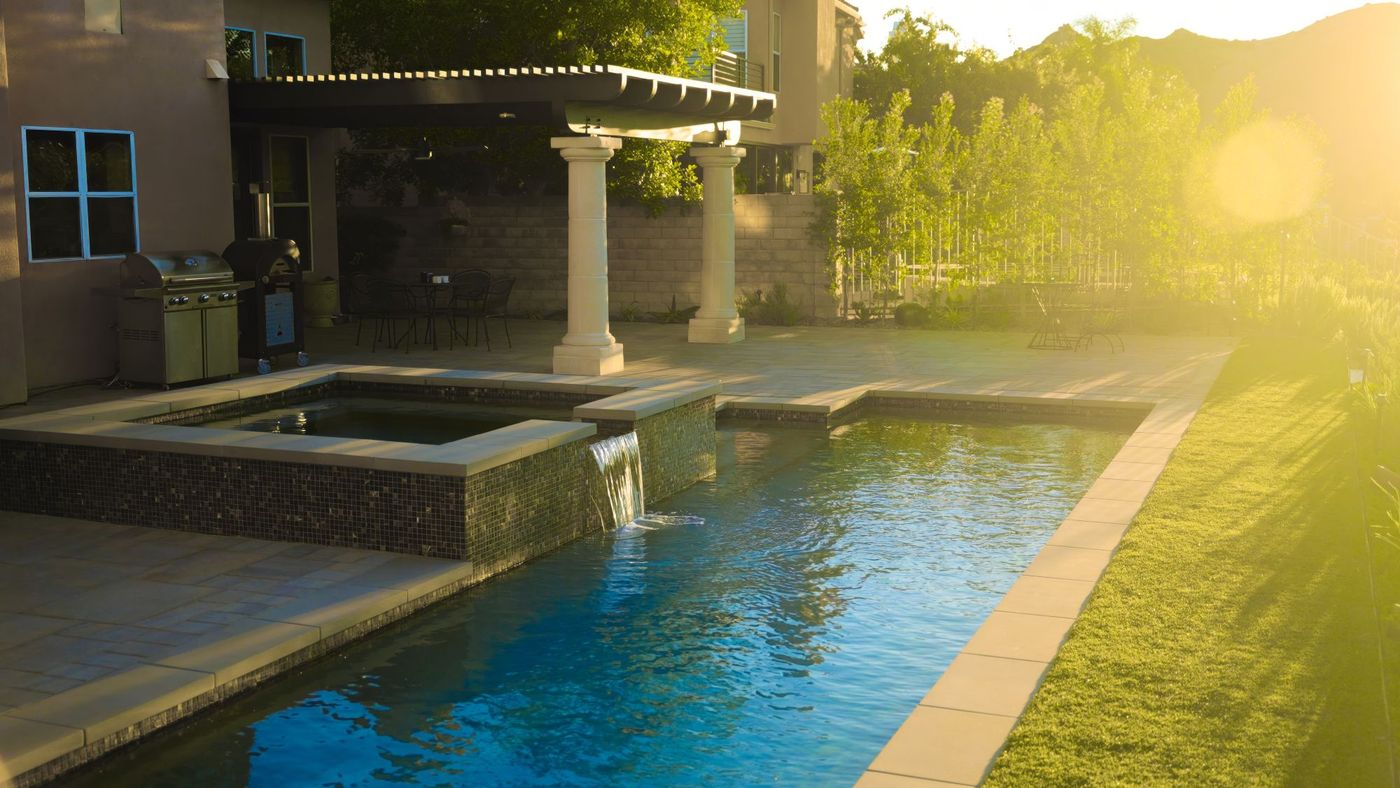 03 Terraced to the fall Luxury Lap Pool: a sloped yard terraced into a lap pool with a raised spa and a spillway, laid out to the fall of the land to keep the retaining down. See the project
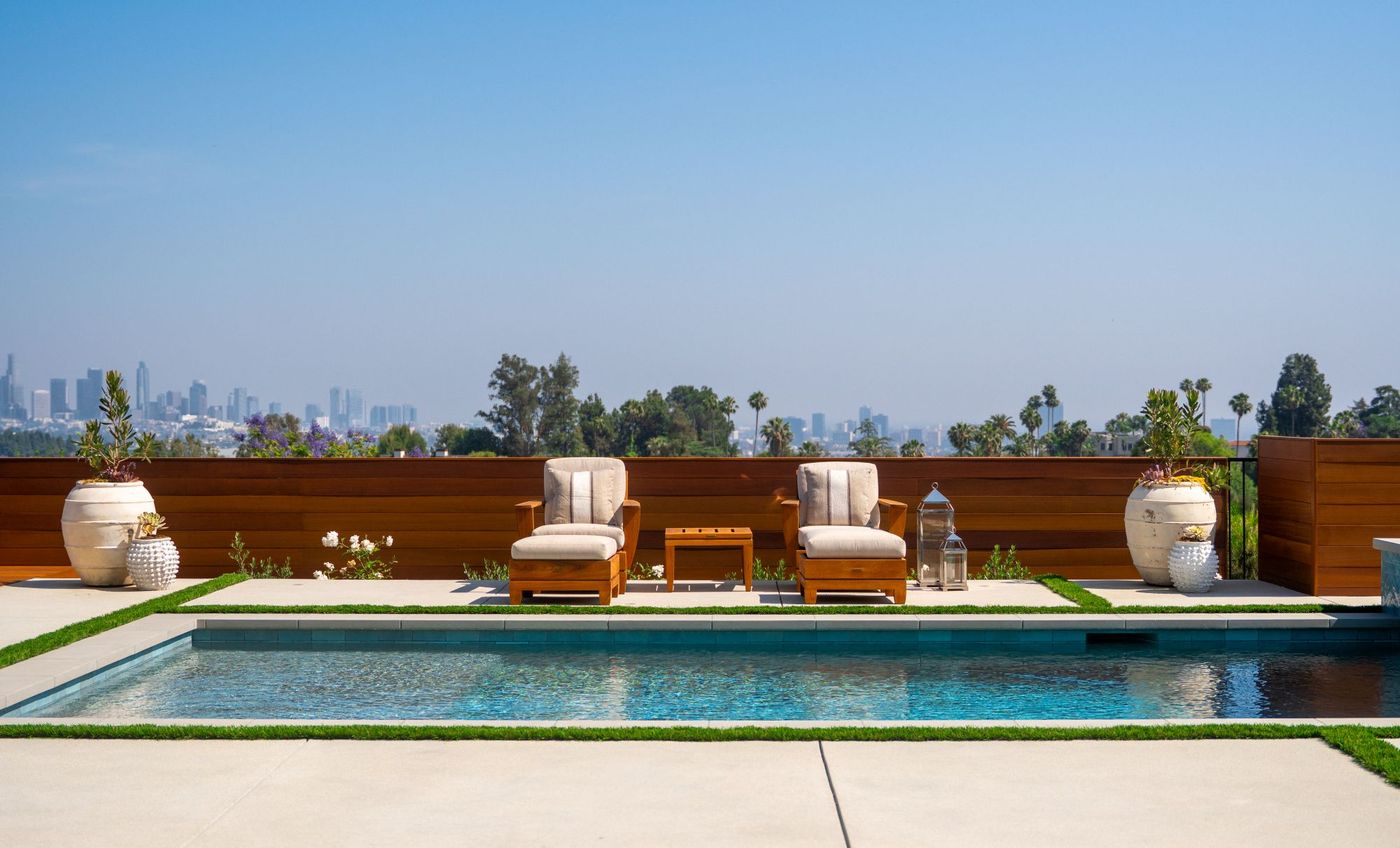 04 One level, one view Skyline Sanctuary: a steep hillside lot terraced into one level pool deck with a raised spa and the Los Angeles skyline in front of it. See the project
 Before: Luxury Lap Pool as we found it
Spot elevations, the property line, the utilities and the slope go on a base plan, and a geotechnical engineer reports on the soil. That report decides what the pool can sit on.
 The 3D design for the same yard
The pool, the spa, the deck and the retaining are drawn together, so the structure that holds the pool also makes the level ground you use.
Finished: Luxury Lap Pool Structural drawings for the shell, piers and walls go through plan check and hillside review, then our crews build it, with inspections at each stage.
Things worth knowing before a first consultation.
A vanishing edge only works where there is something beyond it: a drop, a view or open sky. Facing a fence, a raised or flush edge does the same job for much less.
The effect works from where you look at it most, usually the house or the main terrace. We set the edge from those sightlines, not from the pool.
Water spilling over the edge collects in a basin below and is pumped back. The basin has to hold what swimmers displace, and the weir has to be dead level or the sheet of water breaks up.
Water running off the slope above has to go around the pool, not under it. Drainage is designed with the structure, not added after.
Much of the Los Angeles hillside sits in a Very High Fire Hazard Severity Zone, with brush clearance rules around the house. We choose the planting and materials around the pool with that in mind.
Getting excavators, steel and concrete up a hillside drive or down a slope takes planning, smaller equipment and often a concrete pump, and it belongs in the budget from the start.
No quote written off a photograph can account for what your property is like.
Access, engineering, permits, finishes and scope vary a lot from one property to the next, so the investment and the schedule for your project are set once we have seen the site and the design is settled.
Tell us about the property and what you want the space to do. We will walk through the design, site and permitting factors likely to shape it.
I would definitely recommend Pacific Outdoor Living. We had a great experience. They helped us through all the permitting and difficulties of having a hillside home and following LA pool requirements.
Pacific Outdoor Living gets a 5 star review because of their outstanding customer service and job performance. We recently renovated our backyard with an in-ground pool and outdoor space. The job took no more than two and a half months to complete. Samantha the designer, worked with us to sketch exactly what we wanted and provided us with a 3D model of how our backyard would look like. It came out exactly what was sketched.
Pacific Outdoor Living did an incredible job transforming both our front and back yards. They turned our rarely used backyard into a stunning and functional space, incorporating a new pool, pavers, and artificial turf. We met with at least four other pool builders, but POL stood out for their ability to handle every aspect of the project seamlessly, from design to construction to landscaping.
An infinity-edge pool in Los Angeles usually lands at the top of the $120,000 to $250,000 range for high-end custom pools with spas, and a complex hillside build can reach $400,000 or more. The edge adds a dead-level weir, a catch basin and a pump, and the slope adds engineering, piers and retaining. These are typical Los Angeles market ranges, not a quote, and pricing varies from project to project.
Yes, with a soils report, engineering and the right permits. In the City of Los Angeles, a lot in the Hillside Grading Area needs a grading pre-inspection, and the soils or geology report has to be approved by LADBS before the pool permit is issued. Other cities have their own building departments and hillside rules.
On a hillside lot, almost always. In the City of Los Angeles, hillside pools go through LADBS grading review, and the soils or geology report has to be approved before the permit is issued. On a flat lot the city can still ask for one, and we recommend one wherever the soil or the slope is in question.
One side of the pool is built as a dead-level weir set slightly lower than the others, so water flows over it in an unbroken sheet into a catch basin below, and a pump sends it back to the pool. Seen from the house, the far edge seems to disappear into the view.
An infinity edge spills over one side, usually the side facing the view. A zero edge, also called a perimeter-overflow pool, spills over every side, so the water sits level with the deck like a sheet of glass. Both need a catch basin and very careful leveling.
A little. More water is moving, there is a catch basin to keep clean, more evaporation and a pump to run for the edge, so the chemistry and the water level need closer attention. Automation and an automatic fill take most of that off your hands.
Longer than a flat-lot pool, mostly before construction starts: the soils report, structural engineering and hillside plan check come first, then pier drilling and its inspections. Once the structure is in, the pool is built much like any concrete pool.
Schedule a consultation with one of our designers to discuss your project goals and explore what's possible on your property.
What happens next: we set up a visit, measure the property and talk through what you want the space to do. Then you get a design to look at before you commit to anything.