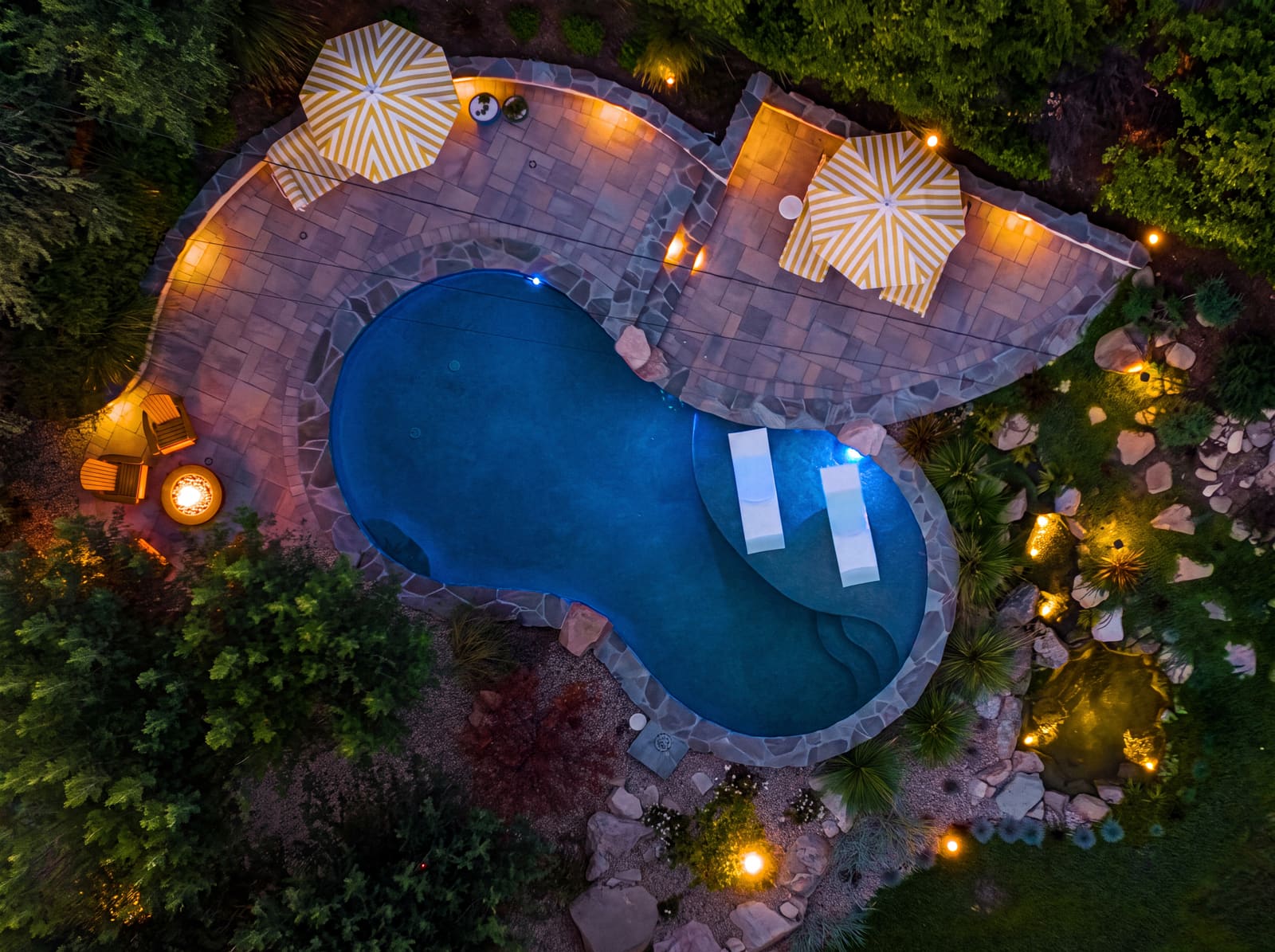
Aerial view at night of a freeform pool with a sun shelf, ringed with boulders, umbrellas and lit paths

Fiberglass vs. Concrete

Fiberglass vs. Concrete Pools in Los Angeles

Both make a good pool. On most Los Angeles lots the choice comes down to three things: how the shell gets into your yard, the shape you want, and what you expect to spend over the next twenty years rather than this one.

The short answer

Which is better, a fiberglass or a concrete pool?

Fiberglass is the better choice when a stock shape suits you, you want the shortest build and the least upkeep, and a truck and crane can reach your yard. Concrete is the better choice when you want a custom shape or size, a raised spa, a vanishing edge or a beach entry, or when the lot is a hillside or the only way in is a side gate.

Installed costs overlap more than most people expect. Published 2026 guides put a typical fiberglass pool at about $55,000 to $110,000 installed and a concrete pool at about $65,000 to $120,000 and up, and high-end custom concrete pools with spas in Los Angeles commonly run $120,000 to $250,000. These are typical Los Angeles market ranges, not a quote, and pricing varies from project to project.

Widest fiberglass shell
About 16 feet, set by road transport
Concrete resurfacing
About every 10 to 15 years for plaster
Fiberglass finish
The gelcoat, with no plaster to replace
Hillsides and side-gate lots
Usually concrete

Side by side

Fiberglass and concrete pools compared

The differences that actually decide it on a Los Angeles lot, in one place.

FiberglassConcrete (shotcrete or gunite)
Installed costAbout $55,000 to $110,000About $65,000 to $120,000 and up; high-end custom LA pools with spas commonly $120,000 to $250,000
Shape and sizeFixed by the manufacturer's molds; widths top out around 16 feetAny shape, size and depth the site and the engineering allow
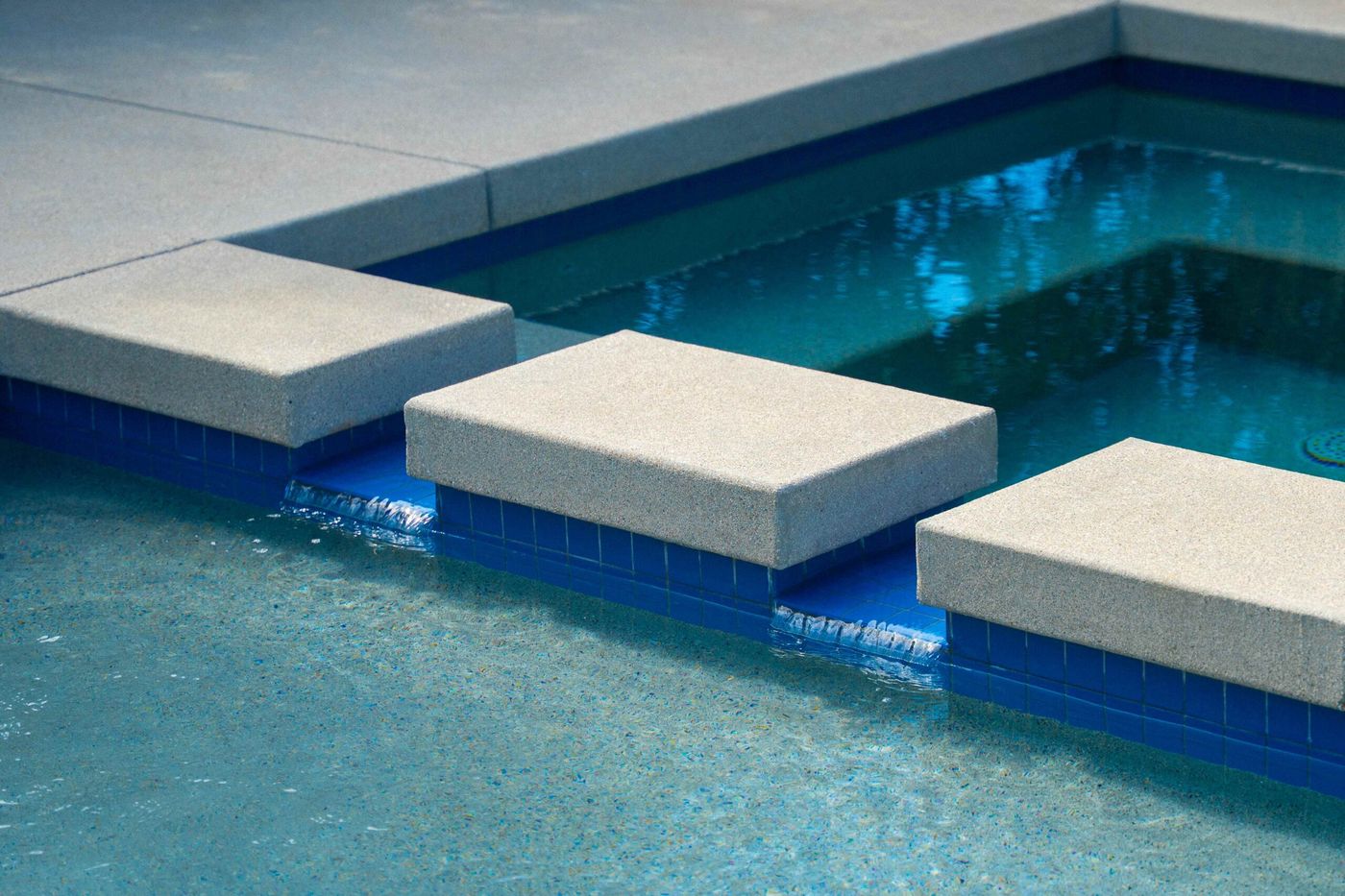
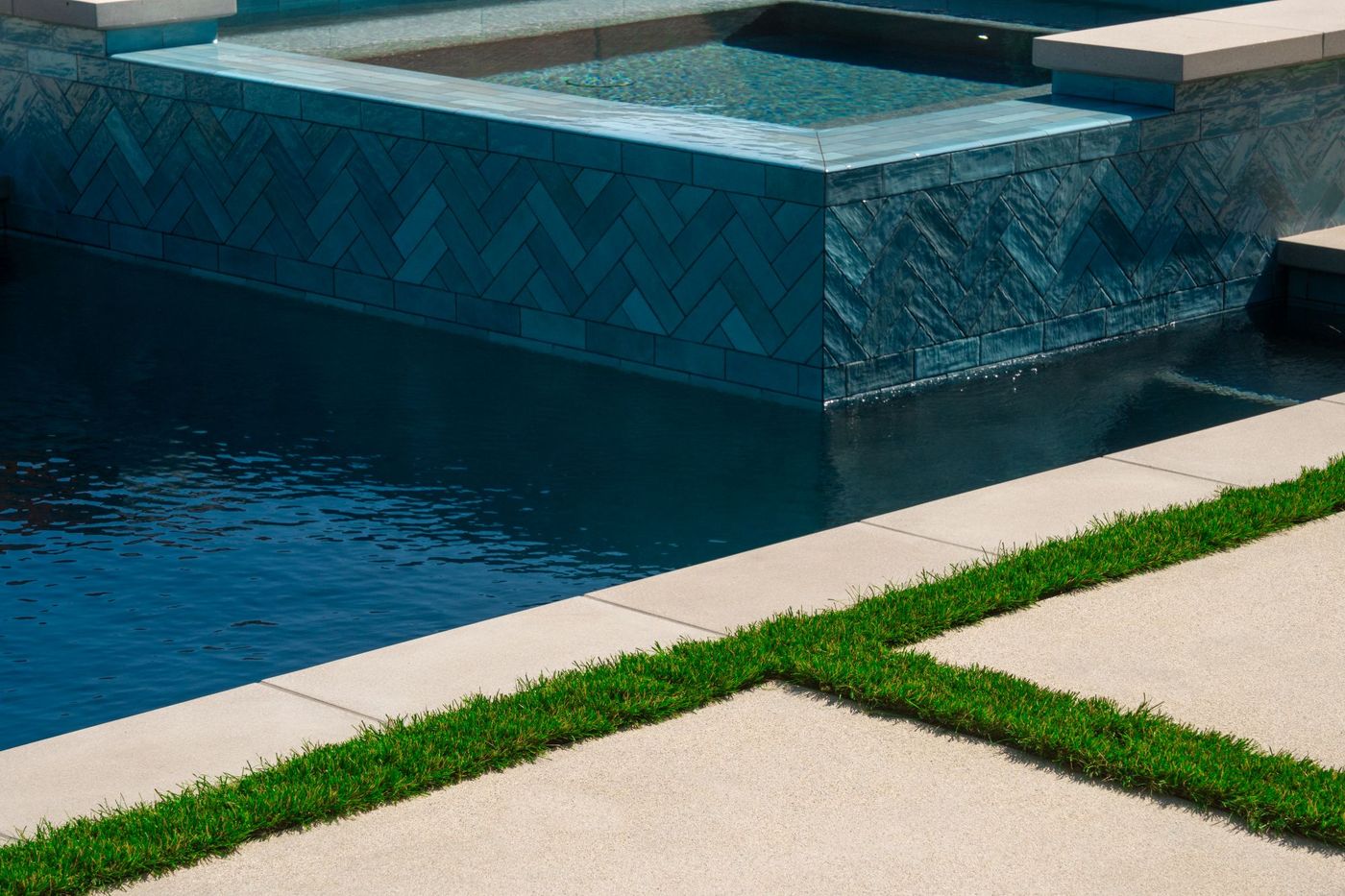
Spa, vanishing edge, beach entryOnly what the mold includes, or a matching fiberglass spaBuilt into the same structure
Getting it to the yardOne-piece shell on a truck, lifted in by crane over the house or through a wide openingSteel, then concrete pumped or sprayed through a hose, so it reaches hillsides and side-gate lots
SurfaceSmooth, nonporous gelcoat that gives algae less to hold ontoPlaster, quartz or pebble, in the color and texture you choose
RefinishingNo plaster to replacePlaster about every 10 to 15 years, at roughly $8,000 to $25,000 in Los Angeles
Build timeUsually shorter: the shell is made in a factoryLonger: steel, shotcrete, curing, tile, coping and finish all happen on site
Hillside lotsRarely practical: crane access and a fixed shape fight the slopeStandard practice, engineered to the soils report with piers or retaining

Costs are typical market ranges from published 2026 cost guides and Los Angeles pricing, not a quote, and pricing varies from project to project.
Key decisions

Things worth knowing before a first consultation.

  • Start with access

    A fiberglass shell arrives in one piece on a truck and is lifted in by crane. Power lines, trees, a narrow street or no clear path over the house can rule it out before anything else is discussed. Concrete arrives as steel and a hose and gets to almost any yard.

  • Then the shape

    If a stock shape suits the yard and how you swim, fiberglass is worth pricing. If you want the pool drawn to the yard, a raised spa built into it or an edge that disappears, it has to be concrete.

  • Think in twenty years

    A concrete pool needs a new finish every 10 to 15 years, at roughly $8,000 to $25,000 in Los Angeles. Fiberglass skips that. Over a long ownership the difference in upkeep matters as much as the difference in build price.

  • How the water feels

    Fiberglass gelcoat is smooth and nonporous, which usually means less brushing and fewer chemicals. Plaster and pebble are textured, and the finish you choose changes the color of the water.

  • Saltwater

    Salt systems work with both, but salt is harder on plaster, natural stone coping and some metal fittings, so choose the finish and the coping with it in mind.

  • Hillside lots

    On a slope, concrete is the practical answer: the shell is engineered to the soils report, with piers or retaining where the slope needs them.

Investment and timeline

No quote written off a photograph can account for what your property is like.

What moves the cost

  • Size, depth and shape
  • For fiberglass: the shell, freight and the crane
  • For concrete: steel, shotcrete and the interior finish
  • A spa, water features and lighting
  • Excavation, soil export and site access
  • The deck, coping and the yard around the pool

What moves the schedule

  • Fiberglass: the shell lead time, and a delivery day with a crane and a clear street
  • Concrete: steel, shotcrete and curing before tile, coping and finish
  • Plan check and permits
  • Inspections at each stage of the build
  • The deck and the yard around the pool

Access, engineering, permits, finishes and scope vary a lot from one property to the next, so the investment and the schedule for your project are set once we have seen the site and the design is settled.

Tell us about the property and what you want the space to do. We will walk through the design, site and permitting factors likely to shape it.

What customers say

  • Pacific Outdoor Living did an incredible job transforming both our front and back yards. They turned our rarely used backyard into a stunning and functional space, incorporating a new pool, pavers, and artificial turf. We met with at least four other pool builders, but POL stood out for their ability to handle every aspect of the project seamlessly, from design to construction to landscaping.

    Menachem Fishkin Google review · 9 months ago Pool, pavers and artificial turf
  • Pacific Outdoor Living gets a 5 star review because of their outstanding customer service and job performance. We recently renovated our backyard with an in-ground pool and outdoor space. The job took no more than two and a half months to complete. Samantha the designer, worked with us to sketch exactly what we wanted and provided us with a 3D model of how our backyard would look like. It came out exactly what was sketched.

    Macky Goldscher Google review · a year ago In-ground pool and outdoor space
  • We had our entire backyard remodeled by Pacific Outdoor Living last year, and we couldn’t be happier with the results. As a mom of two little boys, I wanted a space that was both beautiful and functional for our family, and that’s exactly what we got. We removed everything, including the old pool, and built a brand-new pool, artificial grass, fire pit area, and a basketball court for my husband.

    Janice Chang Google review · a year ago Brand-new pool and full backyard remodel

Read all Pacific Outdoor Living reviews on Google

Frequently asked questions

Is a fiberglass pool cheaper than a concrete pool?

Usually a little, but by less than most people expect. Published 2026 cost guides put a typical installed fiberglass pool at about $55,000 to $110,000 and a concrete pool at about $65,000 to $120,000 and up, and a fiberglass pool also skips the $8,000 to $25,000 refinishing a concrete pool needs every 10 to 15 years. Pricing varies from project to project.
How big can a fiberglass pool be?

Most fiberglass shells are no wider than about 16 feet, because the shell has to travel by road in one piece, and lengths reach roughly 40 feet. A concrete pool has no such limit.

Can you put a fiberglass pool on a hillside lot in Los Angeles?

Sometimes, but it is rarely the practical choice. The one-piece shell needs crane access and an engineered, level base, and a hillside usually also needs piers or retaining. A concrete shell can be engineered to the slope and pumped in through a hose.

Infinity-edge and hillside pools

Which is faster to build, fiberglass or concrete?

Fiberglass, usually, because the shell is made in a factory and set in place once the hole is ready. Concrete takes longer because steel, shotcrete, curing, tile, coping and the finish all happen on site. Either way, permits and the yard around the pool often set the overall schedule.

Does a fiberglass pool need resurfacing?

Not the way a concrete pool does. The gelcoat is the finish, so there is no plaster to replace every 10 to 15 years, though it still needs balanced water to keep its color and surface.

Can a fiberglass pool have a spa or an infinity edge?

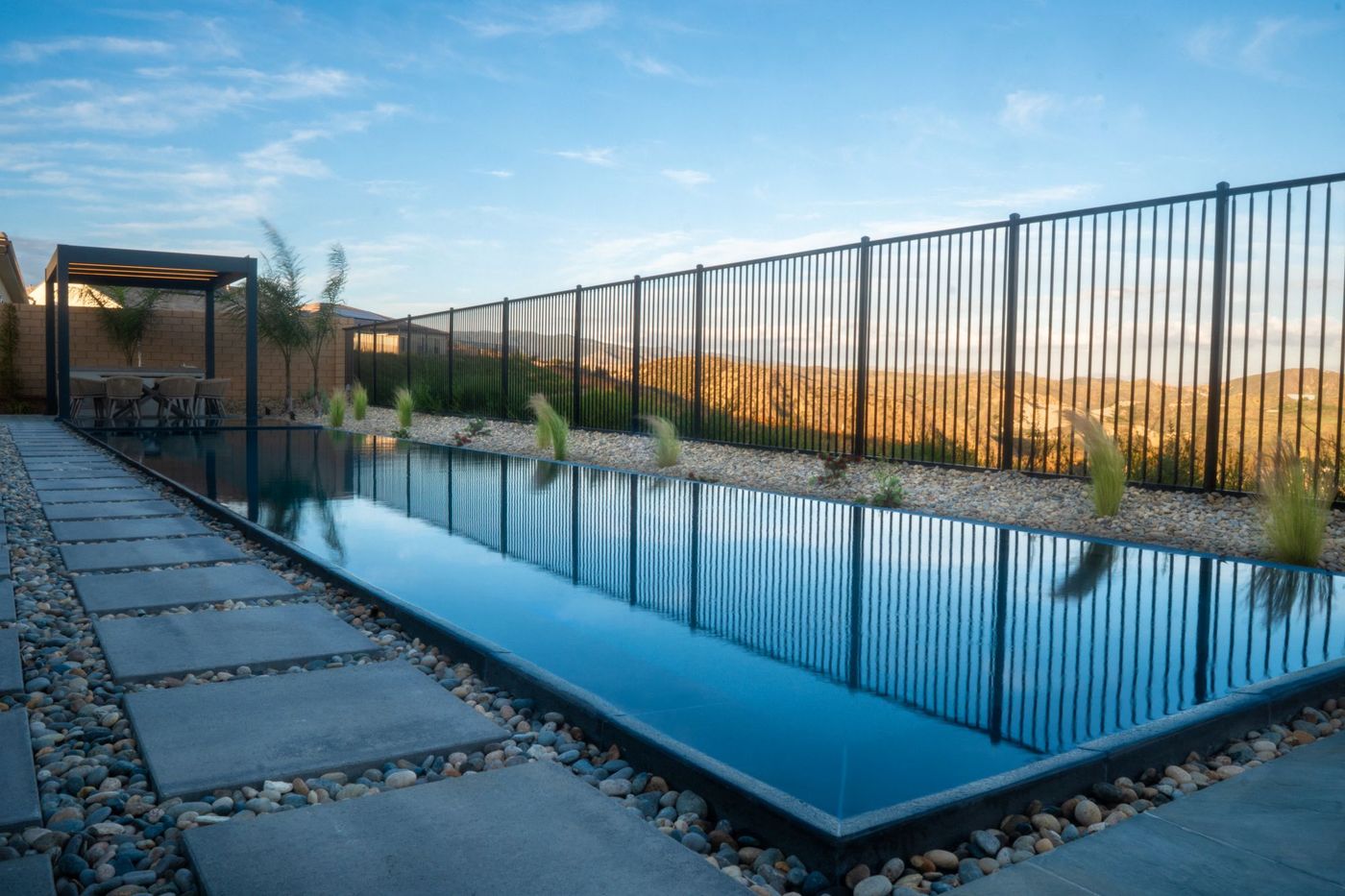
A fiberglass pool can have a matching fiberglass spa and whatever its mold includes, such as steps, benches or a tanning ledge. A raised spa built into the pool wall, a vanishing edge or a custom beach entry is concrete work.

Spas and hot tubs

Which do you recommend?

Whichever fits the yard. We start with access, the shape you want and how long you plan to own the pool, and tell you plainly which makes sense. On hillside and tight-access Los Angeles lots that is usually concrete.

Ready to get started?

Schedule a consultation with one of our designers to discuss your project goals and explore what's possible on your property.

What happens next: we set up a visit, measure the property and talk through what you want the space to do. Then you get a design to look at before you commit to anything.