
What shapes the investment
- Number and type of fixtures
- LED versus other lighting technology
- Smart controls and zoning
- Wiring and transformer requirements
- Whether lighting is added to existing hardscape or planned with new construction
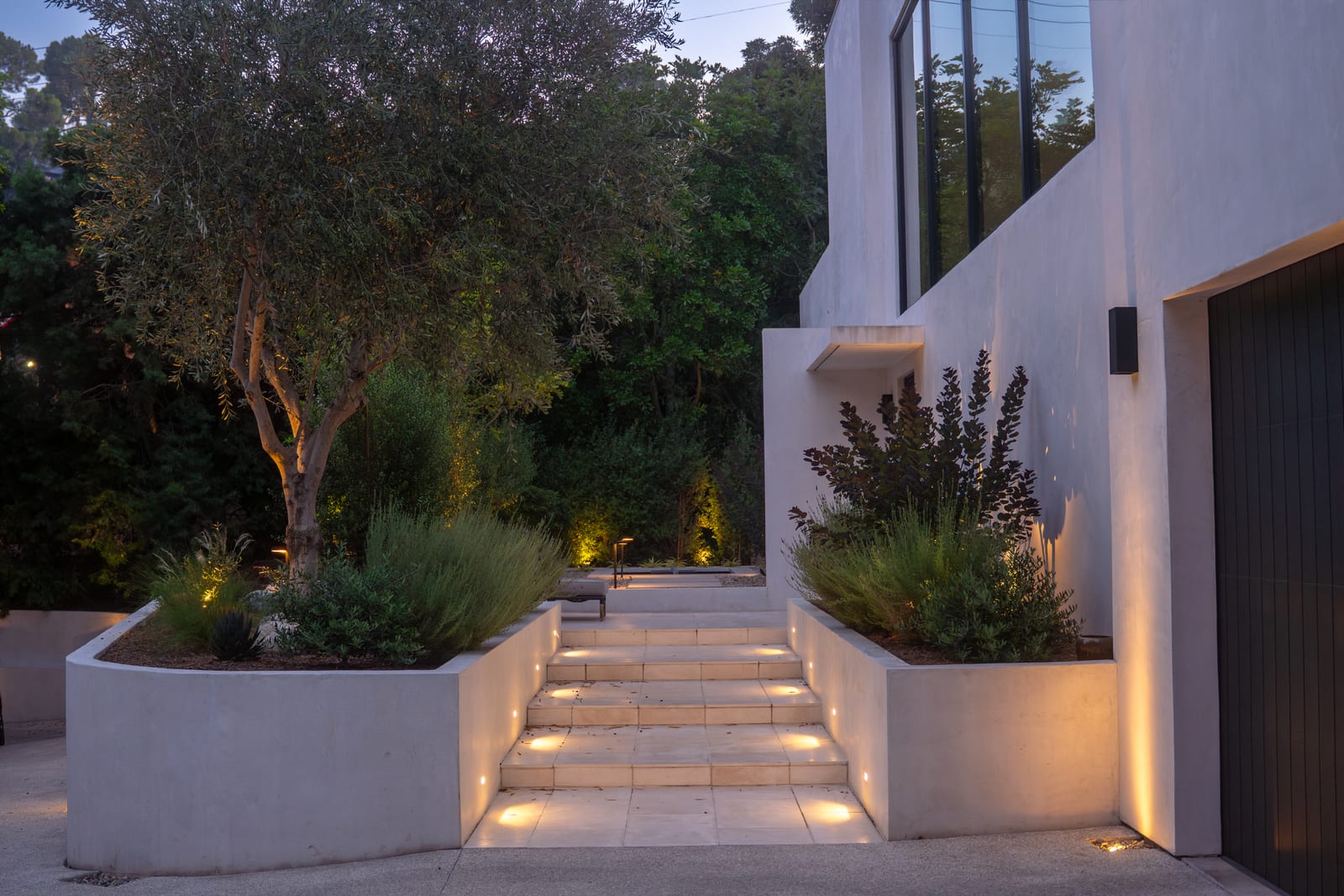
Outdoor Lighting
Outdoor lighting installation and landscape lighting design for San Luis Obispo homes, from downtown bungalows to hillside lots looking out at the Morros. The city’s night-sky standards call for shielded, downward-aimed fixtures and very little light past the property line, so we design to those rules from the first sketch, then install every fixture, transformer, and control with our own crews.
Start here
Good lighting starts with how you use the property after dark. Pick what you’re after below, and the fixtures and placement mostly follow from it. The projects pictured come from our wider portfolio, and every San Luis Obispo plan is drawn to the city’s night-sky standards before a single fixture is chosen.
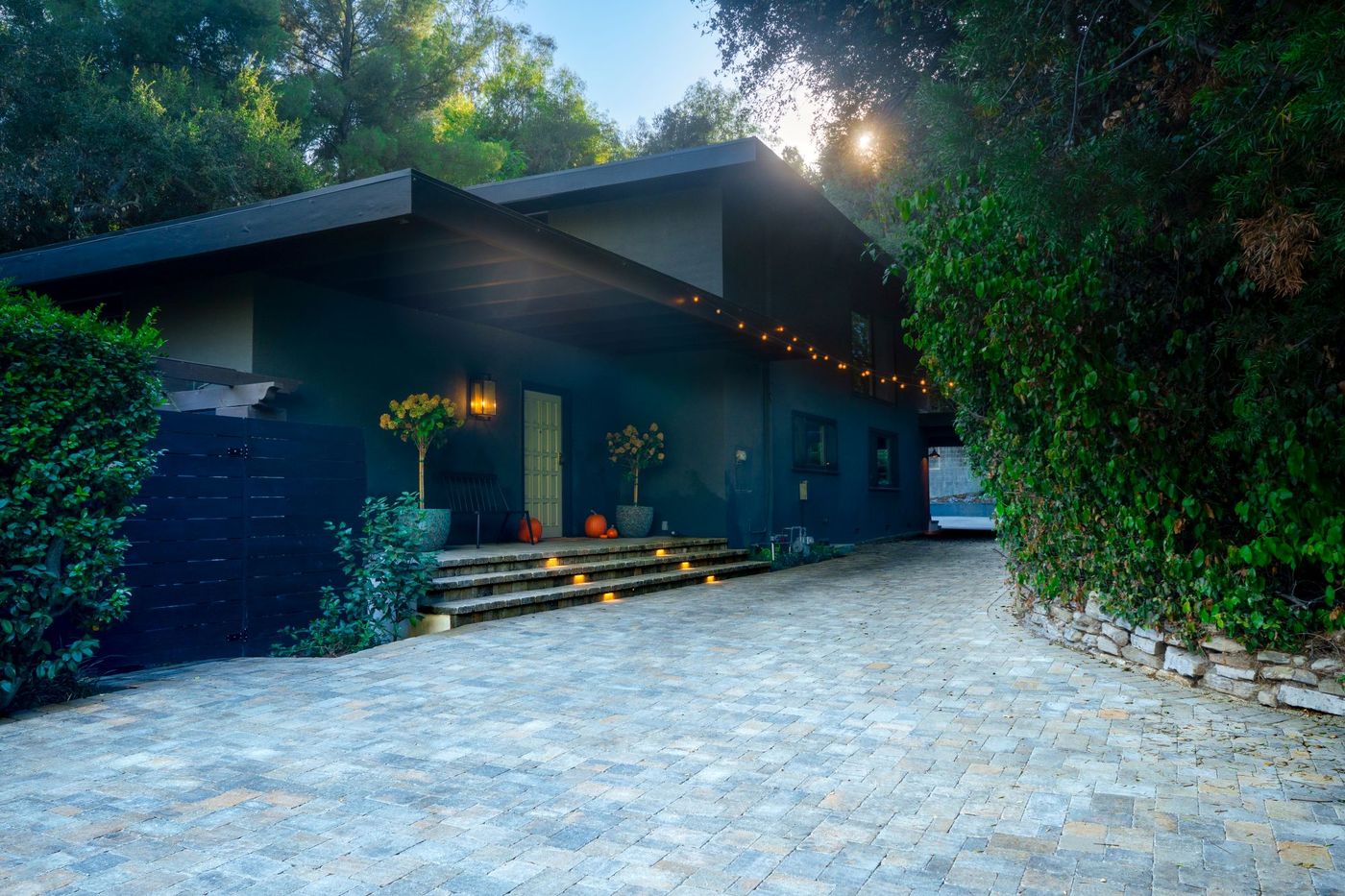 01 A safer, more secure property Shielded step and path lights make entries, driveways, and side yards safe to walk, without the glare the city’s night-sky rules are written to prevent. See the driveway project
 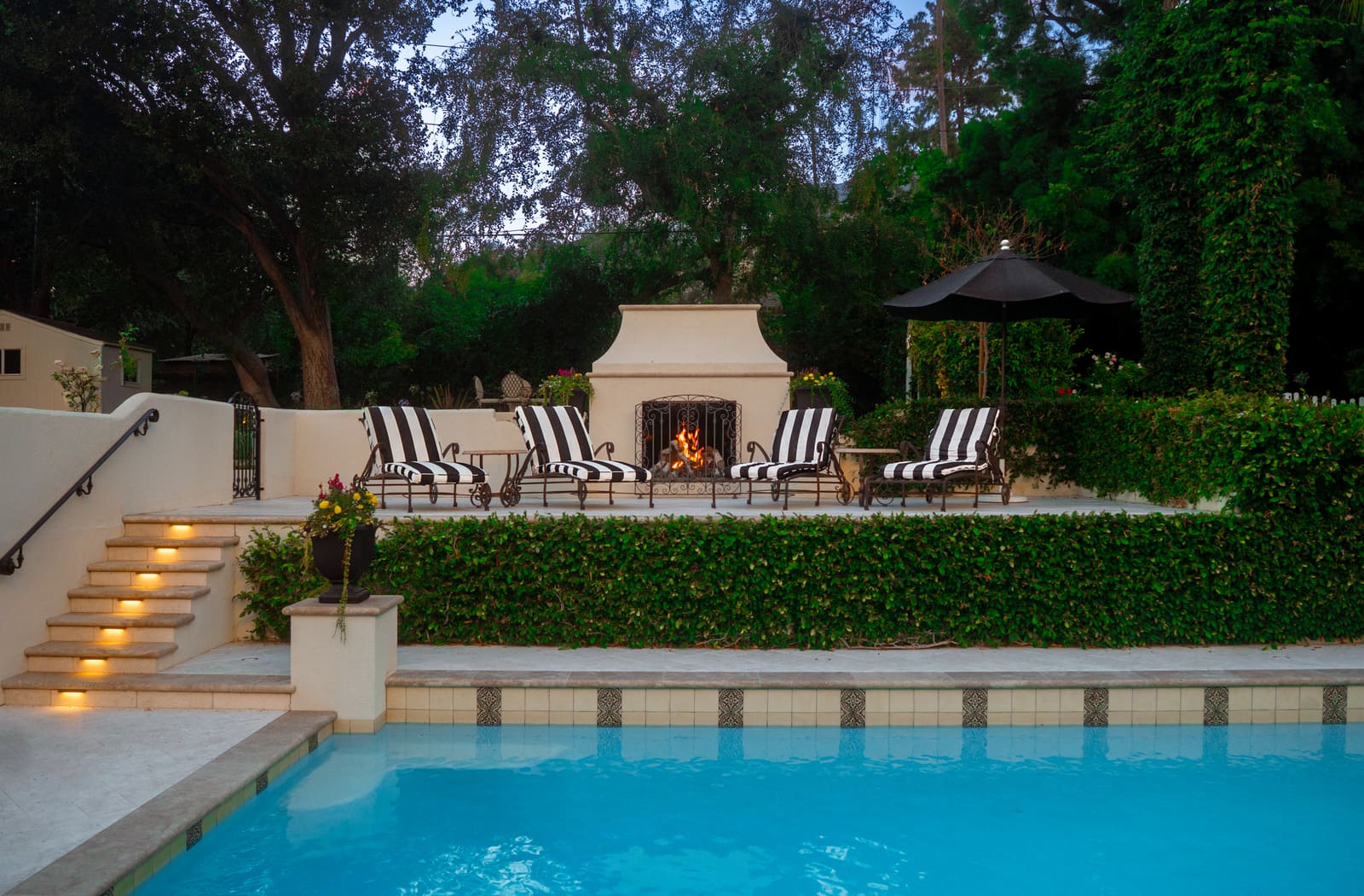 02 A backyard built for evening entertaining A town that fills Higuera Street every Thursday night knows how to live outdoors after dark. Warm, dimmable patio lighting does the same for your own gatherings. See the fireplace terrace
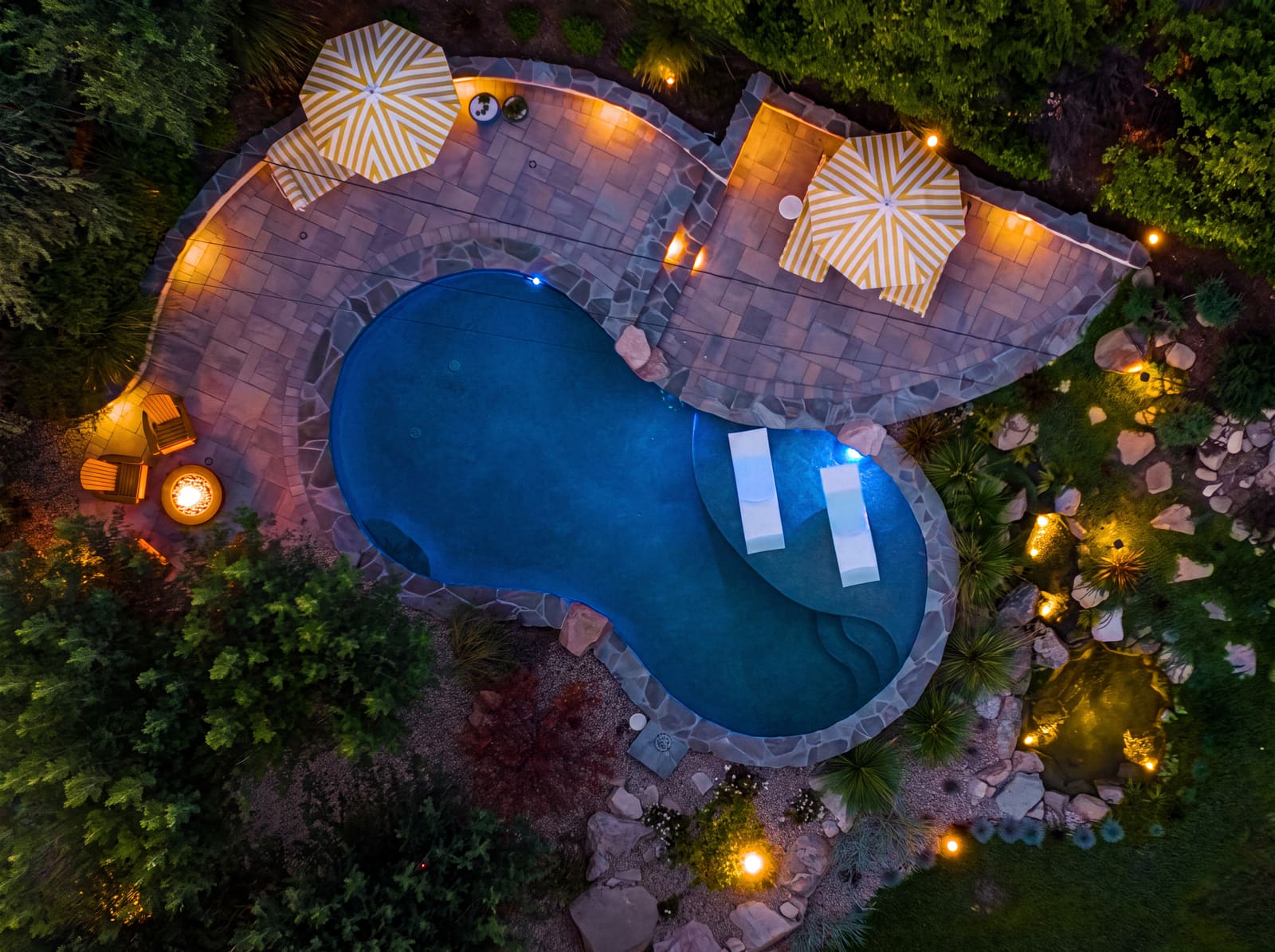
 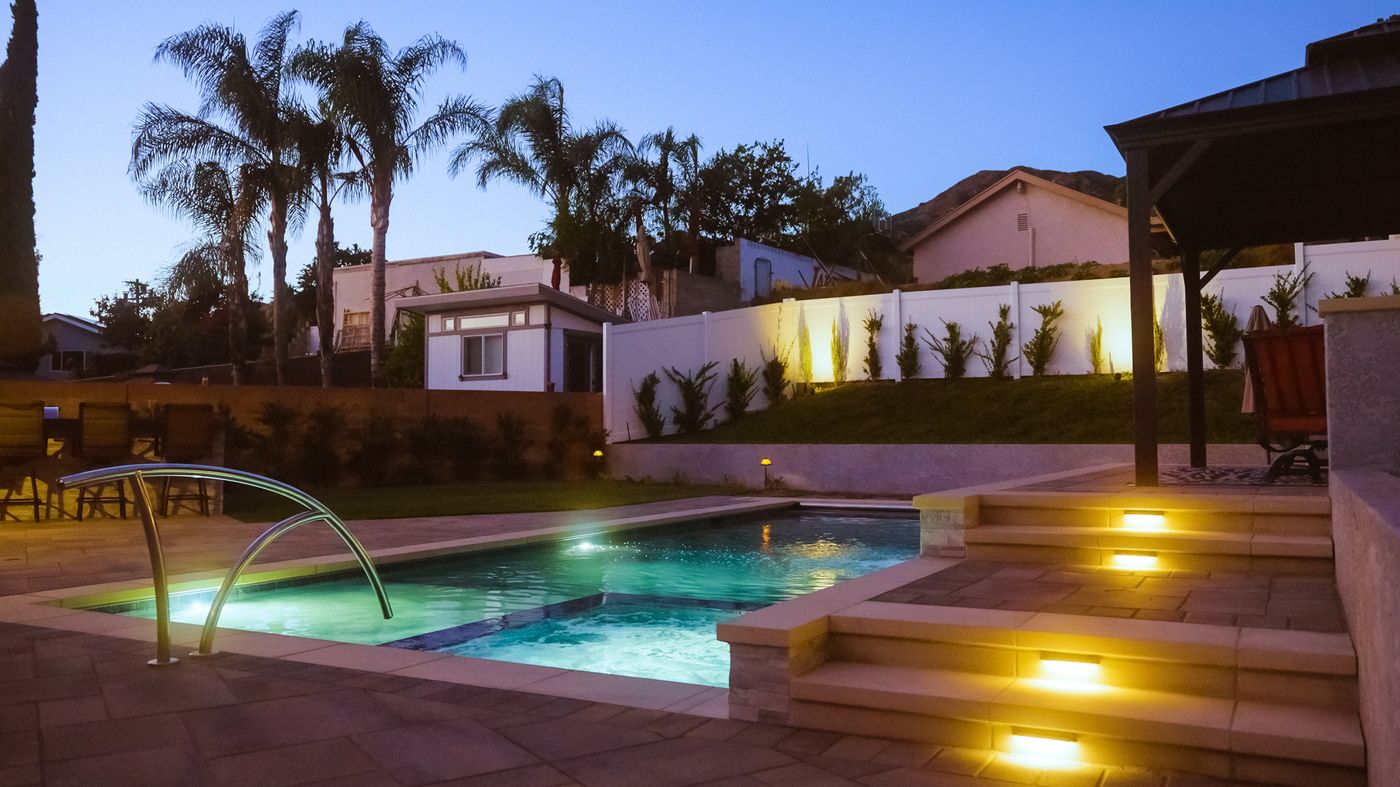 03 Pools and water features that glow at night Underwater lights and soft accents let a pool or fountain carry the evening, so the rest of the yard can stay low and quiet. See pool projects
 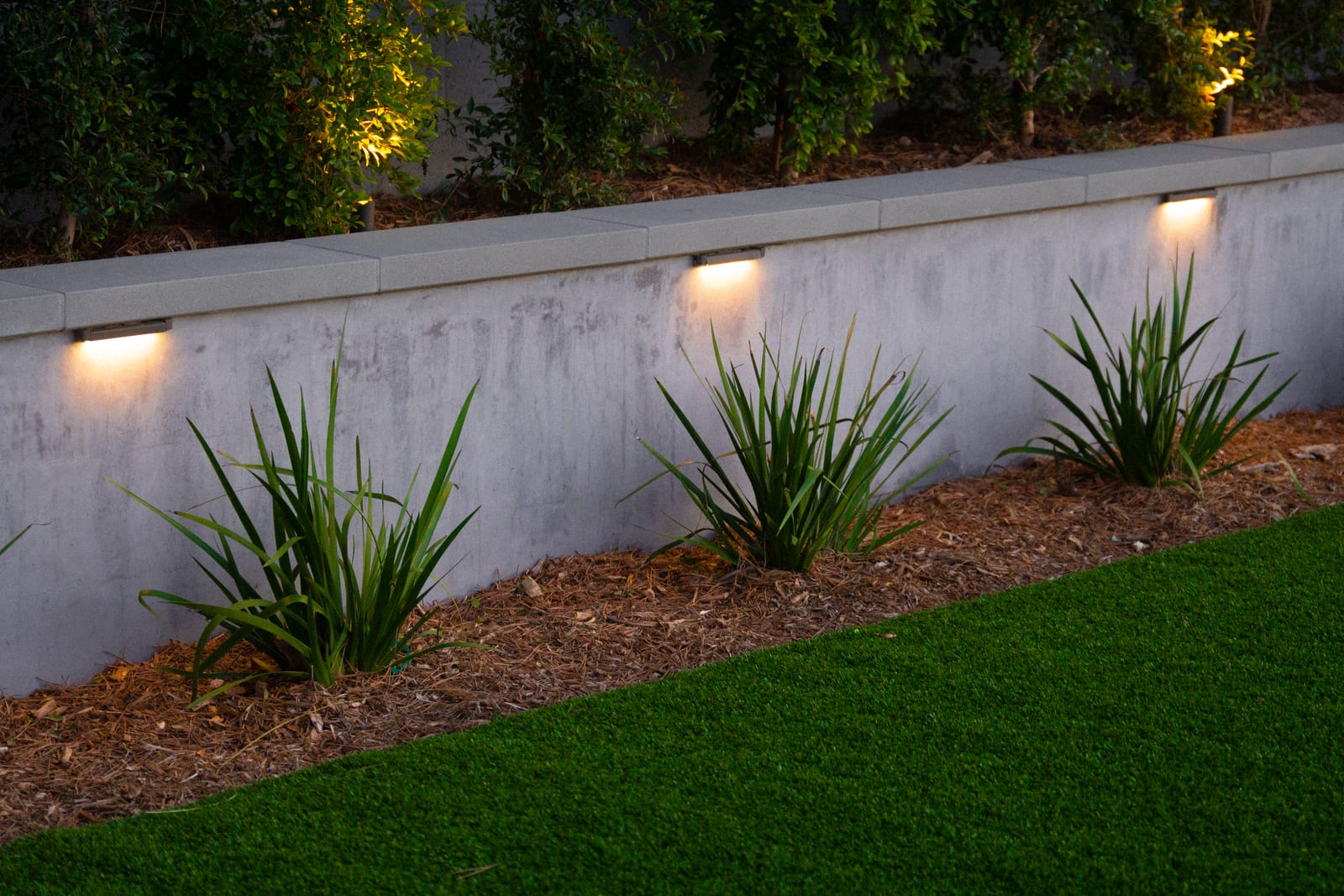 04 Architectural and landscape highlights Carefully aimed uplights pick out a specimen tree, a stone wall, or the facade itself, with shields that keep each beam off the sky and the neighbors. See landscape projects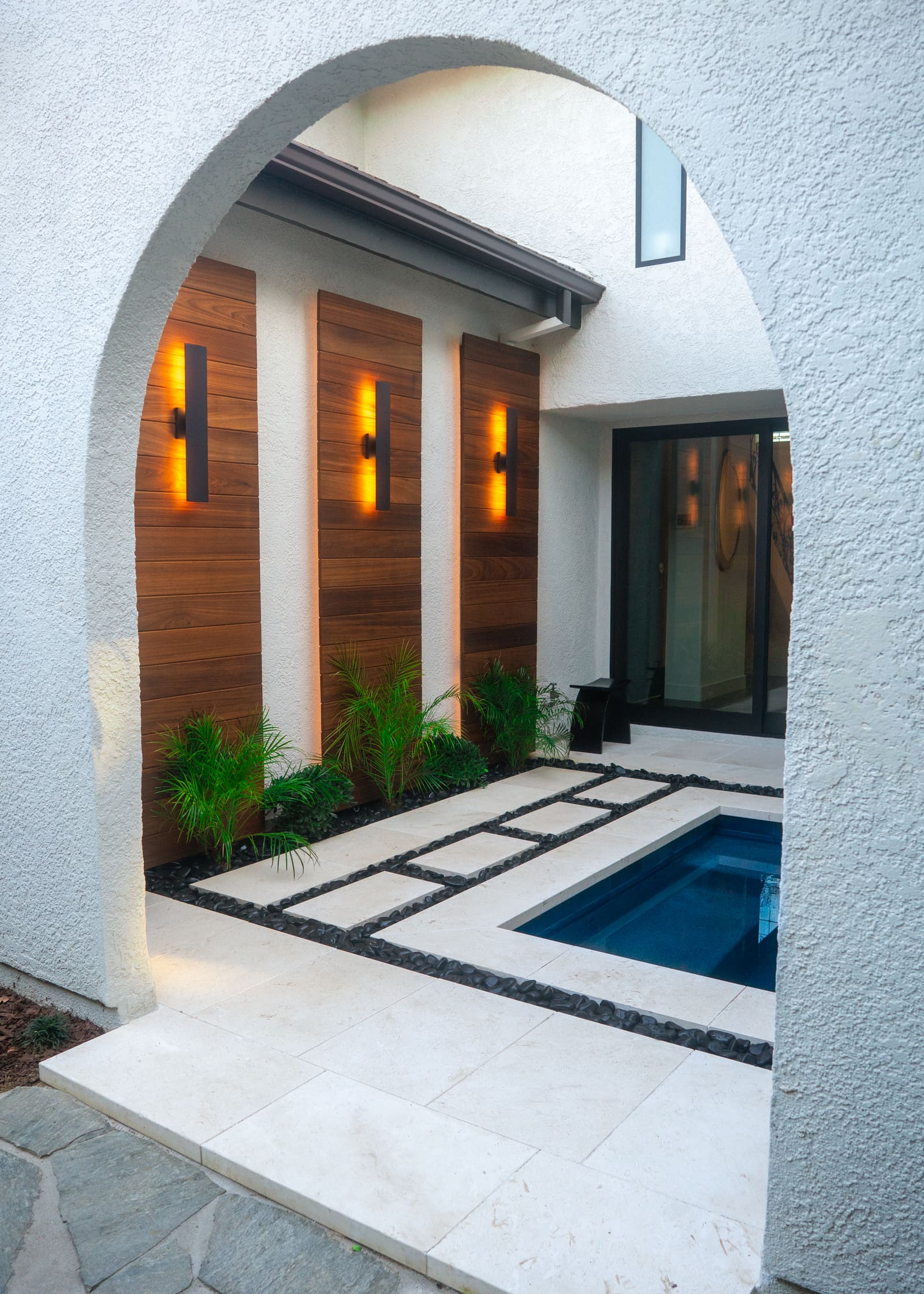
Best for Anyone who wants long-lasting, low-energy lighting that still looks warm and inviting.
On your property Low-voltage cable runs underground from a transformer on an outdoor outlet. Fixture locations are planned during design, not added after the planting is in.
Best for Homeowners who want schedules, zones, and dimming from a phone or panel instead of a timer box on the side of the house.
On your property Needs a smart-capable transformer and, for app control, a Wi-Fi signal where the transformer is mounted. We confirm both during design.
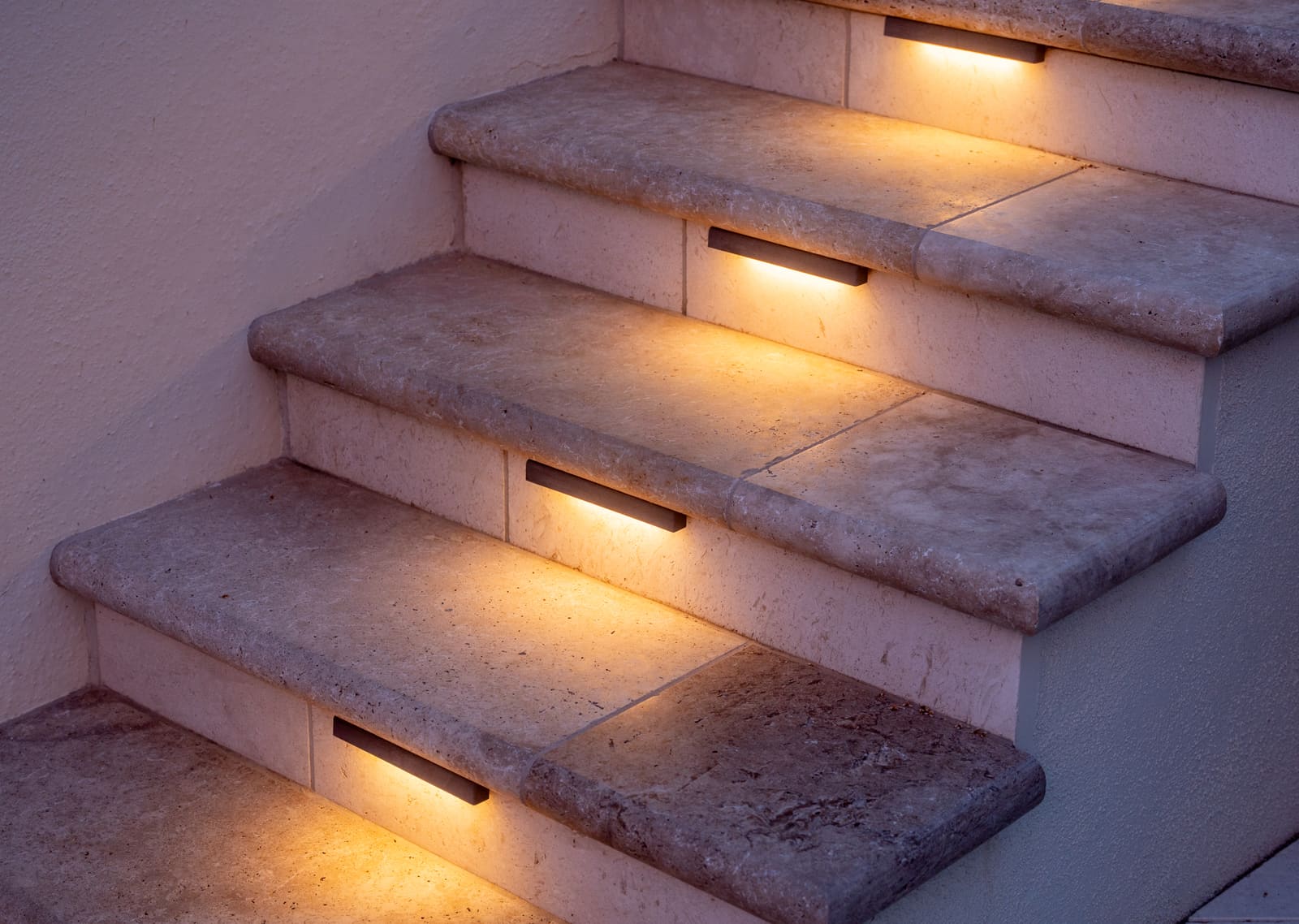
Best for Anyone who wants safer walkways and steps, and a well-lit approach to the house.
On your property Fixture spacing depends on the width and length of the route. Step lights are set into risers and walls as they are built, and path light cable is best run under the base during construction.
Mid-Wilshire, Los Angeles
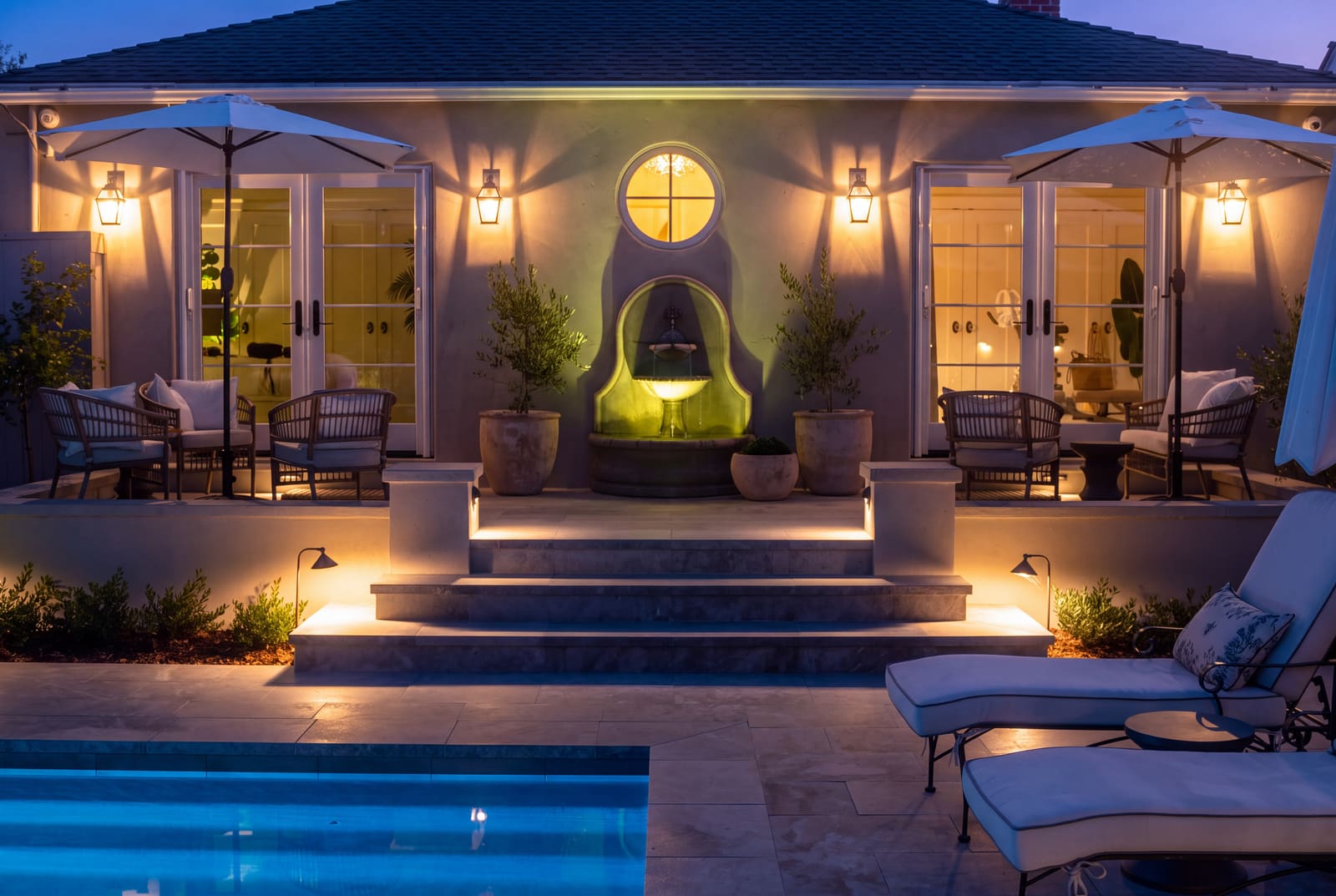
Shown: Lantern Courtyard Escape, Mid-Wilshire, Los Angeles
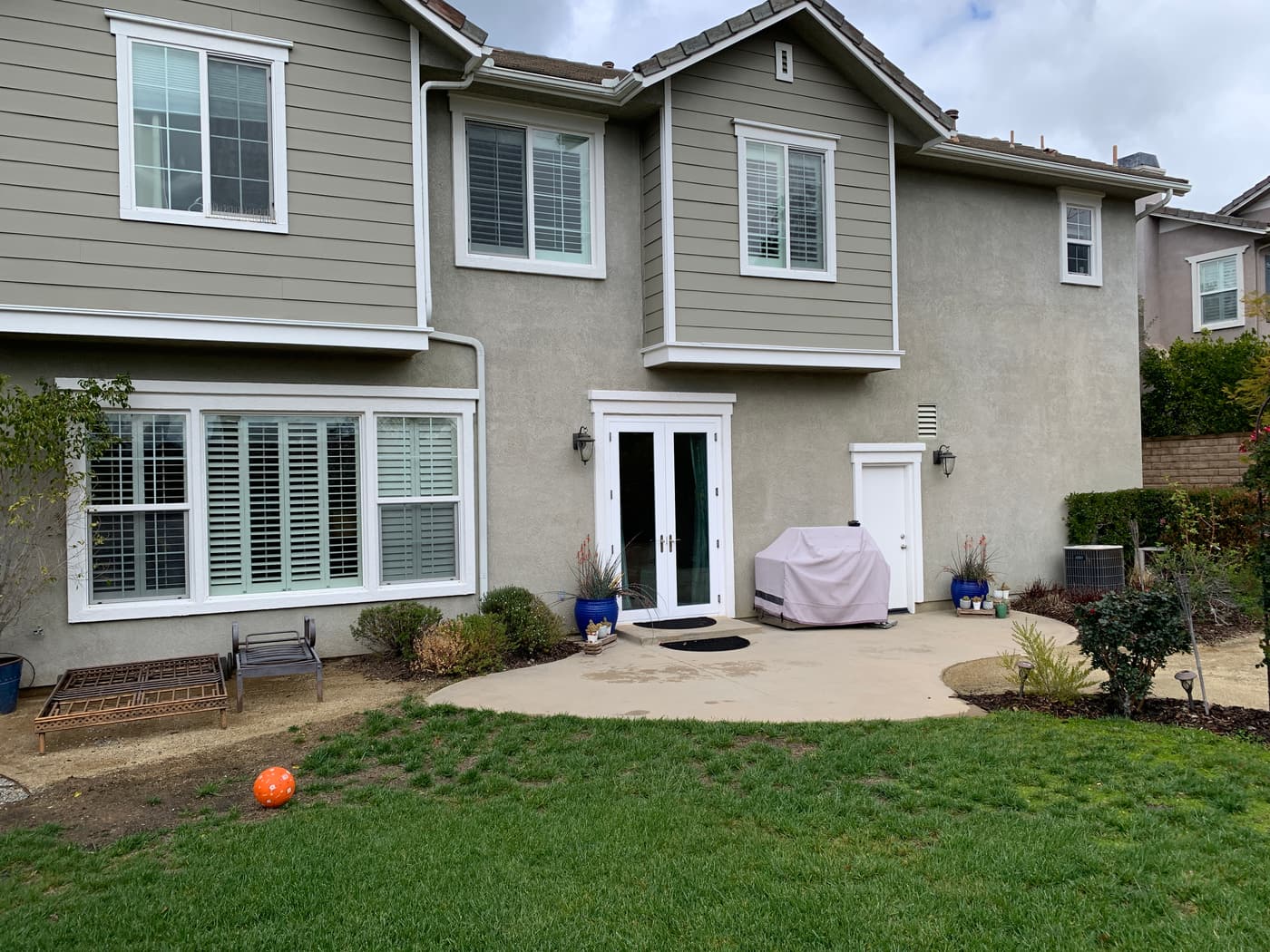 Before
 We measure the property, note where light is actually needed, and check the lot against San Luis Obispo’s night-sky standards, including the limit on light at the property line, before any fixture goes on the plan.
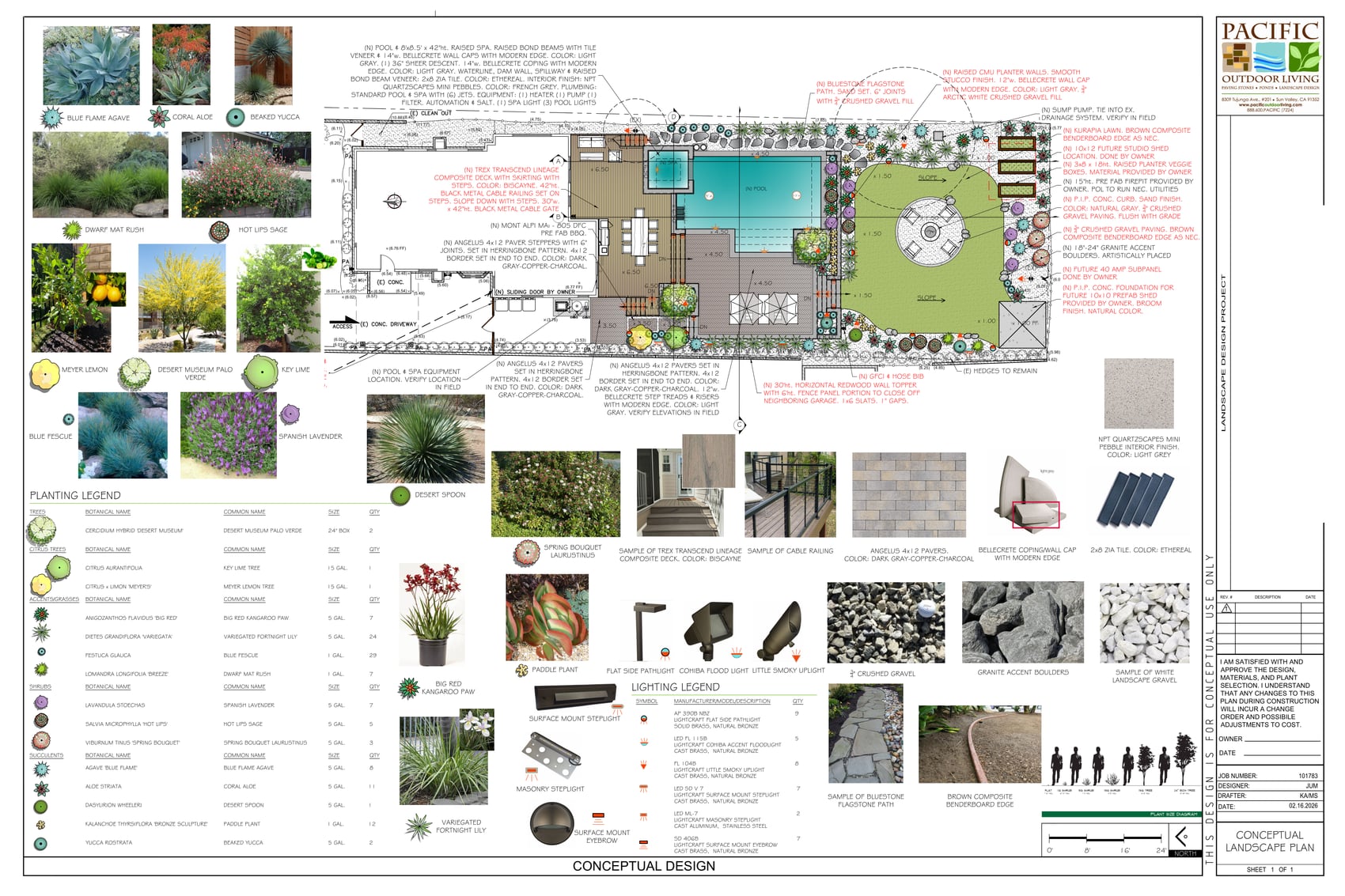
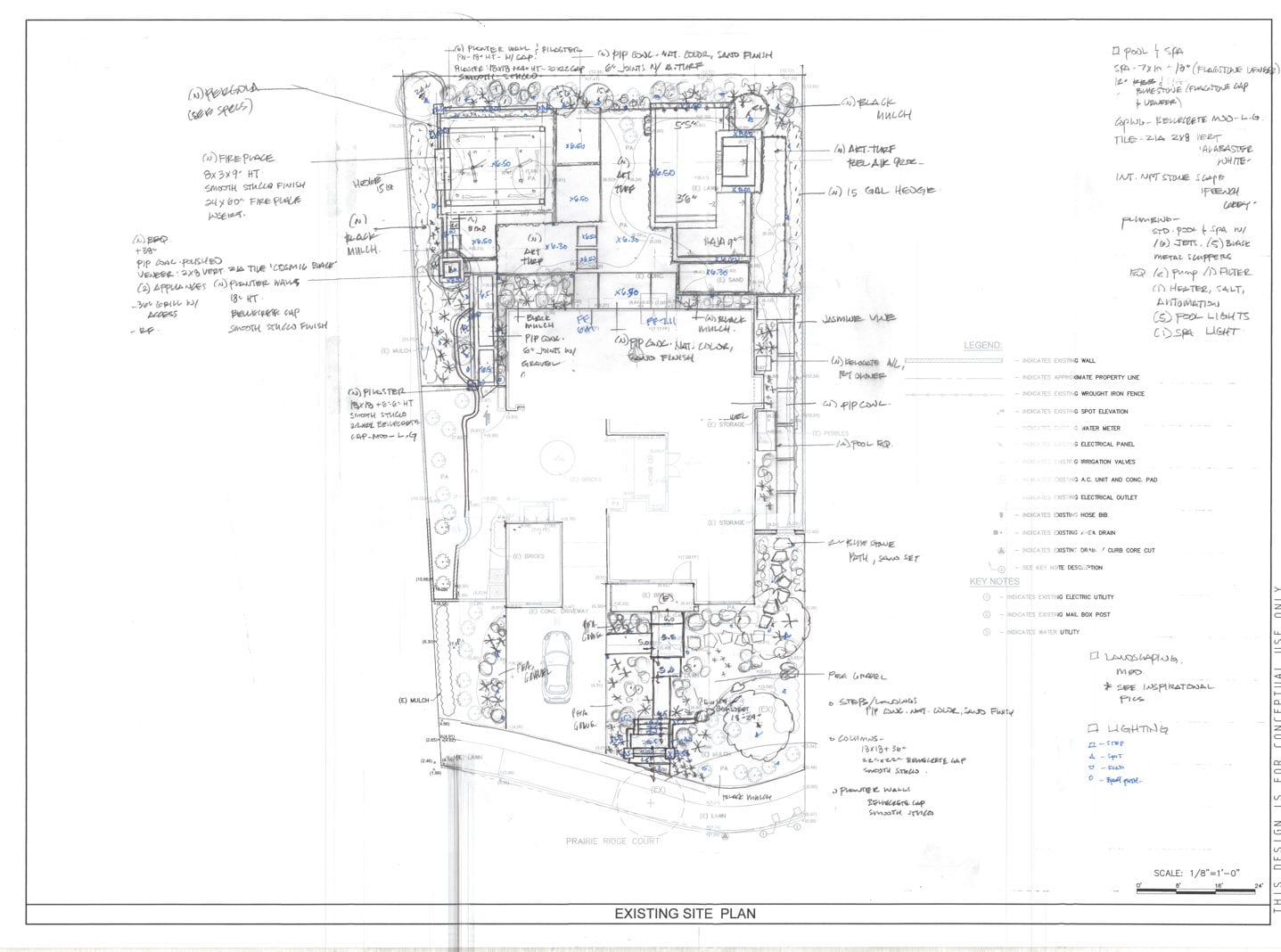 Site plan notes
 With the site analysis in hand, you sit down with a designer and mark up the existing site plan: what should be lit, from the steps to the spa, and what should stay dark.
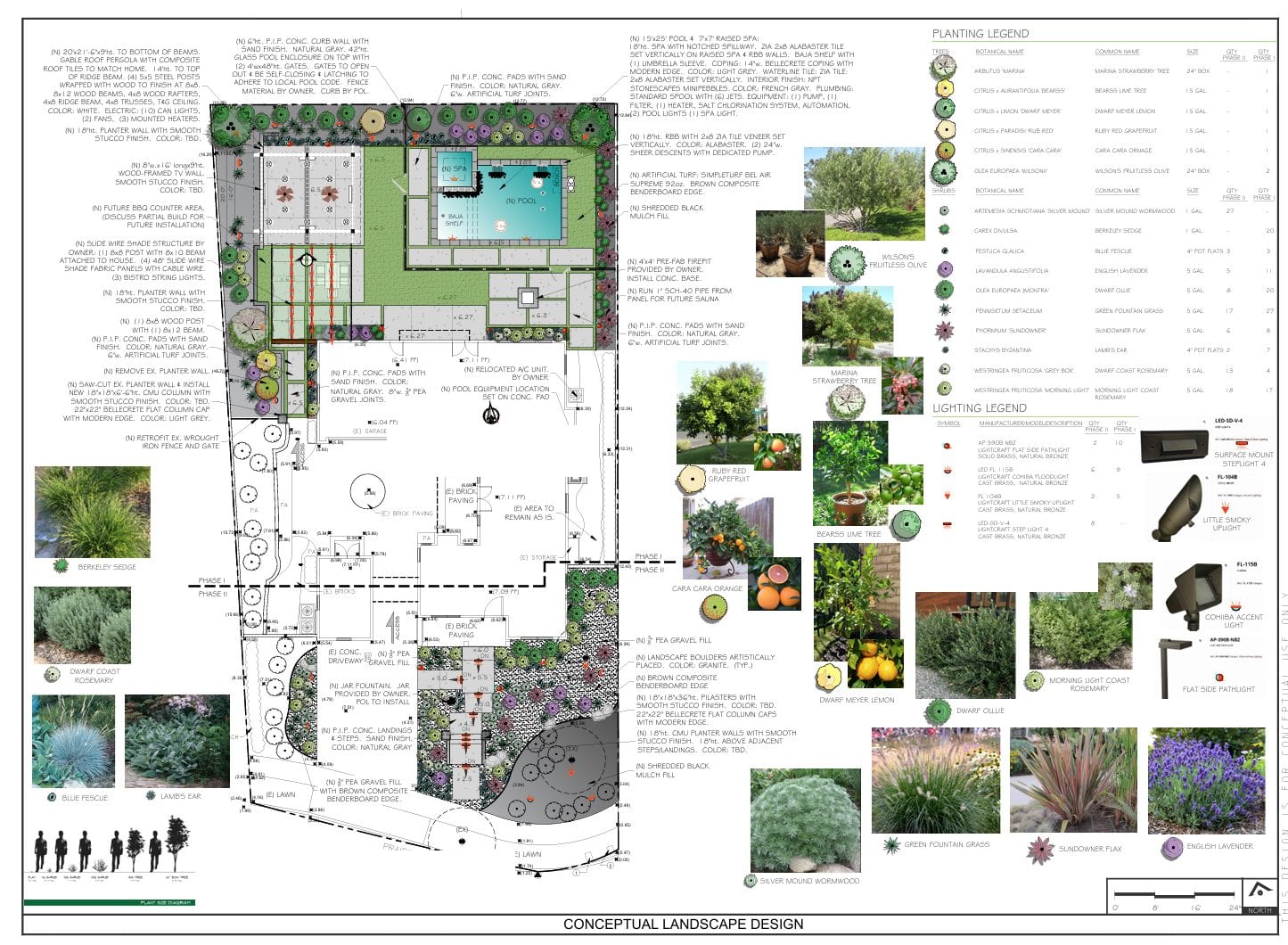 Lighting plan
 The lighting goes onto the color plan with everything else. Every fixture gets a symbol, a model, and a count, so you can see exactly what will be lit before anything is ordered.
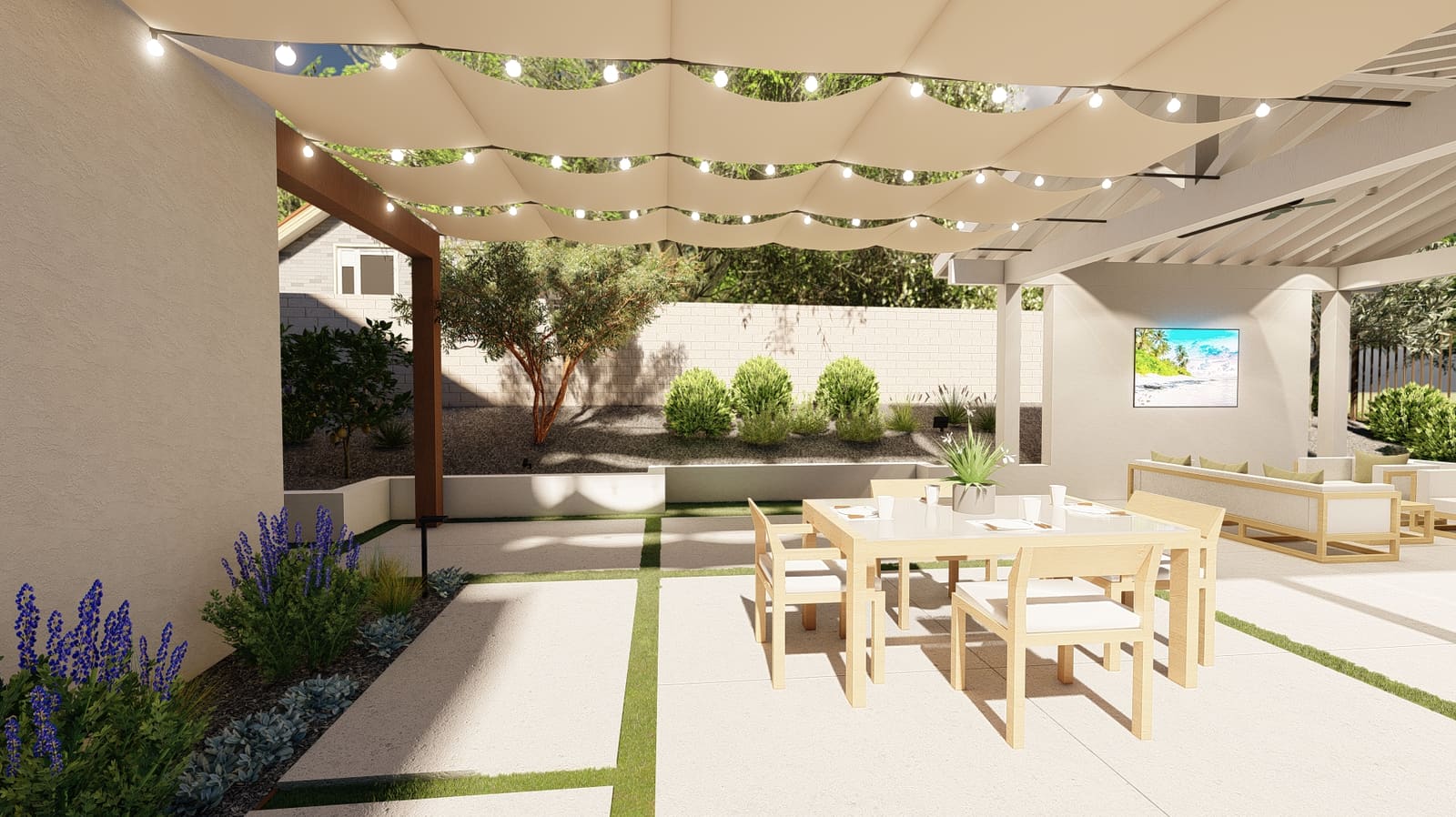 Rendering
 A rendering shows how the finished space will look and feel, string lights and all, so the lighting is judged in context instead of as a list of fixtures.
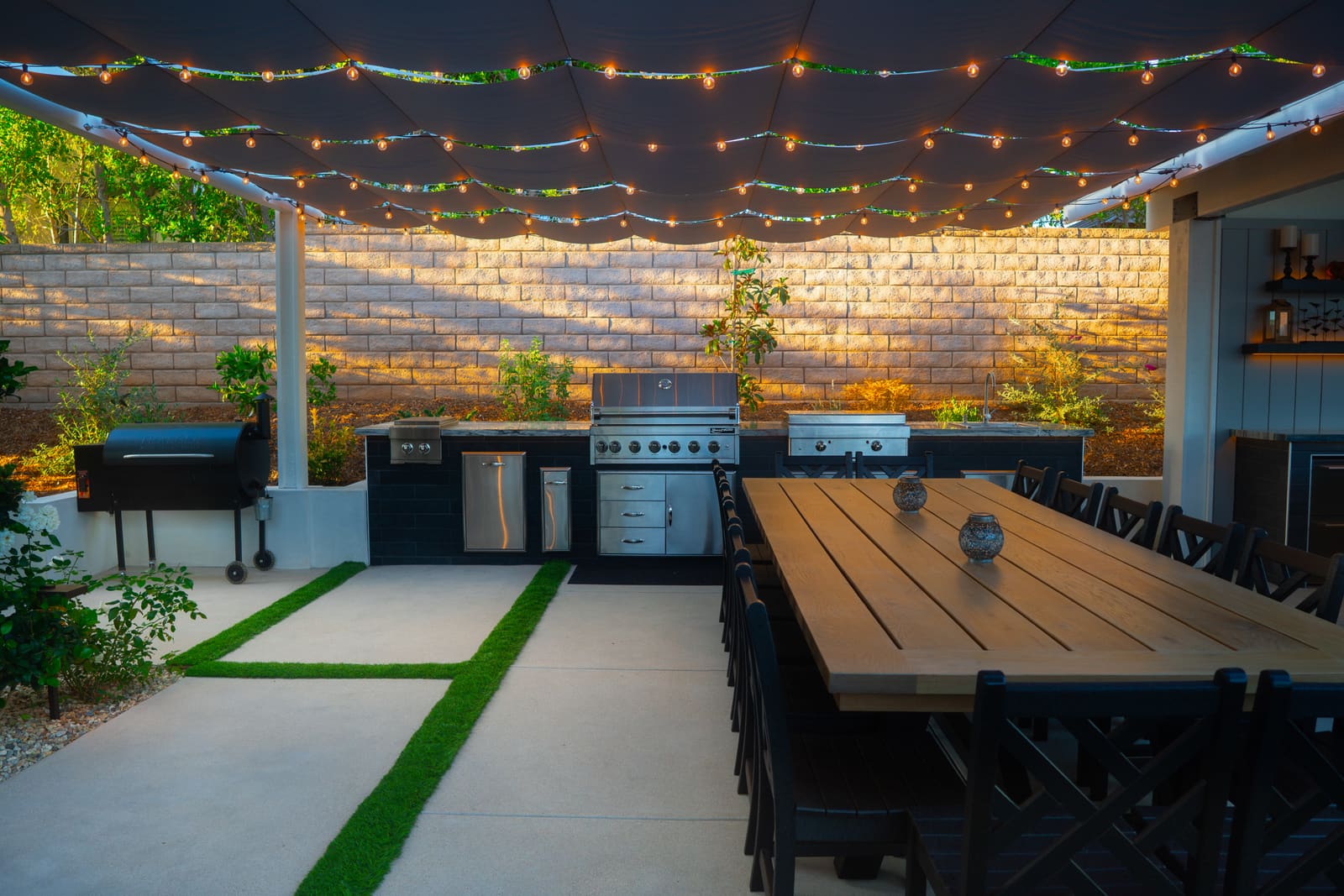 Finished
 Our crews run the low-voltage cable, set the transformer and fixtures, and fine-tune the aiming once it is dark enough to see the result.
Things worth knowing before a first consultation.
LED fixtures cost more upfront than the halogen systems they replace, but draw far less power and last much longer.
Smart systems allow zoning, dimming, and remote control. A basic astronomical timer is simpler and still follows sunset through the year.
Shielded, downward-facing fixtures keep light on the path and out of windows, neighboring yards, and the night sky.
Security lighting favors broader coverage on motion sensors. Ambiance lighting uses softer, more selective accents on a schedule.
Low-voltage cable and sleeves are easiest to run during construction, before paving and planting are finished.
Lighting is planned alongside patios, pools, and planting rather than added as an afterthought.
San Luis Obispo’s zoning code (Section 17.70.100) sets a target of no more than about one lux of light at the property line, measured at grade. We shield and aim every fixture so your lighting stays on your lot, which is also what keeps it comfortable to look at.
No quote written off a photograph can account for what your property is like.
Decking, drainage, utilities, planting, shade and lighting all bear on where a feature goes and how it gets built. Settling them on one set of drawings is what keeps conduit out of the wrong trench and stops paving being cut to fit afterward.
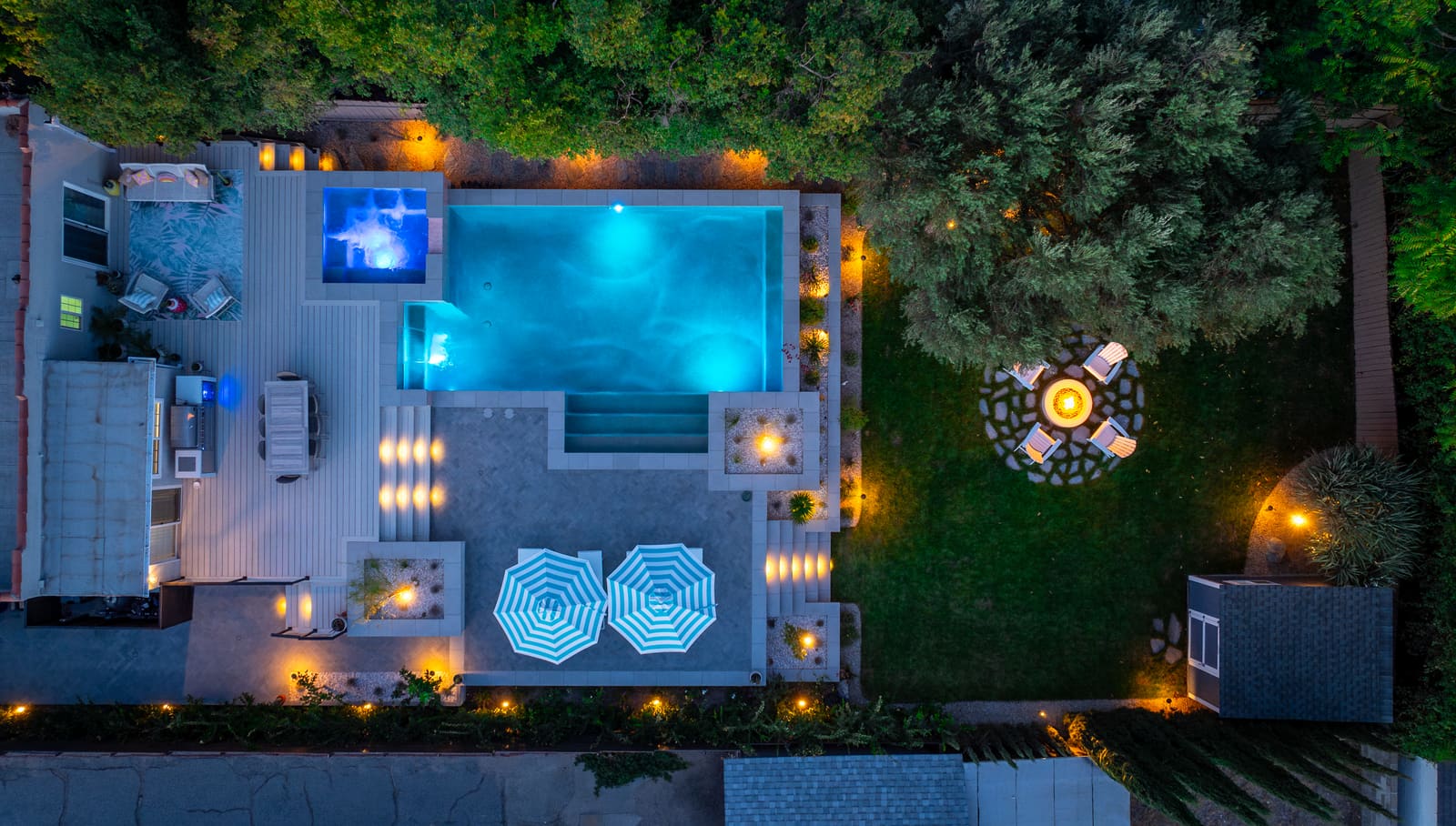
Access, engineering, permits, finishes and scope vary a lot from one property to the next, so the investment and the schedule for your project are set once we have seen the site and the design is settled.
Tell us about the property and what you want the space to do. We will walk through the design, site and permitting factors likely to shape it.
Pacific Outdoor Living did a great job on my paver patio with competitive pricing and helpful advice. Their professionalism and attention to detail made the whole process smooth and stress-free.
They completely remodeled our pool, added a hot tub, and handled all the lighting and landscaping. Our project supervisor, Juan, demonstrated great communication and meticulous attention to detail, taking extra care to ensure that every aspect was safe for our kids and our puppy. This is clearly a company that takes genuine pride in their work.
Yes. Our San Luis Obispo office is on Cross Street, and our in-house crews install landscape lighting throughout the city, from a single entry walk to a whole-property system.
Yes. The city’s lighting and night sky preservation standards (Section 17.70.100 of the zoning code) call for outdoor fixtures to be shielded and aimed downward, and for light to stay on your side of the property line. We design and aim every fixture to meet them.
Low-voltage fixtures themselves usually are not the permit question. A new 120-volt outlet or circuit for the transformer usually is. We pull whatever the city or county requires through our in-house permitting department.
Quality integrated LED fixtures are commonly rated for 30,000 to 50,000 hours, which is more than a decade of nightly use. Solid brass and copper bodies also outlast painted aluminum fixtures, especially near the coast.
Yes. We include a monitoring period after installation to check settings and aiming, and to confirm everything is working as designed.
Schedule a consultation with one of our designers to discuss your project goals and explore what's possible on your property.
What happens next: we set up a visit, measure the property and talk through what you want the space to do. Then you get a design to look at before you commit to anything.