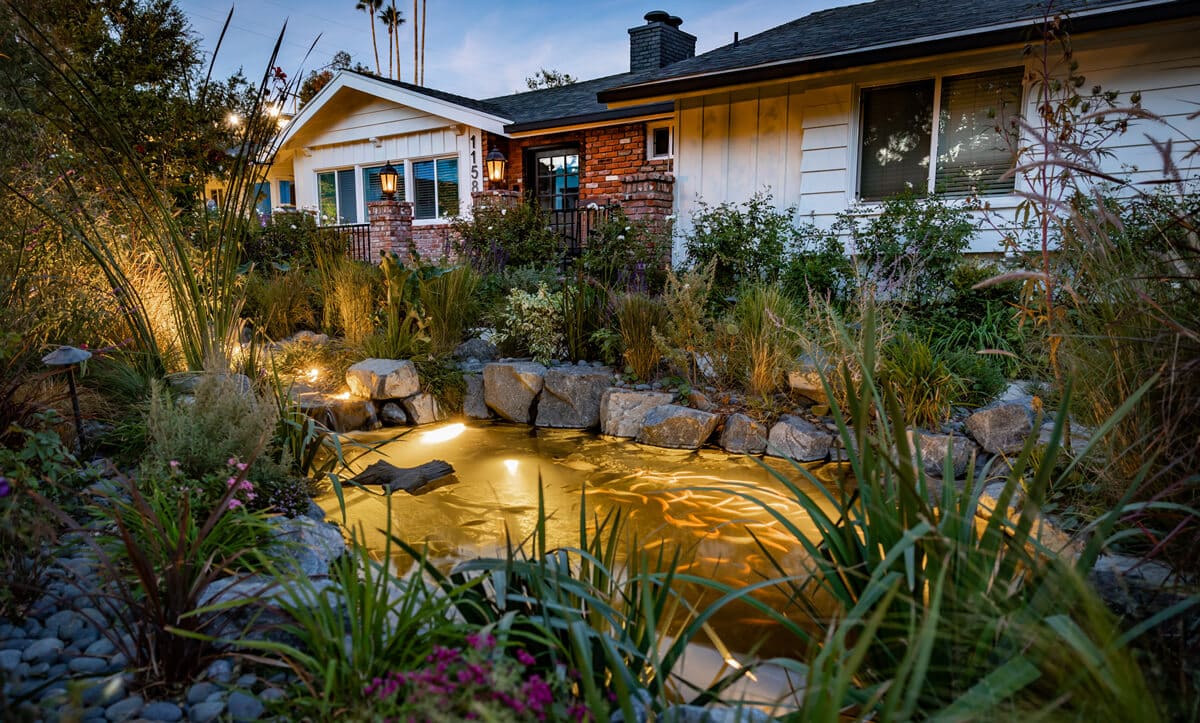
Three small to medium ponds arranged across a front yard landscape

Water Features

Templeton Water Feature Design and Installation

Templeton is quieter and more rural than its wine-country neighbors to the north, with the same hot, dry summers on properties that often run larger than a typical suburban lot. We design fountains and pondless waterfalls ourselves, and coordinate with our sister company California Waterscapes for full ecosystem ponds and natural swim ponds sized to a rural-acreage property.

Service options

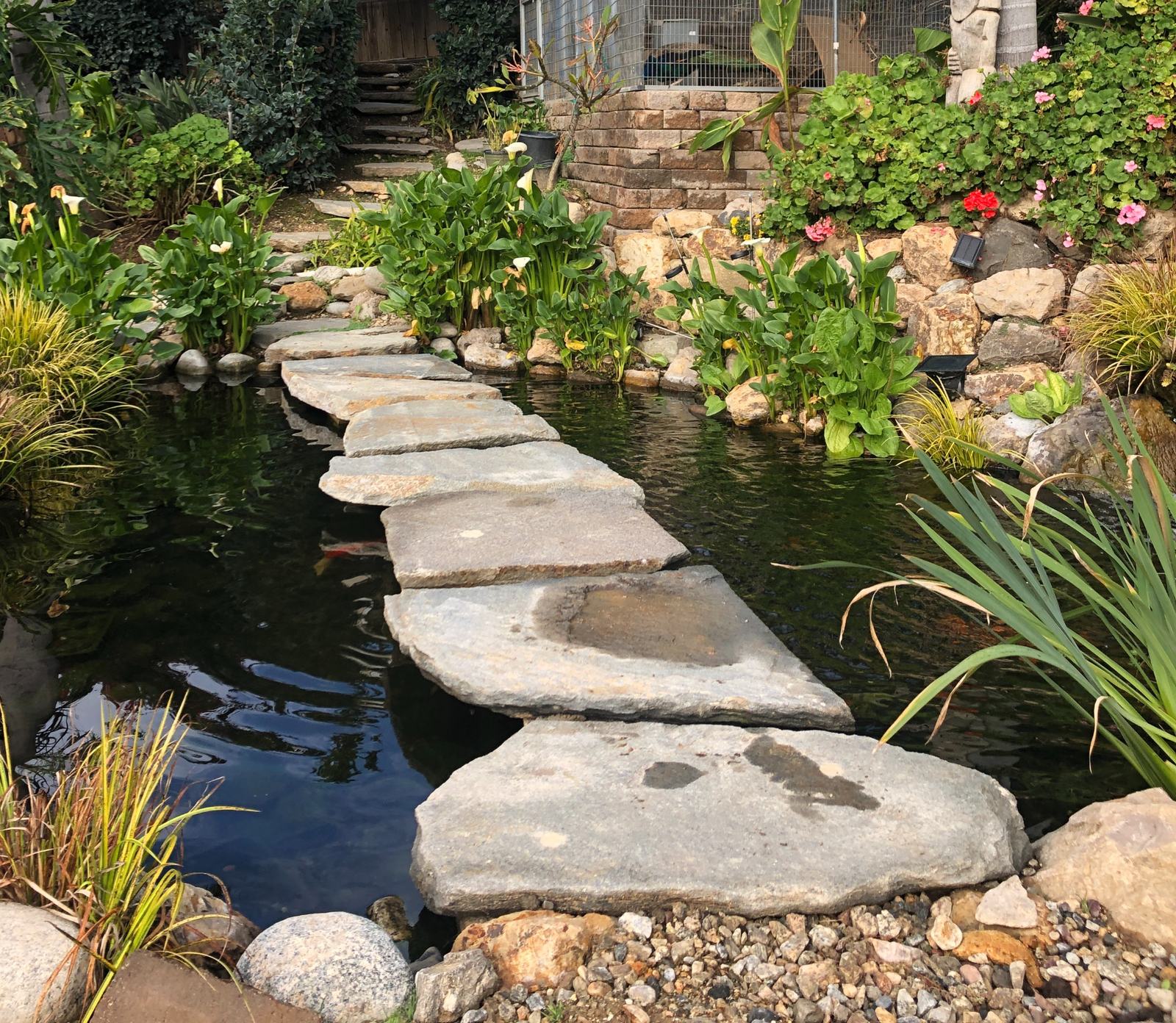
A narrow modern koi pond built along a garden wall, with clear water and stone edging

Ecosystem, Koi & Ornamental Ponds

Best for Anyone who wants a living water garden with koi, aquatic plants, natural stone, and a filtration system built into the feature.

  • Mechanical skimmer catches leaves and surface debris
  • Biofalls-style biological filtration supports beneficial bacteria
  • Supports koi, goldfish, aquatic plants, birds, and pollinators
  • Natural boulders, gravel, and plants shape the pond edges
  • Chemical-free balance when the full ecosystem is designed together

On your property Needs enough depth for fish, thoughtful shade, and room for skimmer, pump, biological filter, stone, plants, and safe access for care.

  • Koi
  • Aquatic plants
  • Biofalls
  • Skimmer
  • Stone edging

Custom Water Feature

Central Coast

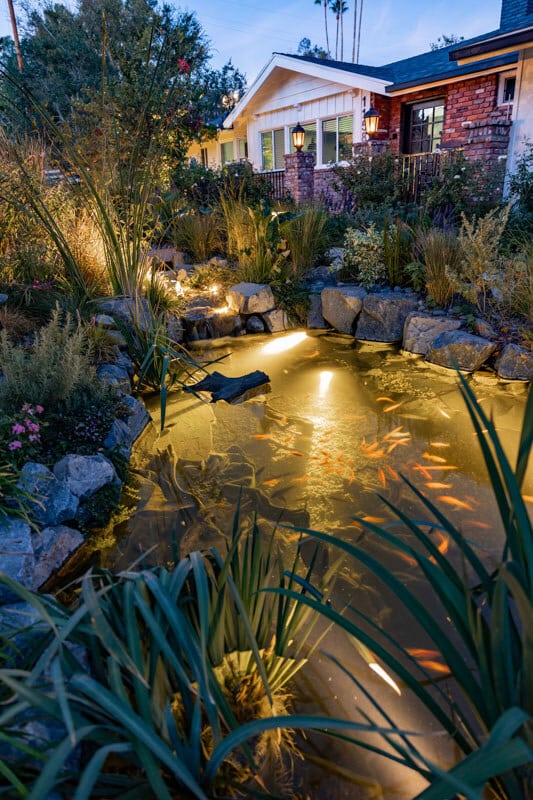
A koi pond with visible fish, aquatic plants and stone edging, set in a drought-tolerant landscape

Shown: Custom Water Feature, Central Coast

How we work

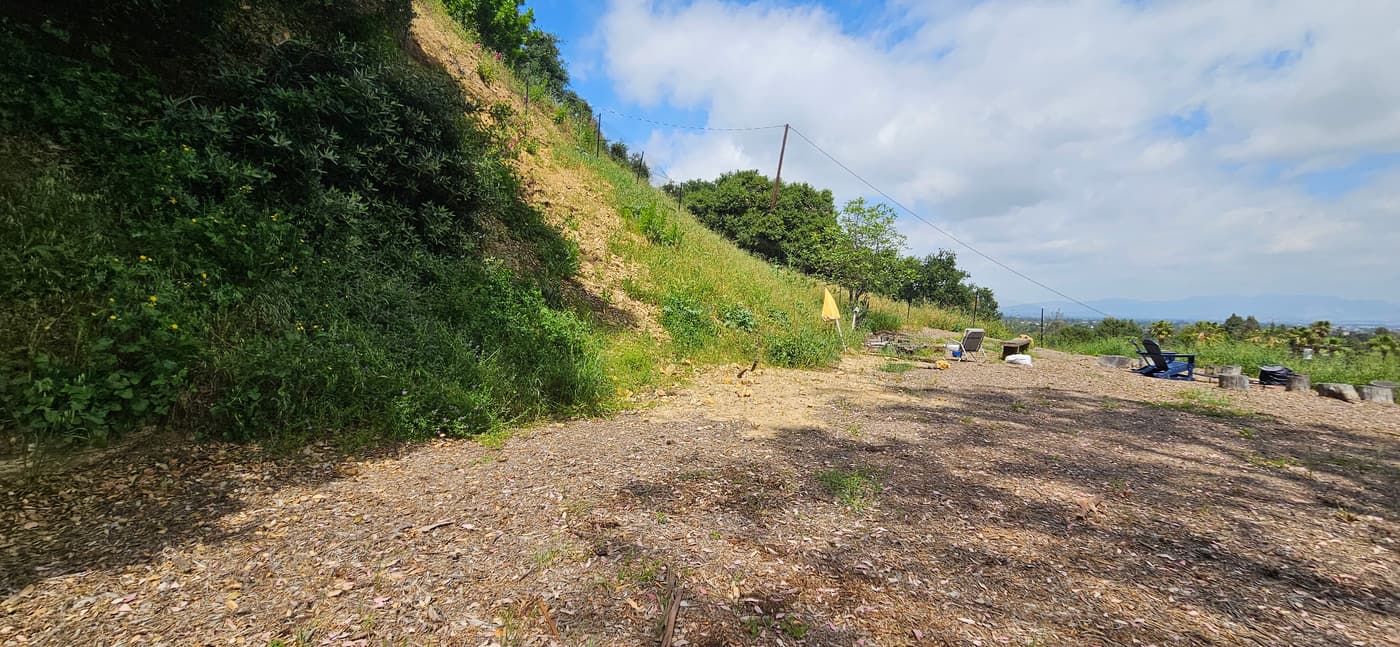
  1. An eroding hillside slope marked with a survey flag before construction began Before

    Site assessment and design

    We assess sunlight, drainage, slope and well or septic infrastructure across your rural-acreage Templeton property before design starts.

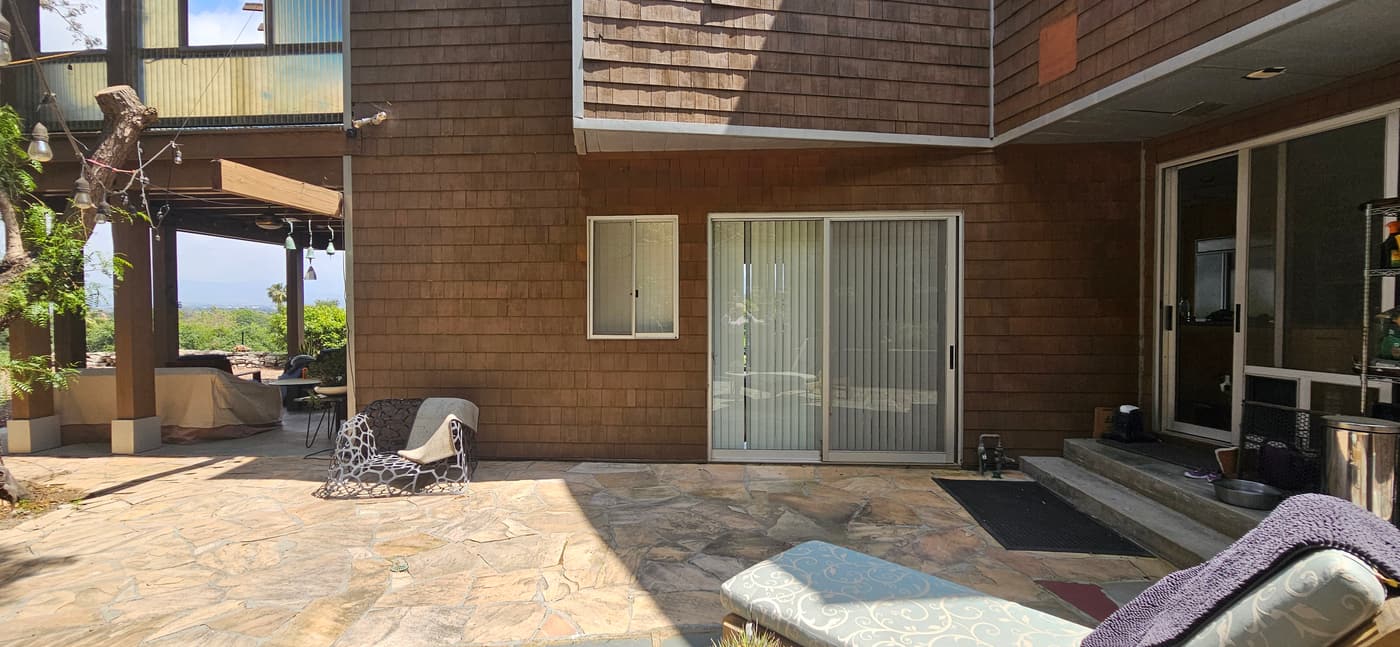
  2. The existing patio and rear of a house before a waterfall and stream were excavated Site preparation

    Excavation and basin preparation

    We shape the basin, streambed or hidden reservoir, then prepare a stable base for liner, boulders, equipment and safe access.

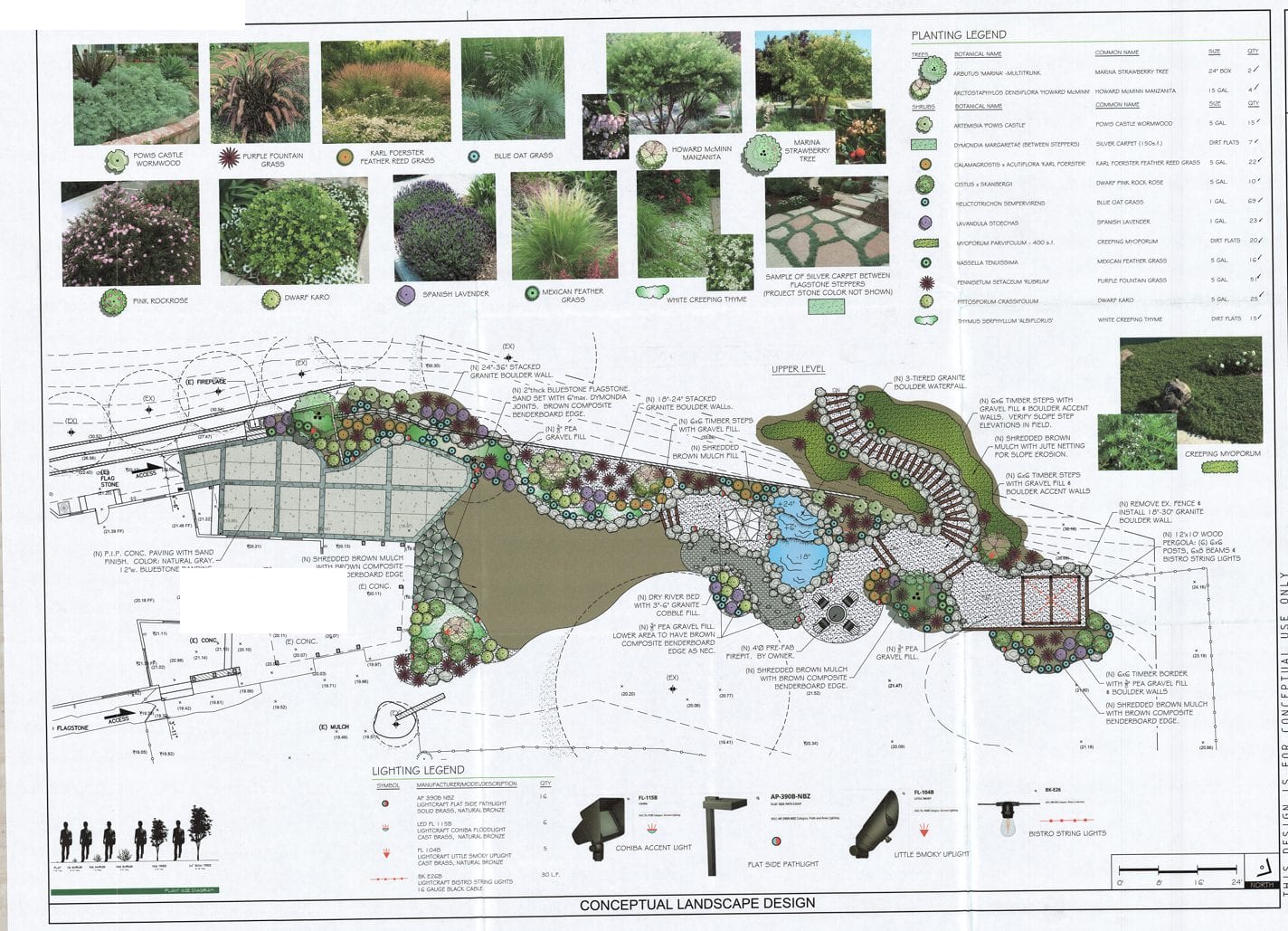
  3. Conceptual landscape design plan labeling a three-tiered granite boulder waterfall and dry river bed Design plan

    Liner, boulders, and natural structure

    Rubber liner, underlayment, gravel, flagstone, boulders and planted edges are installed so the feature looks natural on a rural-acreage lot.

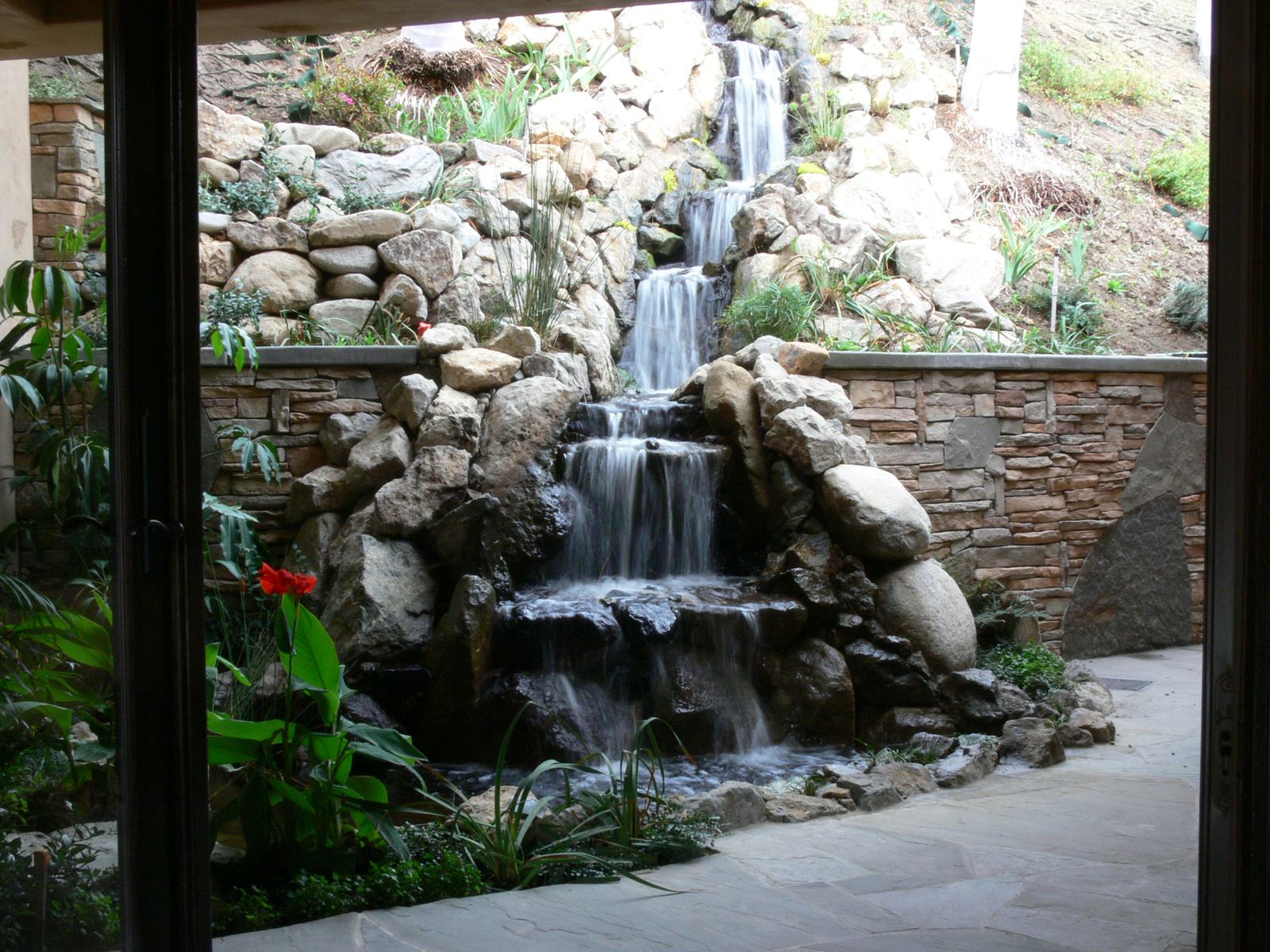
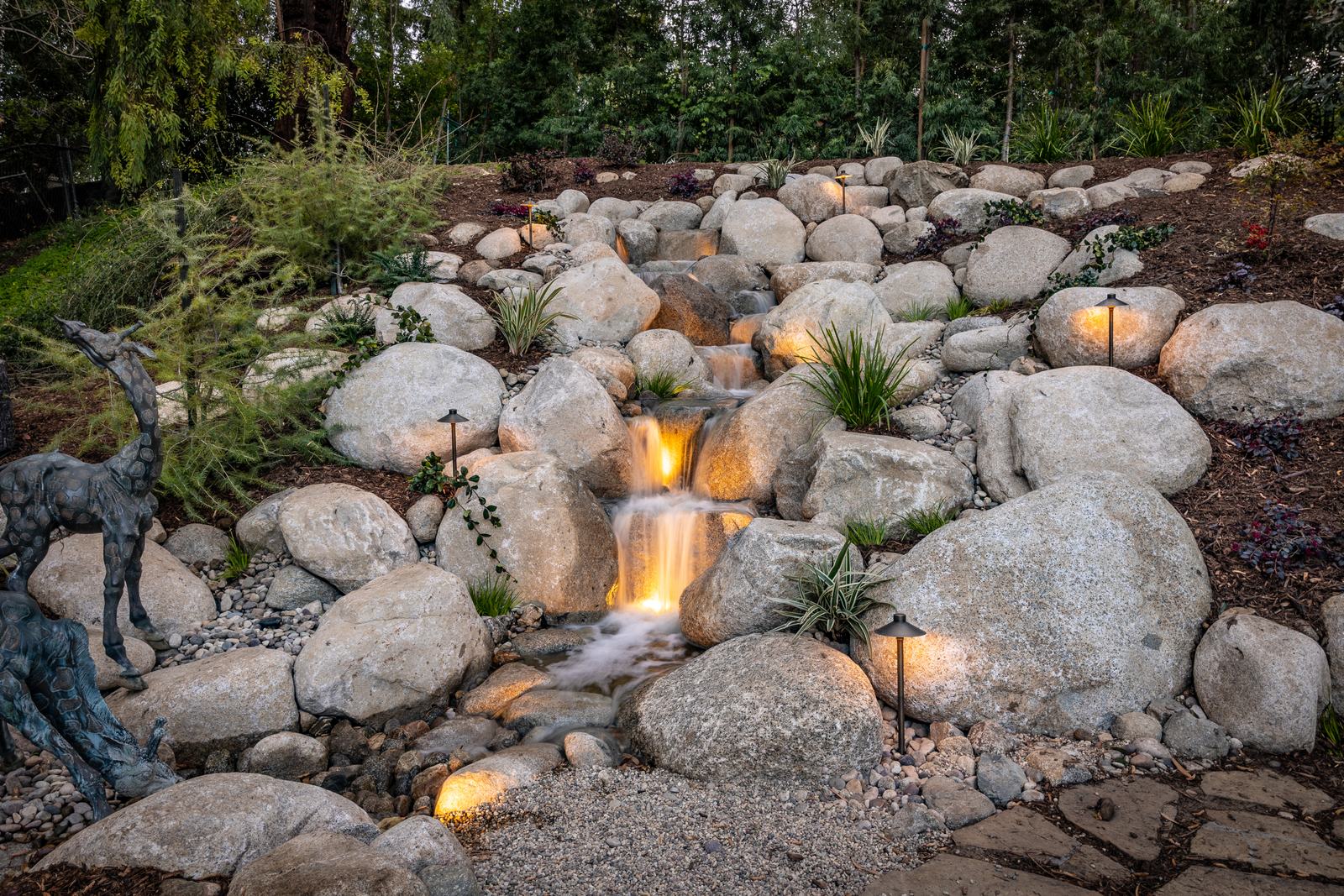
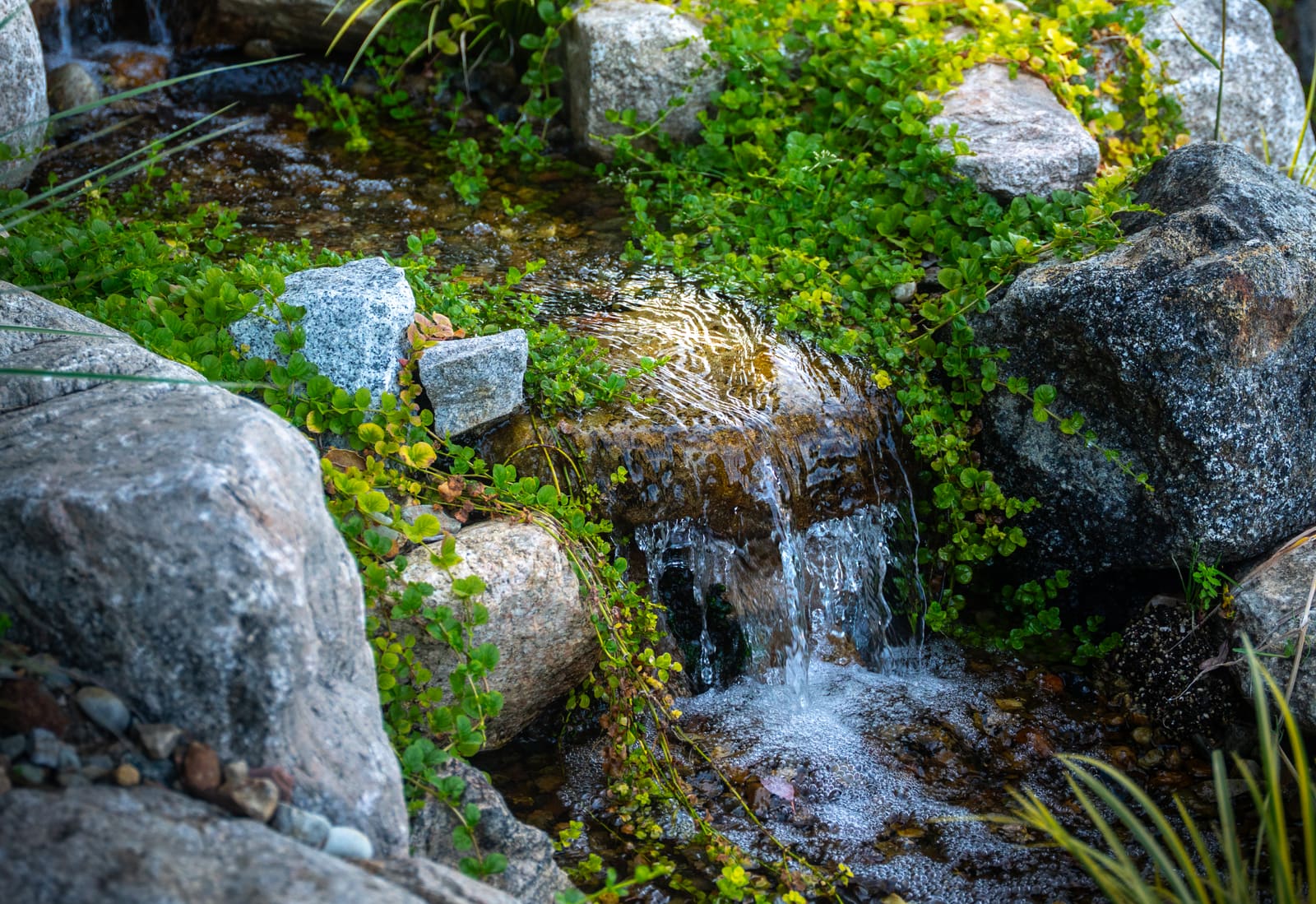
  4. Water cascading over granite boulders into a finished stream, close up Equipment

    Circulation and filtration

    Pump, skimmer, biological filter and plumbing are installed and tested, with fill planned around your property's well or septic system where that applies.

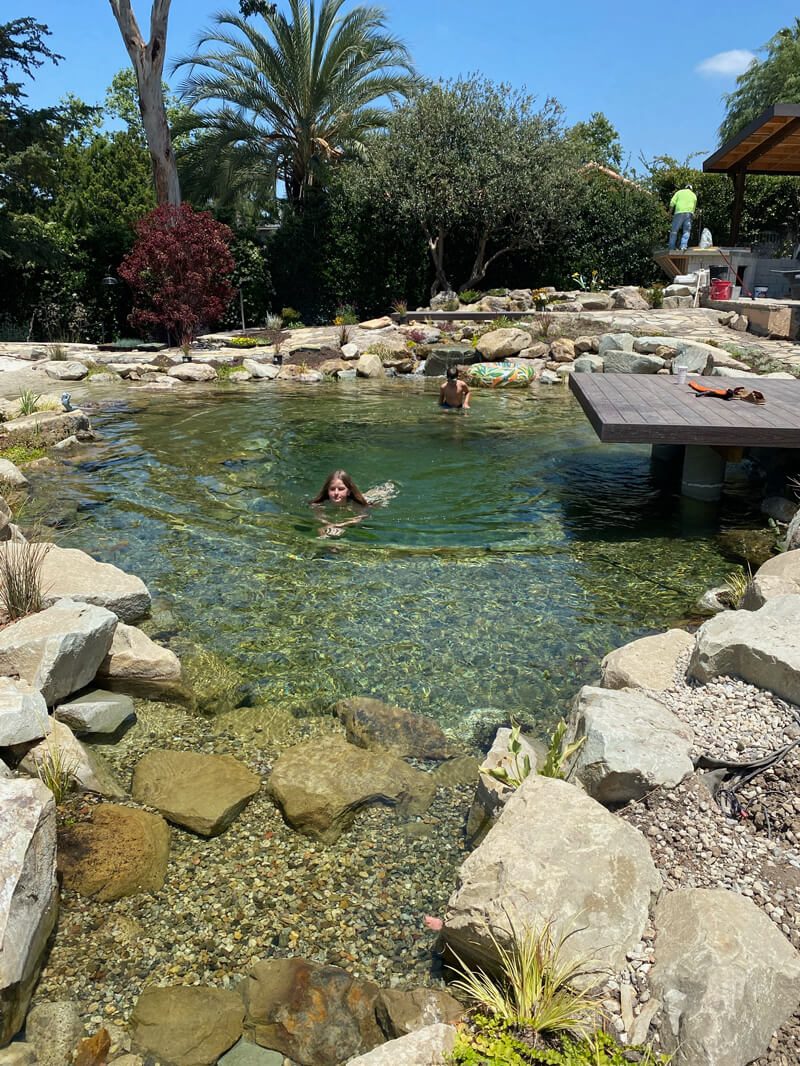
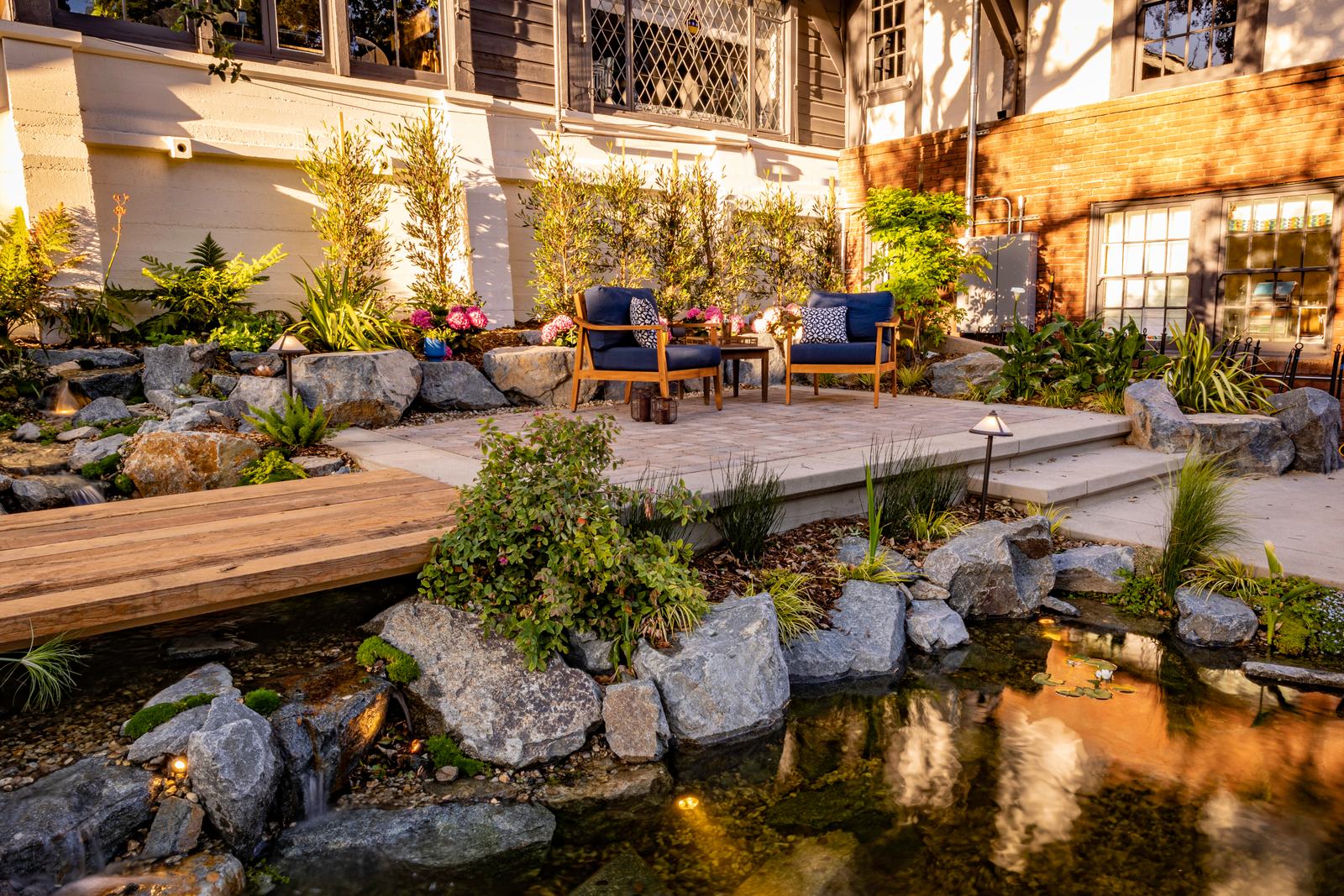
  5. Three small to medium ponds arranged across a front yard landscape Finished

    Edging, planting, and finishing

    Stone edges, drought-tolerant planting, lighting and care instructions complete the feature.

Key decisions

Things worth knowing before a first consultation.

  • Ecosystem pond versus fountain versus pondless

    Koi ponds support life and need balanced filtration. Fountains are simpler. Pondless waterfalls offer water sound without an open pond.

  • Mechanical and biological filtration

    A skimmer removes leaves and debris. Biological filtration uses beneficial bacteria to break down nutrients and keep the system balanced.

  • Fish or no fish

    Koi are beautiful but require good filtration and enough depth. Goldfish and small fish can be easier. Fountains and pondless waterfalls need no fish.

  • Sound, stone, and planting

    Rock placement, waterfall height, plant selection, and edge detailing determine whether the feature feels natural or decorative.

  • Well or septic infrastructure

    Rural-acreage Templeton properties often run well water, septic, or both. We map that infrastructure during the Site Analysis so the water feature's fill and equipment work with what your property actually has.

Investment and timeline

No quote written off a photograph can account for what your property is like.

What shapes the investment

  • Type of water feature (koi pond, fountain, pondless)
  • Size and depth
  • Excavation difficulty and site prep
  • Liner quality and installation
  • Pump, skimmer, biological filter, and optional UV filtration
  • Edge treatment and landscaping

What shapes the schedule

  • Design and site assessment
  • Permit requirements (varies by city)
  • Excavation and soil conditions
  • Liner curing and water conditioning
  • Landscape integration and planting

Why custom water feature was drawn together with the rest of the property

Decking, drainage, utilities, planting, shade and lighting all bear on where a feature goes and how it gets built. Settling them on one set of drawings is what keeps conduit out of the wrong trench and stops paving being cut to fit afterward.

  • Feature placement Position for visibility from house and entertaining areas, while considering sunlight.
  • Circulation and filtration Skimmer, pump, and biological filtration sized for fish health, water clarity, and the chosen feature type.
  • Stone edging and integration Natural stone frames the feature and connects to surrounding hardscape.
  • Aquatic planting Plants provide food, shade, and habitat for fish and wildlife.
  • Landscape context Trees, shade, perimeter planting, and waterfall sound make the water feature feel natural.
A site plan showing pond placement, circulation, planting, and integration
The design sheet: layout, drainage, planting and lighting
A finished pond and stream feature bordered by mature garden planting
The same yard built: Custom Water Feature, Templeton

Access, engineering, permits, finishes and scope vary a lot from one property to the next, so the investment and the schedule for your project are set once we have seen the site and the design is settled.

Tell us about the property and what you want the space to do. We will walk through the design, site and permitting factors likely to shape it.

What customers say

  • The yard had flooding, an aging pool finish, old irrigation, and an unusable layout-a list of problems we felt overwhelmed by. Pacific Outdoor Living helped turn those problems into a complete new design that transformed our space. The new layout is beautiful, functional, and finally usable year-round.

    Tom W. Google review · 1 year ago Pool deck and remodel, Templeton area

Read all Pacific Outdoor Living reviews on Google

Frequently asked questions

Does Pacific Outdoor Living serve Templeton?

Yes. Templeton is within our Central Coast service region, and our in-house design-build team works throughout the area, including rural-acreage properties.

Can a water feature be planned around a well or septic system?

Yes. We map your property's well or septic infrastructure during the Site Analysis so fill schedule and equipment placement are designed around what you actually have.

How deep should a koi pond be?

At least 18 inches, ideally 24 to 36. A deeper pond holds a more stable water temperature and gives the fish room to get away from predators.

How much maintenance does a water feature need?

A koi pond takes daily feeding, a weekly water check, and seasonal filter cleaning, roughly 30 minutes a week with good filtration. A fountain or pondless feature needs far less.

How does California Waterscapes fit into the project?

California Waterscapes is part of the Pacific Outdoor Living family and serves the Central Coast alongside our own team. For specialized ecosystem pond and natural swim pond work, they are the crew we coordinate with, while Pacific Outdoor Living designs and builds fountains, water walls, and pondless waterfalls directly and manages the larger design-build plan around whichever feature fits your property.

Ready to get started?

Schedule a consultation with one of our designers to discuss your project goals and explore what's possible on your property.

What happens next: we set up a visit, measure the property and talk through what you want the space to do. Then you get a design to look at before you commit to anything.