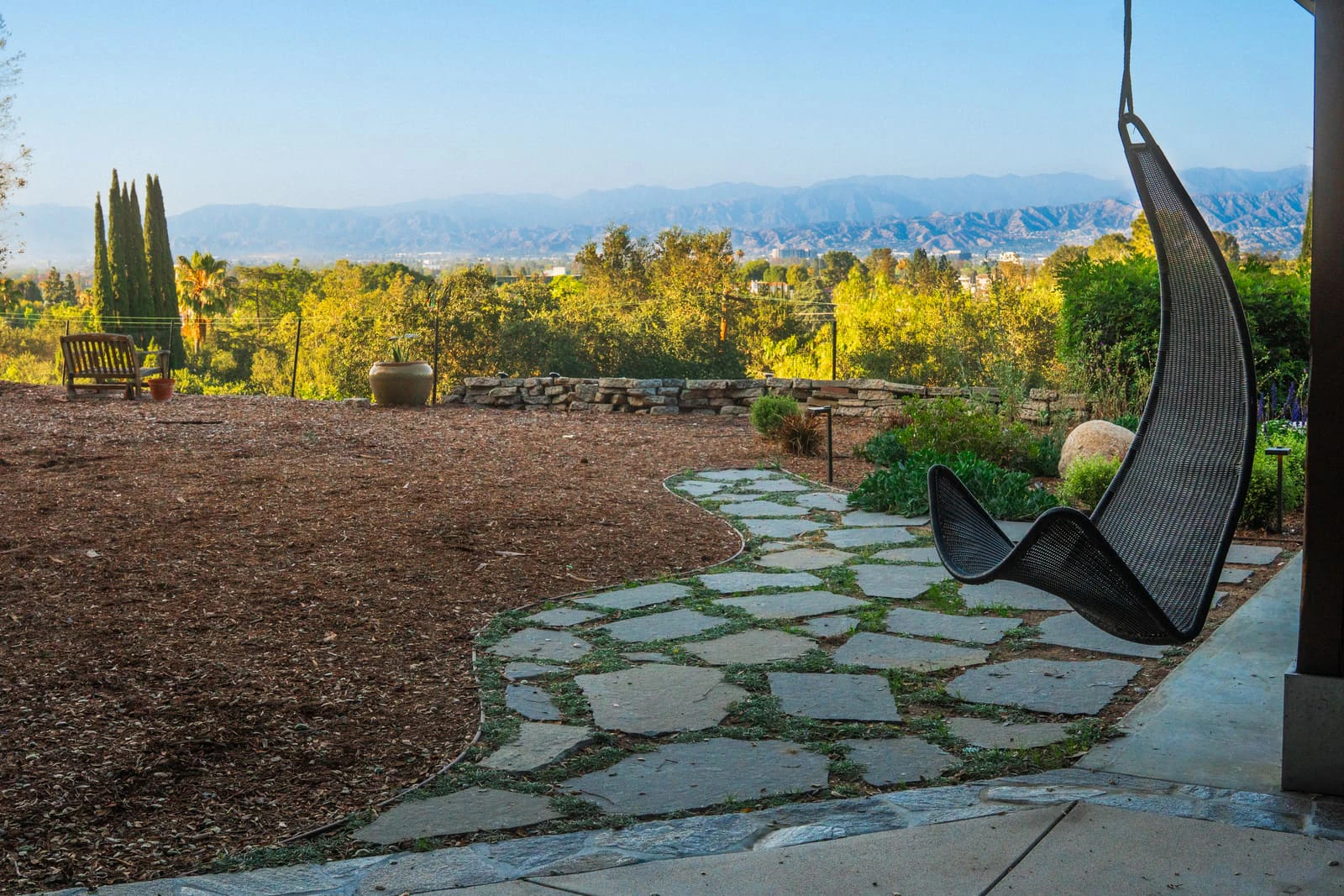
A bluestone flagstone path with planted joints curving past a hanging chair toward a view over the valley

San Fernando Valley

Landscape Design in the San Fernando Valley

Landscape design for San Fernando Valley homes, from postwar lots on the Valley floor to hillside gardens above Ventura Boulevard and along the foothills. We plan the planting with the shade, drainage and hardscape it depends on, so the garden holds up through a Valley summer and looks better each year it grows in, and our own crews from Sun Valley build it.

Service options

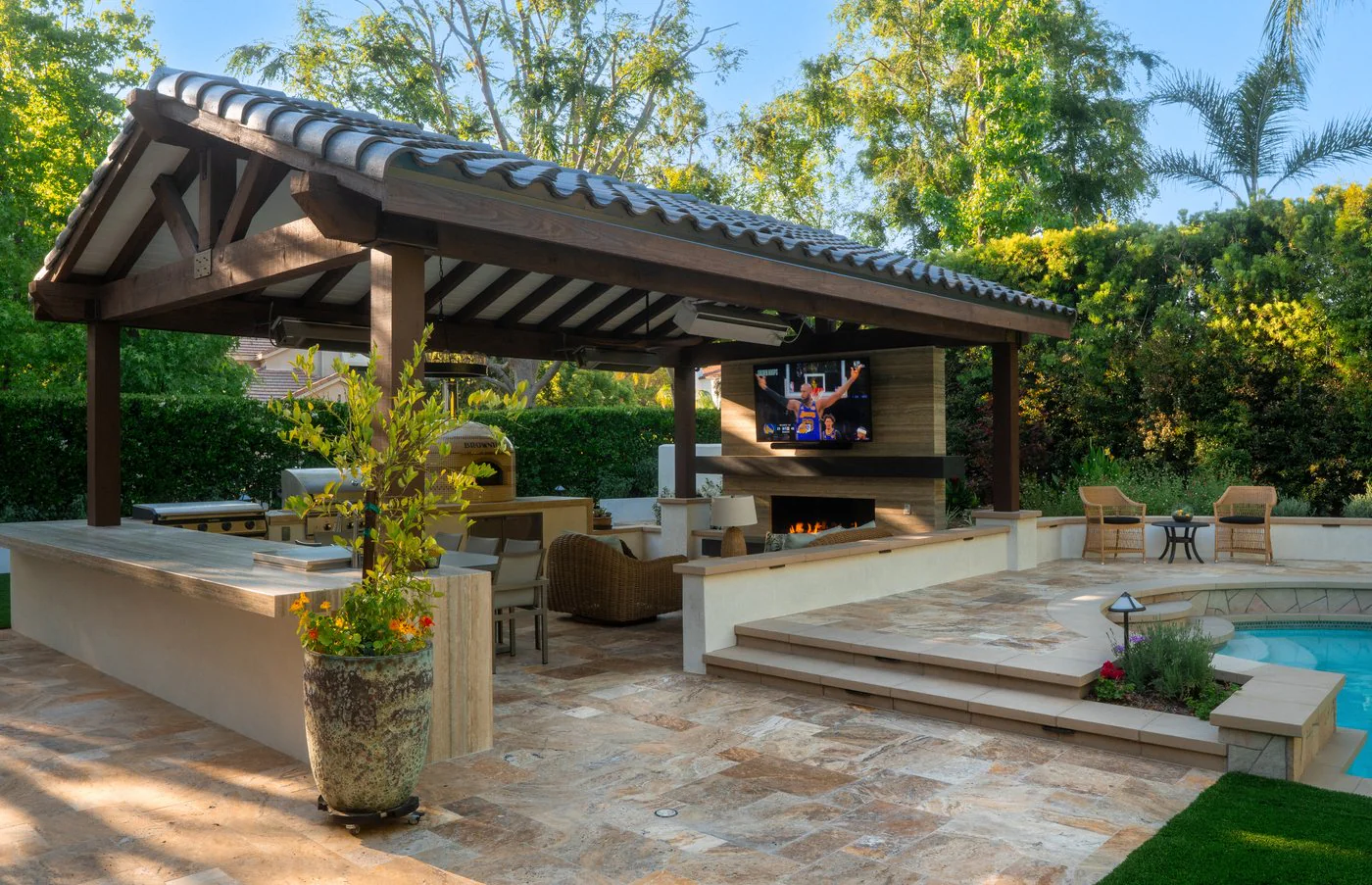
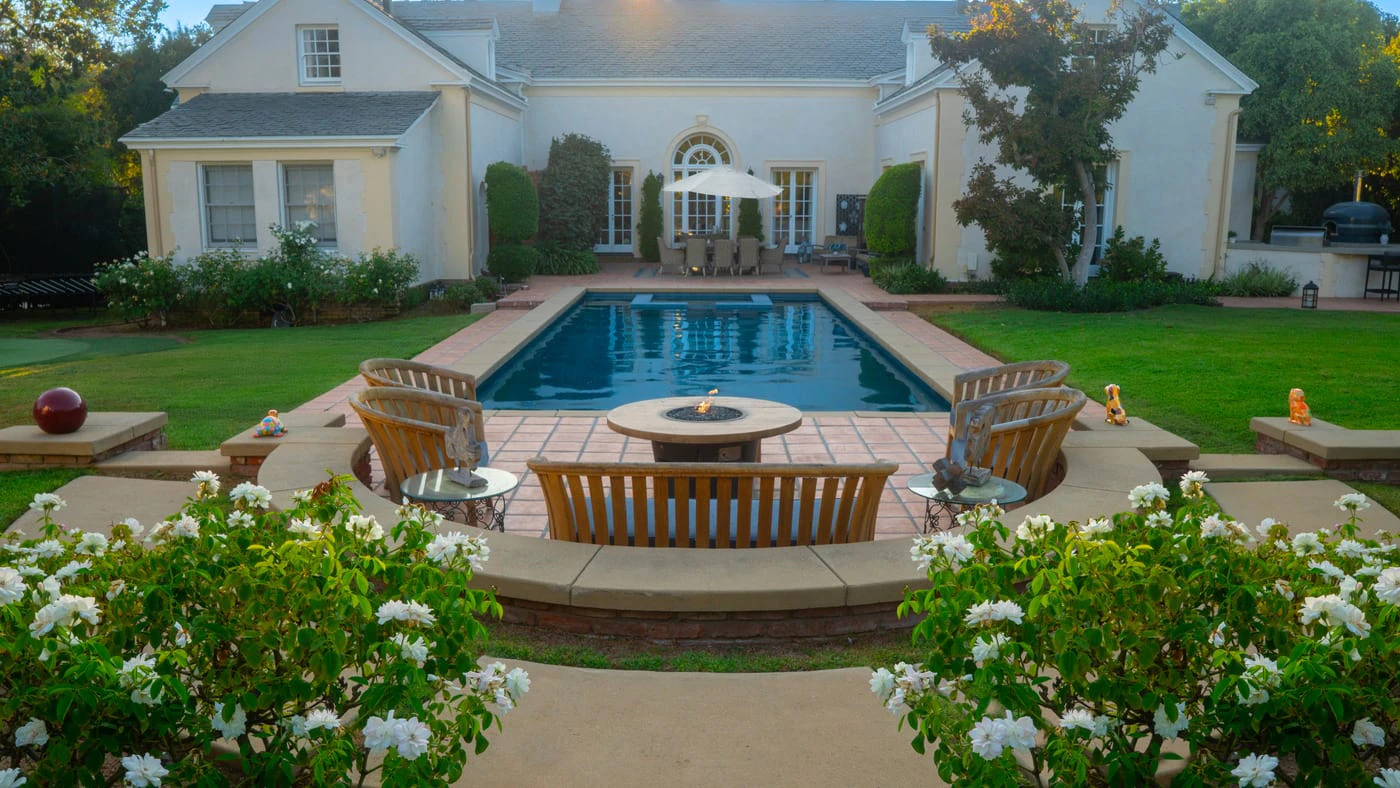
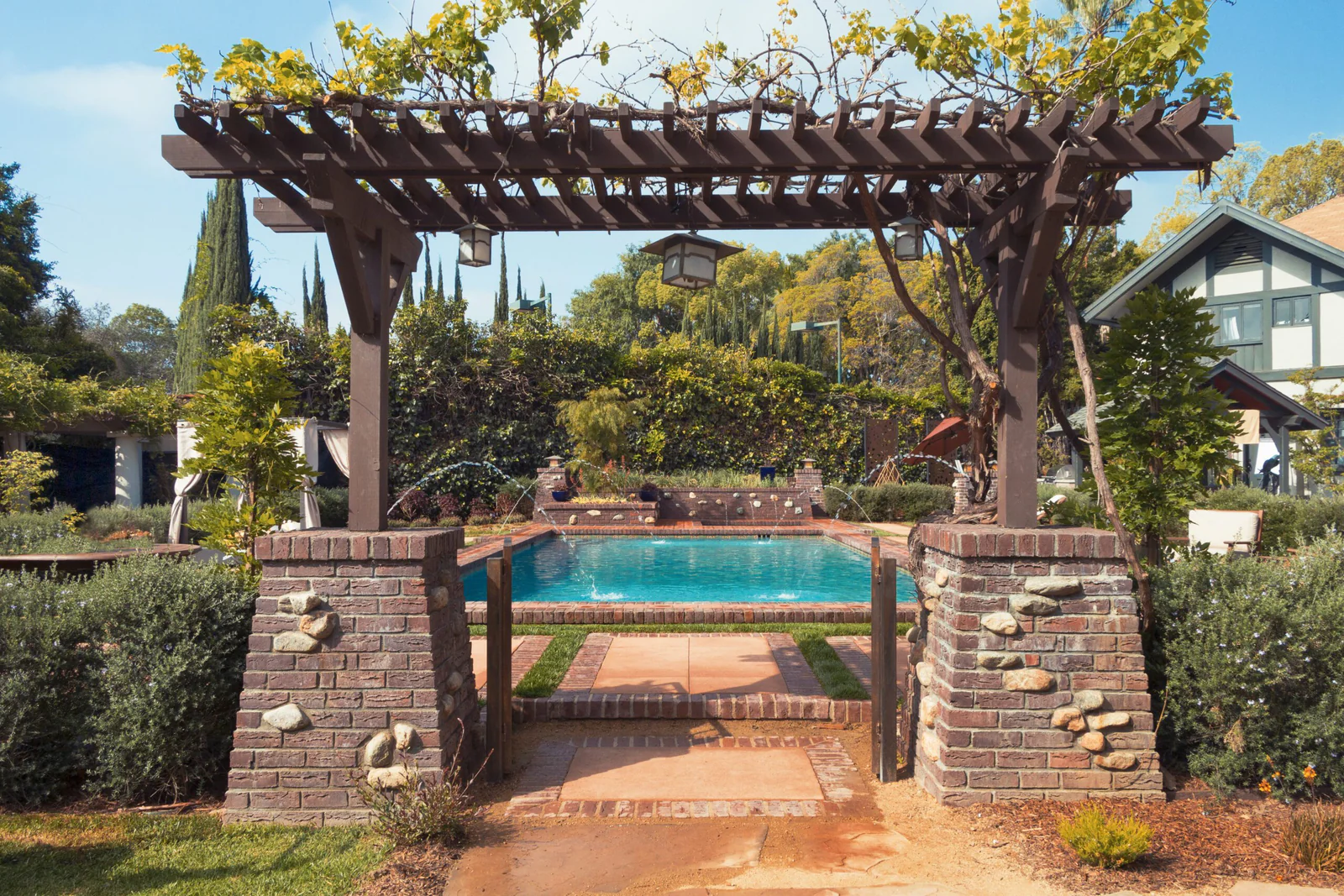
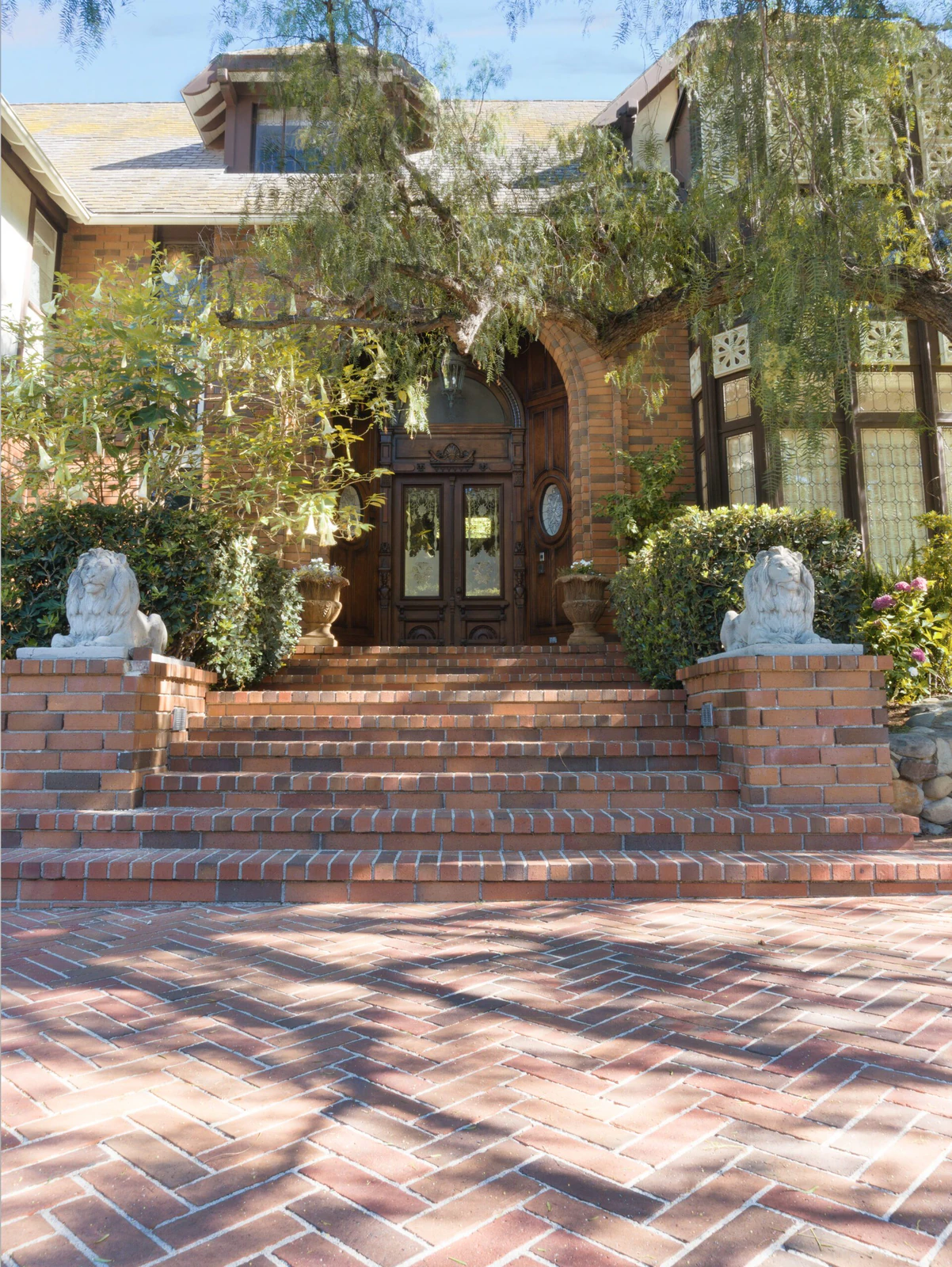
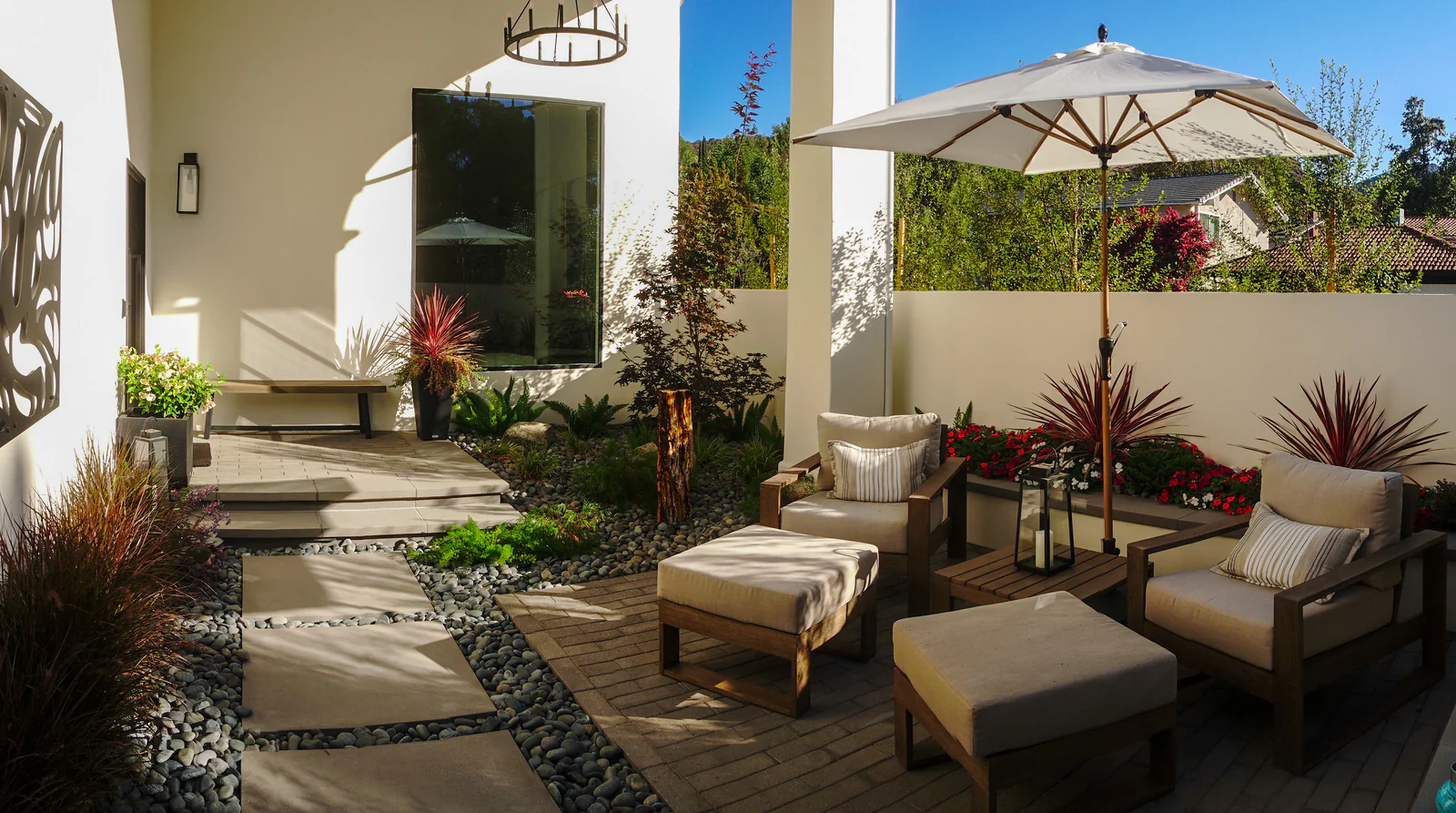
A Mediterranean-style outdoor space with warm paving, architectural planting and layered garden details

Mediterranean Landscapes

Best for Spanish Colonial, Tuscan, Mission Revival and other stucco-and-tile homes, and anyone who wants a shaded courtyard built for outdoor entertaining.

  • Warm plaster walls and terracotta roof tile set the palette
  • Wood-beamed pergolas and columns create shaded gathering space
  • Quiet fountains and wall features add sound without excess
  • Olive, lavender, rosemary and cypress become low-water once established
  • Handcrafted stonework and travertine patios stay cool underfoot

On your property The most natural fit for the Valley: the palette was made for hot, dry summers, and the Spanish and traditional houses of Encino, Sherman Oaks and Valley Village already speak its language. Plan the pergola for the western sun from the start.

  • Pergolas
  • Outdoor kitchens
  • Fire features
  • Water features

Hillside Cascade

Studio City

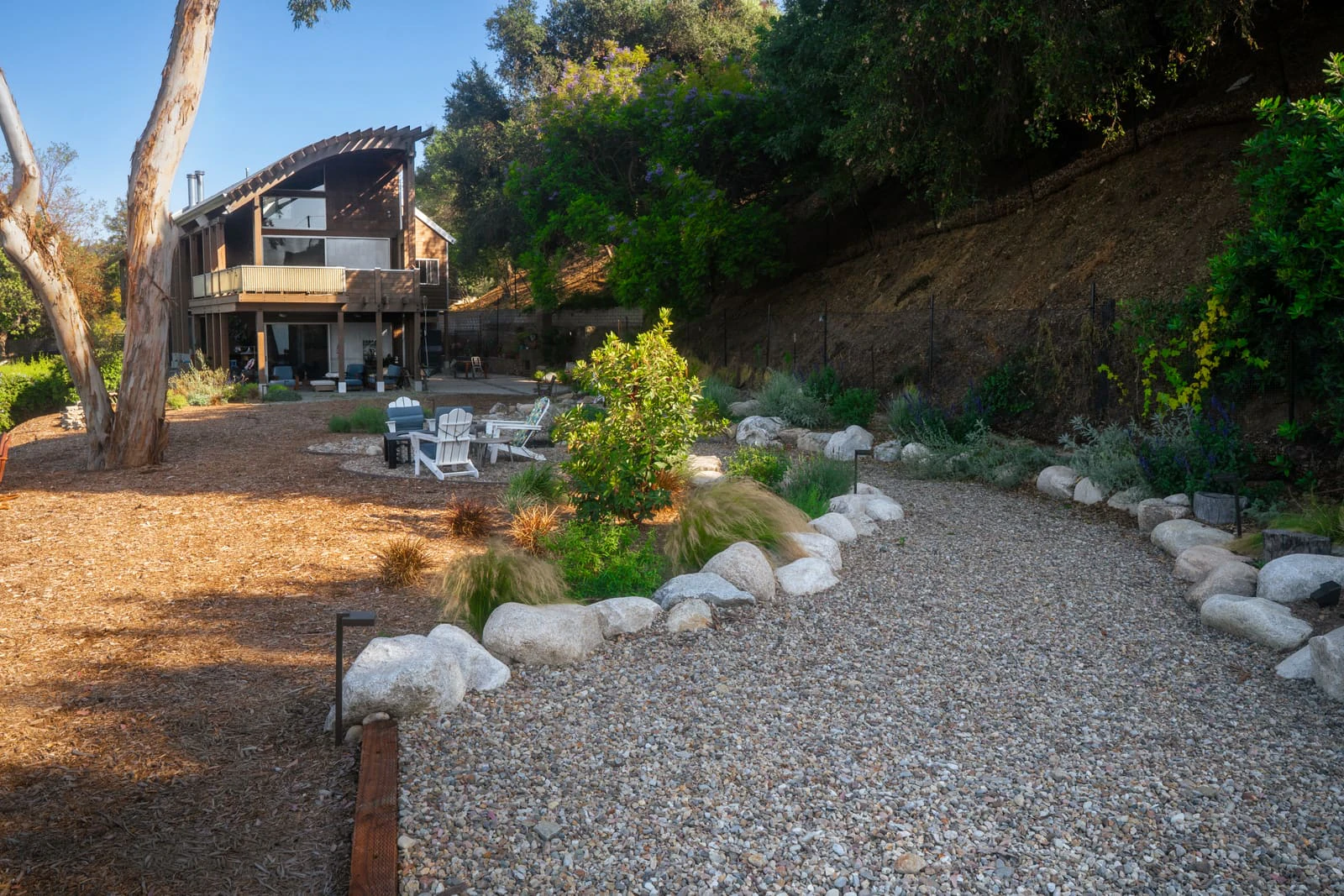
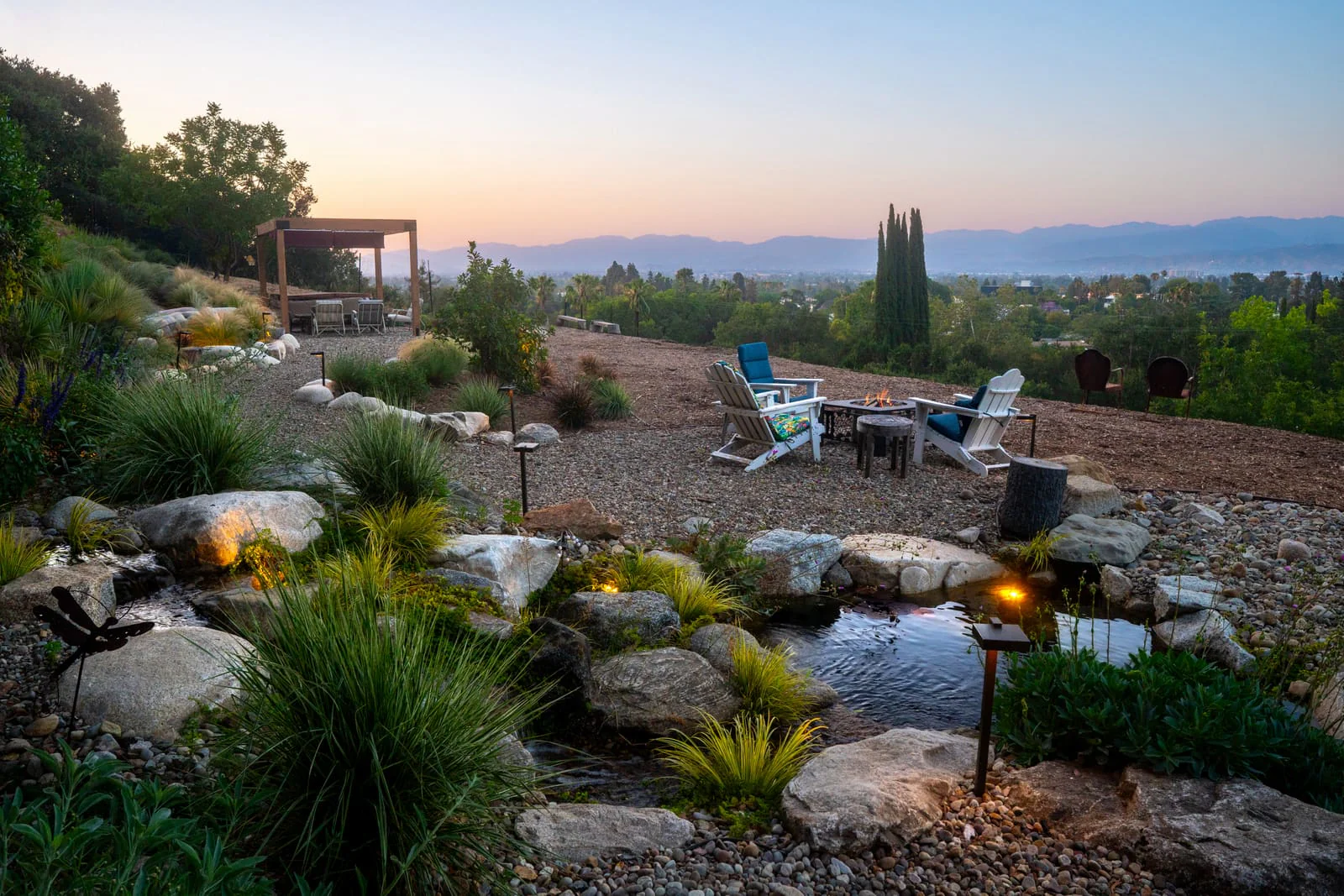
A hillside garden at dusk with a boulder-edged pond, ornamental grasses and lit paths, Adirondack chairs and a pergola looking out over the valley

Shown: Hillside Cascade, Studio City

How we work

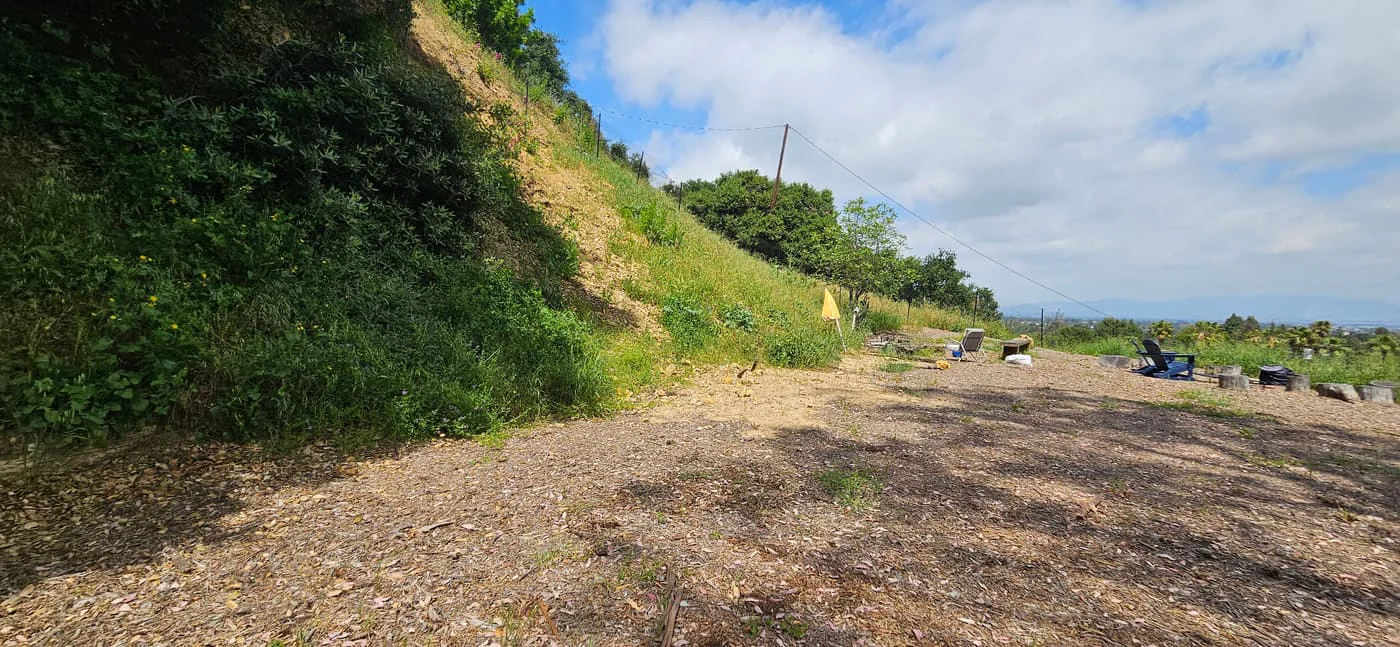
  1. A Studio City hillside before construction, with bare, eroding ground running up the slope Before

    Site analysis and existing conditions

    We assess sun and shade on each side of the house, drainage, slope, existing trees and soil. On a Valley lot that also means reading the old concrete and drainage of a postwar parcel, or the grade and fire zone of a hillside one.

  2. Designer and clients reviewing 3D property renderings together at a design consultation meeting Design

    Design and style selection

    Your designer lays out the garden with the hardscape and shade it depends on and presents it in plan and 3D, in whichever style suits the house: Mediterranean, English Garden, Traditional, Modern, Drought-Tolerant, Japanese Zen or Small-Space.

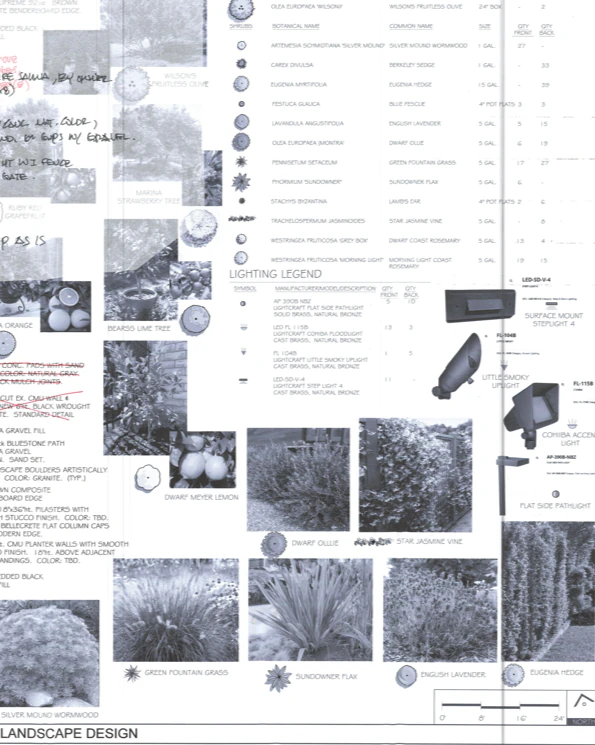
  3. A landscape design plant specification sheet listing botanical and common names, sizes, and quantities alongside photos of each specified plant Selection

    Plant selection and specification

    Trees, shrubs and perennials chosen for Valley heat, your exposure and the style, sized for maturity rather than the nursery pot, and listed on one specification sheet.

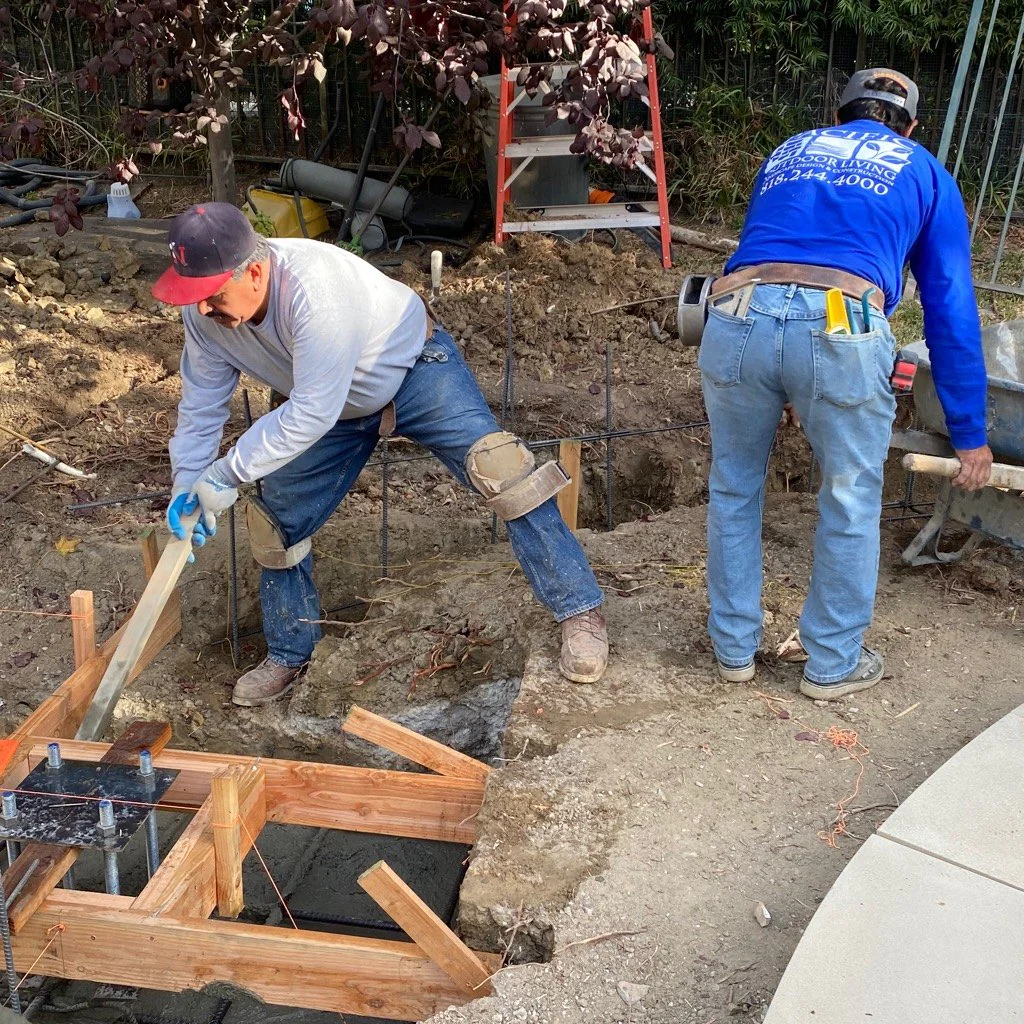
  4. Pacific Outdoor Living crew members preparing rebar and concrete forms during site construction Installation

    Soil, irrigation and planting

    Grading, soil amendment and drip irrigation zoned by exposure, then planting. On slopes, mulch over jute netting holds the ground until the roots take over.

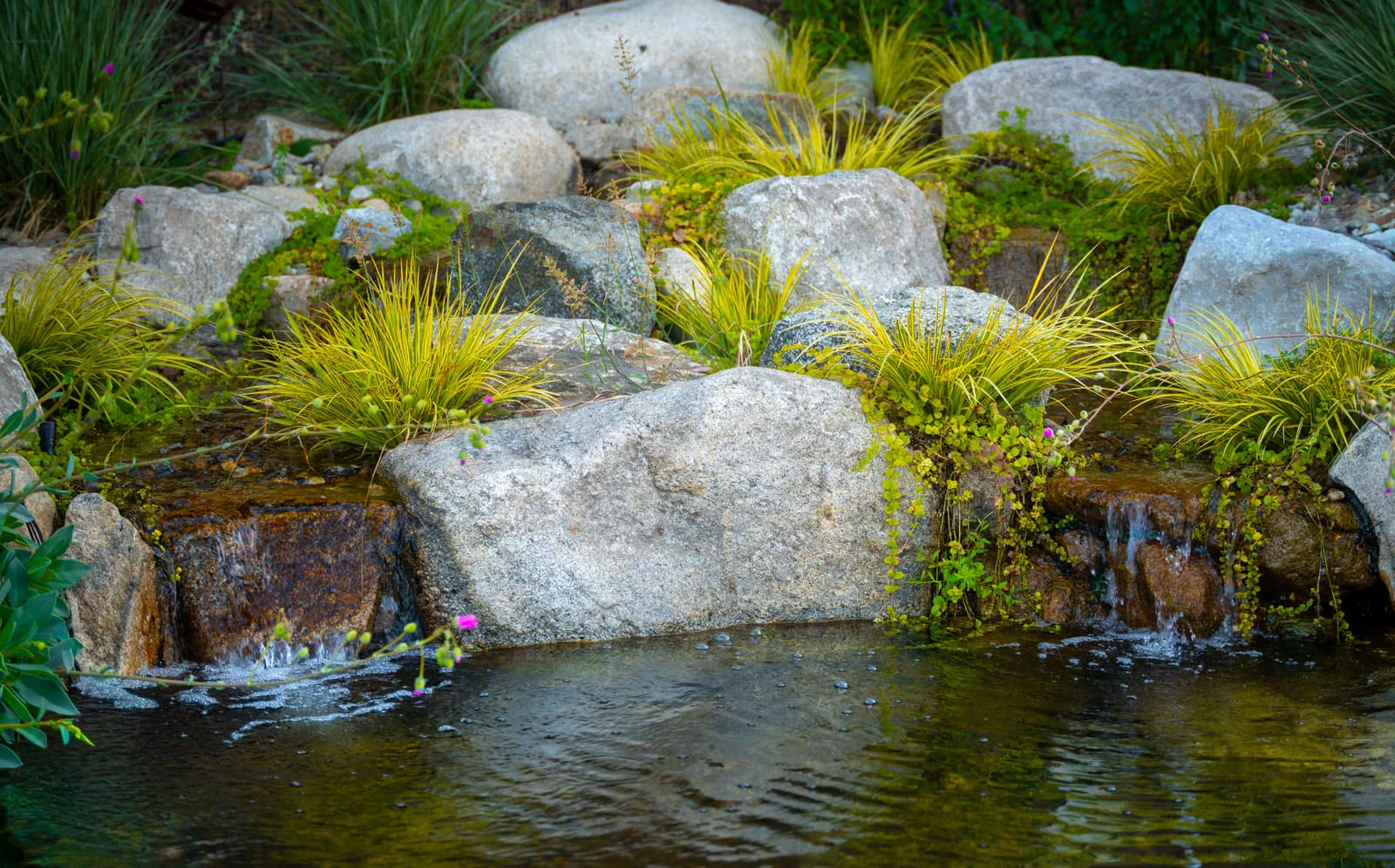
  5. Ornamental grasses and creeping groundcover established among granite boulders beside a pond Established

    Establishment and care

    First-season watering, mulching and pruning, with care instructions so the garden is established before its first full Valley summer.

Key decisions

Things worth knowing before a first consultation.

  • Heat and exposure

    West- and south-facing beds in the Valley take reflected heat from walls and paving. Plant choice, mulch depth and irrigation zoning are set by exposure, not by one palette for the whole yard.

  • Shade before plants

    Where the shade comes from decides what can grow under it. Trees and structures are placed first, then the planting is chosen for the light it will actually get.

  • Water and maintenance level

    Drought-tolerant and native planting cuts water use the most; English and traditional gardens need more water and deadheading. Hydrozoning by plant water need keeps the thirstier beds from setting the schedule for everything else.

  • Protected trees

    Coast live oak, valley oak, western sycamore and California black walnut are protected in the City of Los Angeles. Grading, trenching and new irrigation stay out of the root zone, and work close to a protected tree needs city review.

  • Slopes and erosion

    On hillside lots, boulder walls and terraces hold the grade, and slopes are planted through mulch and jute netting so they stay put while the roots establish.

  • Defensible space on the foothills

    Lots in the Very High Fire Hazard Severity Zones along the northern foothills and the Santa Monica Mountains plant conservatively near the house: low, irrigated, lower-resin species close in, with the fuller planting further out.

  • Older lots, older ground

    Postwar lots often carry compacted soil, buried concrete and irrigation that no longer works. We locate utilities and test what is there before planting over it.

  • Integration with hardscape

    Planting should soften patios, steps and walls, not fight them, and leave room for a mature canopy without roots lifting the paving.

Investment and timeline

No quote written off a photograph can account for what your property is like.

What shapes the investment

  • Landscape style and plant palette
  • Size of the planting area and the size of plants specified
  • Grading, soil preparation and any retaining on a slope
  • Irrigation, drainage and how much old hardscape comes out
  • Integration with patios, lighting and shade structures

What shapes the schedule

  • Design and plant selection
  • Planting season: fall and spring are best, since summer heat stresses new plants
  • Hillside, protected-tree or fire-zone review where it applies
  • Plant availability and ordering
  • Weather and the establishment period

Why hillside cascade was drawn together with the rest of the property

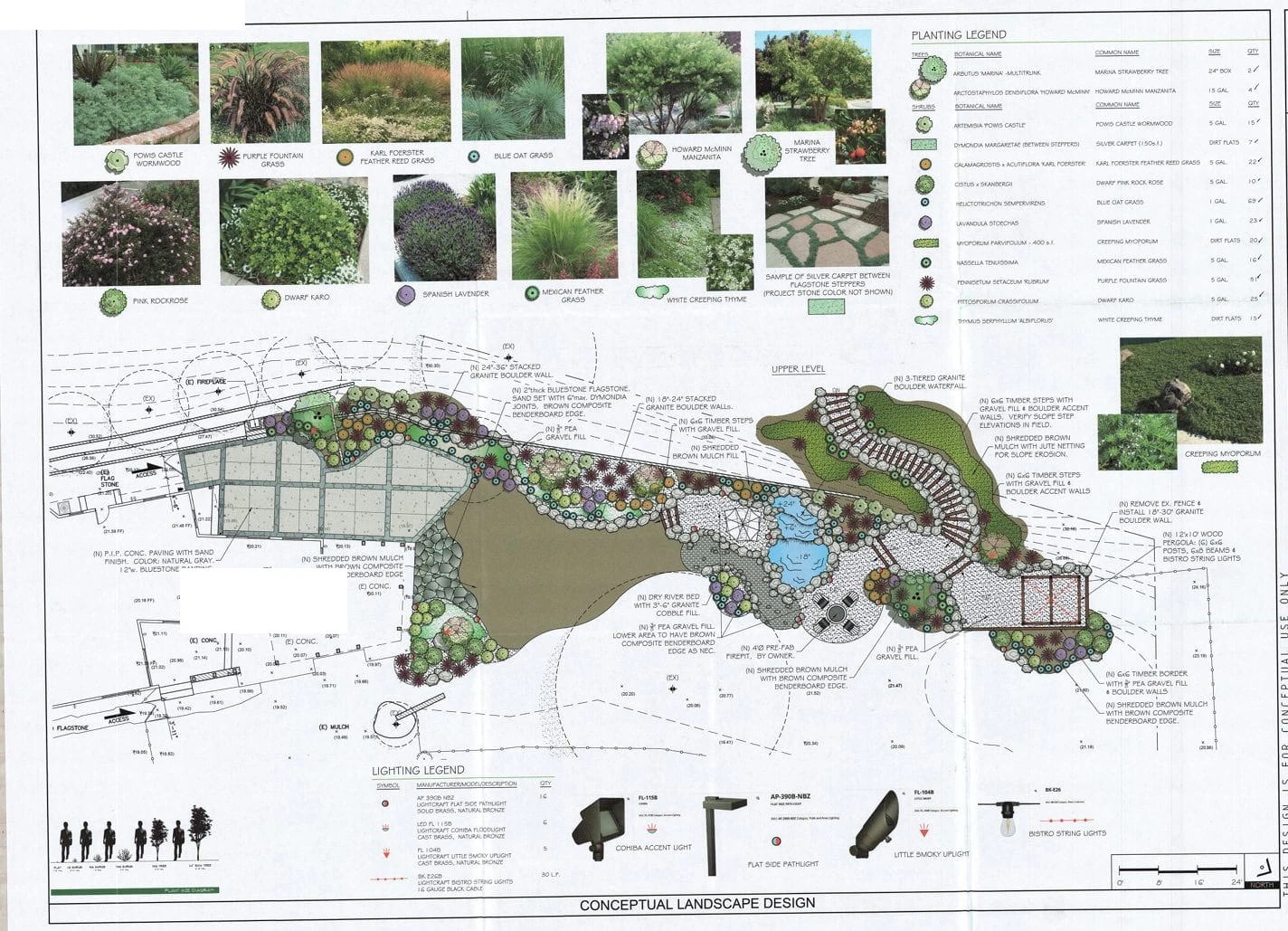
Decking, drainage, utilities, planting, shade and lighting all bear on where a feature goes and how it gets built. Settling them on one set of drawings is what keeps conduit out of the wrong trench and stops paving being cut to fit afterward.

  • Boulder walls and grade Walls of eighteen to thirty-six inch granite boulders hold the slope in three places.
  • Water A three-tier boulder waterfall, and a dry river bed of granite cobble running down through the garden.
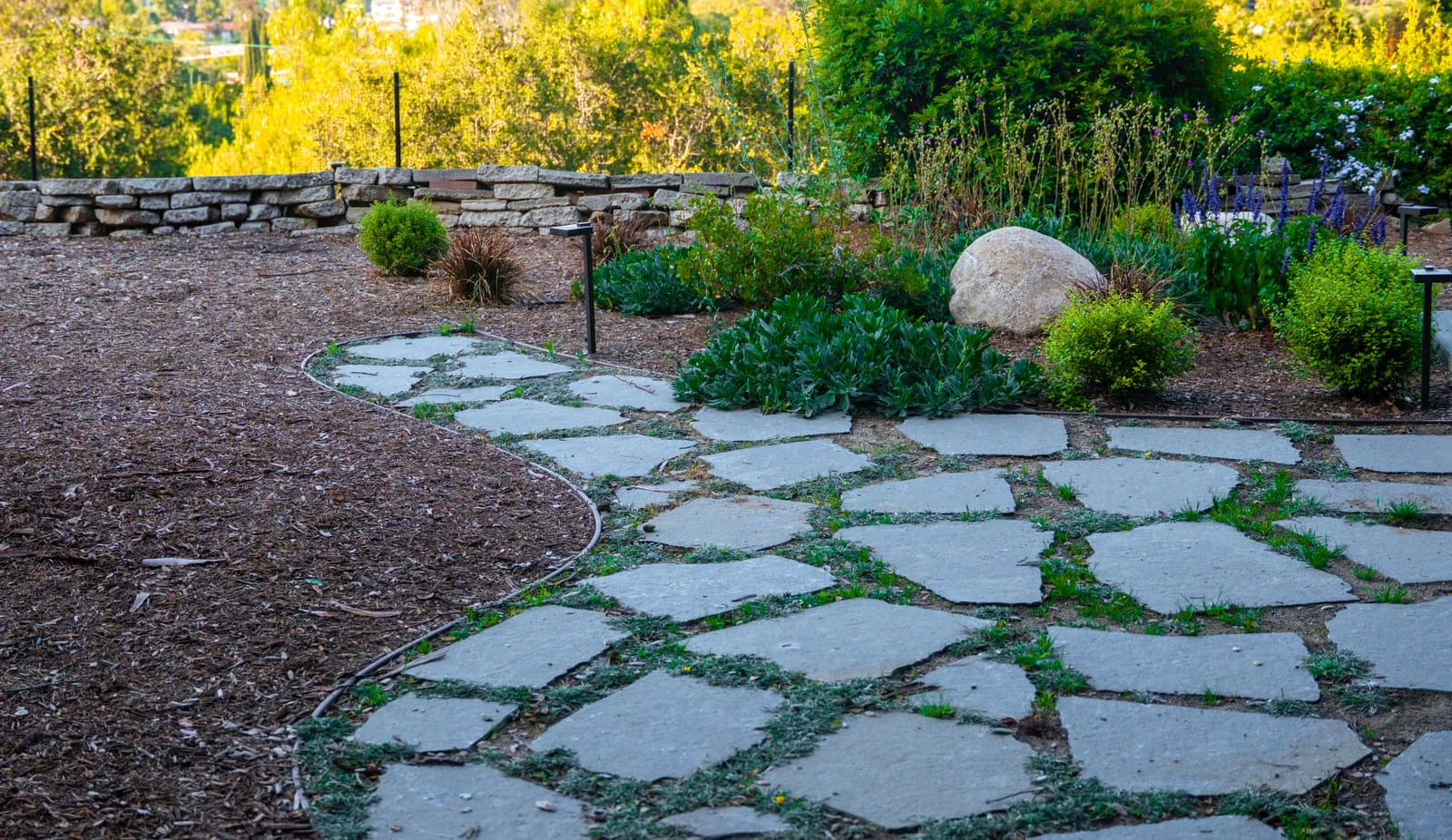
  • Paths and terraces Bluestone flagstone set in sand with dymondia in the joints, and concrete paving banded in bluestone.
  • Planting Grasses and water-wise planting, with the slopes finished in mulch over jute netting until the roots took hold.
  • Shade A pergola on the upper terrace, placed for the view and the afternoon sun.
Conceptual landscape plan for the Studio City hillside garden, showing terraces, the waterfall, paths and the planting legend
The design sheet: layout, drainage, planting and lighting
Bluestone flagstone set in a curving path with planted joints, between mulched beds of grasses and granite boulders
The same yard built: Hillside Cascade, Studio City

Access, engineering, permits, finishes and scope vary a lot from one property to the next, so the investment and the schedule for your project are set once we have seen the site and the design is settled.

Tell us about the property and what you want the space to do. We will walk through the design, site and permitting factors likely to shape it.

What customers say

  • Pacific Outdoor Living replaced the original landscaping with drought-tolerant plants, making the yard look like a completely different home. The transformation was stunning and immediately improved our curb appeal. We were thrilled with how they handled the planting design and modern aesthetic choices.

    Christian Bailey Google review Drought-tolerant planting and landscape replacement
  • Other companies struggled with the steep hillside, but Pacific Outdoor Living transformed it into a three-tier patio space with thoughtful design and execution. Their expertise in handling difficult terrain made all the difference. The final result is stunning and has completely changed how we use our property.

    April Crow Google review Steep hillside, three-tier patio
  • The company used its own crews, treated the yard and homeowner with respect, and got the job done on time. Having the same team throughout meant consistency and accountability. We appreciated their professional approach and the respect they showed our property.

    Ronnie Stewart Google review In-house crews, on time

Read all Pacific Outdoor Living reviews on Google

Frequently asked questions

What grows well in San Fernando Valley heat?

Mediterranean and California native plants do the heavy lifting: rosemary, westringia, sages, ceanothus, toyon, coffeeberry, olive, ornamental grasses and citrus all read as full and green on drip irrigation. The key is matching each bed to its exposure, since a west-facing wall and a shaded side yard on the same lot need different plants.

When is the best time to plant in the Valley?

Fall, from September through November, and spring, from February through April. New planting needs time to root before its first full Valley summer, so we avoid planting into July and August heat where we can.

Can we replace our lawn and still have a green yard?

Yes. A smaller lawn or artificial turf where the kids and dogs actually play, with drought-tolerant planting doing the work everywhere else, keeps the useful open space and drops the irrigation demand substantially.

Are there protected trees on our property?

Possibly. Coast live oak, valley oak, western sycamore and California black walnut are protected in the City of Los Angeles, so if one is on the property we map its root zone during design and plan grading, trenching and planting around it.

How do you landscape a hillside lot?

With the grade, not against it. Boulder or engineered retaining walls make level terraces, steps and paths connect them, and slopes are planted through mulch over jute netting so they hold while the roots establish. On Hillside Cascade in Studio City that meant three walls of granite boulders and a dry river bed carrying the stone down the slope.

What changes on a lot in a fire hazard zone?

Mostly the planting closest to the house. The first several feet stay free of combustible material, the near zone is planted low and irrigated with lower-resin species such as toyon, lemonade berry and deergrass, and the fuller planting sits further out. We confirm your parcel's zone during the site analysis.

Do I need a permit for landscaping in the Valley?

Routine planting usually does not. Retaining walls above a certain height, major grading, hillside work and electrical for lighting can, and work near a protected tree needs review. Our permitting department confirms what your scope needs and handles the submittals.

What does landscape design cost in the San Fernando Valley?

It depends on the size of the planting area, the plant sizes specified, how much grading or old hardscape removal the lot needs and how much of the yard is included. Your designer sets the design fee at the first meeting, once the site analysis has measured the property.

Do you serve my part of the Valley?

Very likely. Our yard and showroom are in Sun Valley, and we design and build landscapes from Burbank and Studio City to West Hills, Northridge and Porter Ranch. Each community has its own page with an address checker.

See every community we serve

Ready to get started?

Schedule a consultation with one of our designers to discuss your project goals and explore what's possible on your property.

What happens next: we set up a visit, measure the property and talk through what you want the space to do. Then you get a design to look at before you commit to anything.