
The Design Journal · From the founder
Landscape Designer vs. Landscape Contractor vs. Design-Build Company: Which Should You Hire?
Explore the three approaches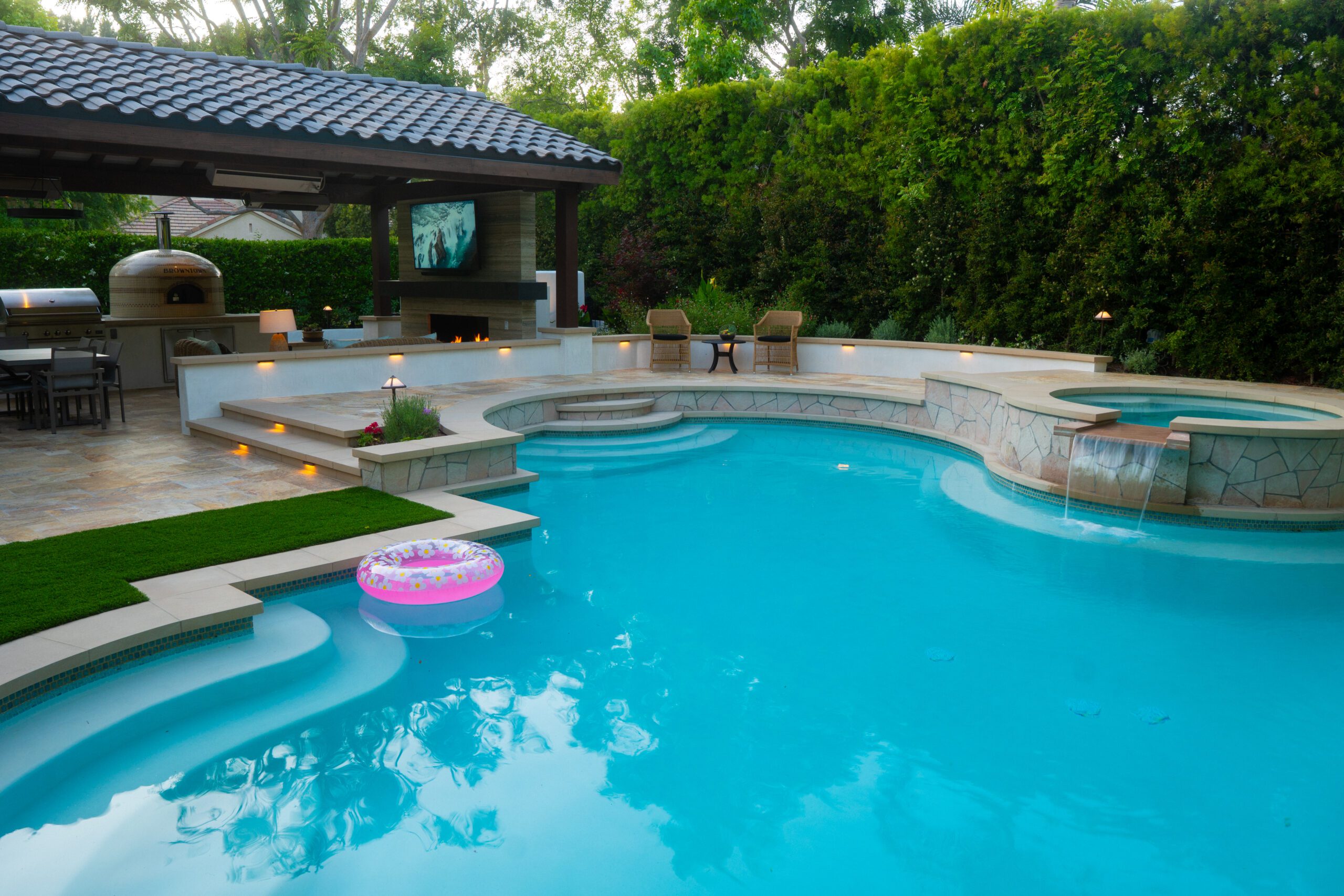
When you hire someone to design and build your backyard, what are you really buying?
Most homeowners would say they're buying a beautiful landscape, a swimming pool, an outdoor kitchen, or perhaps an entirely new outdoor living environment.
But I think you're buying something more important: You're buying the expectation that the finished project will look and function the way you envisioned, that it will be built rapidly without delays and change orders and that you'll receive a quality product at a fair price.
If the result exceeds your expectations, even better!
I've been involved in the building industry for more than 50 years, and my sons and I started Pacific Outdoor Living in 1999. One thing I've learned is that a great landscape requires two very different skills: excellent design and excellent construction.
But there's a third ingredient that's just as important, and it's often overlooked.
The designer and contractor must know how to work together.
Three Ways to Design and Build Your Landscape
As a homeowner, you generally have three choices.
Explore each approach. Terry’s full explanation is below.
1. Hire a landscape contractor who also does the design.
Some landscape contractors design their own projects. This can work well, particularly for smaller or relatively simple jobs. However, a good contractor isn't necessarily a good designer. They're two different professions requiring different skills.
2. Hire an independent landscape designer or landscape architect.
In this arrangement, you hire a professional to develop the design, then hire a separate contractor to build it.
This can work very well, especially when the designer and contractor have experience working together. But it also introduces an important challenge: two separate companies must coordinate their work, often with different standards and expectations.
If the designer isn't a builder and may not be familiar with what things cost today, they might not keep the homeowner from going way over budget. Or even worse, they may never have started with a budget, but just the homeowner's concept.
3. Hire a landscape design-build company.
A design-build company handles both design and construction under one organization.
The designers and construction teams work together regularly, use established procedures, and have a common objective: delivering the finished project the homeowner expects.
As a design-build company, we always start with the budget and keep the project in range.
For a major outdoor living project, I believe this is by far the best approach. Let me explain why.
A Beautiful Design Is Only Half the Job
A designer's job is to envision a beautiful, functional landscape that meets the homeowner's needs.
The contractor's job is to turn that vision into reality.
That sounds simple, but there's a tremendous amount of communication required between the two.
For example, imagine a designer creates a beautiful backyard with a swimming pool, a raised spa, an outdoor kitchen, a pergola, retaining walls, and elaborate paving.
Everything looks wonderful on the drawing.
But how will the pool elevations work with the patio? Where will the drainage go? How will the utilities get to the outdoor kitchen? What foundations are required? Can the construction equipment access the backyard?
And perhaps most importantly, can the entire project actually be built within the homeowner's budget?
These are not questions that should be left until construction begins.
They need to be addressed during the design process, with input from the people who understand how the work will actually be built.
Communication Must Go Both Ways
One of the biggest lessons I've learned is that communication between designers and contractors must be a two-way street.
The designer needs to be able to instruct the contractor, clarify details, and correct work that doesn't follow the design.
But the contractor must also be able to correct the designer.
A good construction supervisor may recognize that a particular detail is difficult to build, unnecessarily expensive, or likely to create problems later.
That information needs to get back to the designer.
When designers and contractors work together every day, this becomes a natural part of their jobs.
The designer learns how things are actually constructed. The contractor learns what the designer is trying to achieve.
Both become better at their professions.
Now consider what happens when the designer and contractor work for different companies and perhaps have never worked together before.
They may have different construction standards, different expectations, and different ways of communicating.
An independent designer might work with a particular contractor only once a year. How much opportunity is there to develop common procedures and a strong working relationship?
Certainly, there are excellent independent landscape architects and contractors who work very successfully together.
But the homeowner needs to understand that the relationship between them is an important part of the project's success.
Both become better at their professions.
Construction Documents: Where the Design Becomes Instructions
There's another aspect of landscape design that most homeowners know very little about.
It's called Construction Documents, commonly referred to as CDs.
These are the technical drawings and specifications that tell the contractor how to build the project.
They may include dimensions, elevations, materials, construction details, drainage plans, utility layouts, and structural information.
Not every project requires the same level of documentation, but the more complicated the project, the more important these documents become.
Here's the problem: There isn't one universal standard that every landscape designer and contractor follows for preparing and interpreting these plans.
One designer may provide extensive construction details. Another may provide only basic drawings and expect the contractor to work out the details.
One contractor may understand exactly what the designer intended. Another may interpret the same drawing differently.
And when something isn't clear, who makes the decision?
If the answer isn't established before construction starts, misunderstandings can lead to delays, change orders, additional costs, and sometimes an unhappy homeowner.
Finished projectWhat It Took Us Years to Learn at Pacific Outdoor Living
When my sons and I started Pacific Outdoor Living in 1999, we were primarily a paving stone contractor.
Over the years, we expanded into complete landscape design and construction, including pools, spas, outdoor kitchens, pergolas, masonry, planting, and water features.
As the projects became more complex, so did the need for coordination between our designers and construction teams.
And I'll tell you something: It took us years to get those communication lines worked out properly.
We had to establish standards for how plans were prepared, what information our construction supervisors needed, how questions were handled, and how corrections were communicated back to the designers.
It wasn't something we accomplished overnight.
Today, our designers work with our construction team every day.
Our construction supervisors provide feedback to the designers. Our designers learn from what happens in the field. And we continually refine the way we prepare our plans and build our projects.
We've also learned that construction knowledge needs to be brought into the design process early, not after the homeowner has fallen in love with a design that may be impractical or far beyond the intended budget.
Are our systems perfect? Of course not. We're continually working to improve them.
But having our designers and builders working together within one organization gives us a tremendous advantage.
And that advantage ultimately belongs to the homeowner.
Who Is Responsible When Something Goes Wrong?
Here's another question I would encourage every homeowner to ask.
What happens when there's a disagreement between the designer and the contractor?
Suppose the contractor says a detail on the plan won't work. The designer says it should. Construction stops while the two try to resolve the issue.
Who makes the final decision? Who pays for the correction? And who is responsible for the delay?
When the designer and contractor work for separate companies, these questions can become complicated, depending on their contracts and responsibilities.
With a properly organized design-build company, there's one organization responsible for coordinating the design and construction.
That doesn't mean problems never occur. Construction is complicated, and unexpected conditions are part of the business.
But there should be a clear process for resolving them without making the homeowner the referee between two separate companies.
To me, that's one of the biggest advantages of design-build.
My Advice to Homeowners
Whether you hire an independent landscape designer, a contractor who designs his own projects, or a full-service design-build company, I would encourage you to look beyond the beautiful photographs.
Find out how the company actually operates.
Who prepares the construction plans? Who checks whether the design can be built within your budget? How are construction problems resolved? Who is responsible for the finished product?
And most importantly, do the people designing your project regularly work with the people who will build it?
After more than 50 years in construction, I've come to believe that a successful project is not simply the result of a great designer or a great contractor. It's the result of a team that knows how to work together.
That's why we built Pacific Outdoor Living around the design-build approach.
And that's why I believe it's the best way to deliver an exceptional outdoor living environment.
Take this into your next conversation
Homeowner's Checklist: 10 Questions to Ask Before Hiring a Landscape Designer or Contractor
Before you sign a contract, I recommend asking these questions.
0 of 10 questions reviewed
Check each question as you discuss it with your prospective team.
My final advice: Don't select a designer or contractor based solely on price or how attractive their portfolio looks. Make sure you understand how they operate, how they communicate, and who is responsible for delivering the result you're expecting.
The voice behind the advice
About the Author
Terry Morrill is the founder of Pacific Outdoor Living, a Southern California landscape design-build company established in 1999. A graduate of Cal Poly San Luis Obispo in Architectural Engineering, Terry has more than 50 years of experience in construction, remodeling, and real estate development. Pacific Outdoor Living has been recognized twice on the Inc. 500 list and has had its work featured on HGTV, ABC's Extreme Makeover: Home Edition, and other national media.
Your backyard. One team.
Let’s bring your vision to life.
Start a conversation with Pacific Outdoor Living.
Schedule a Consultation More from the Design Journal →