
What shapes the investment
- Patio size and the material chosen
- Site grade and drainage work required
- Excavation difficulty and access for equipment
- Permitting and any engineering needed
- How much of the surrounding hardscape and planting is in scope
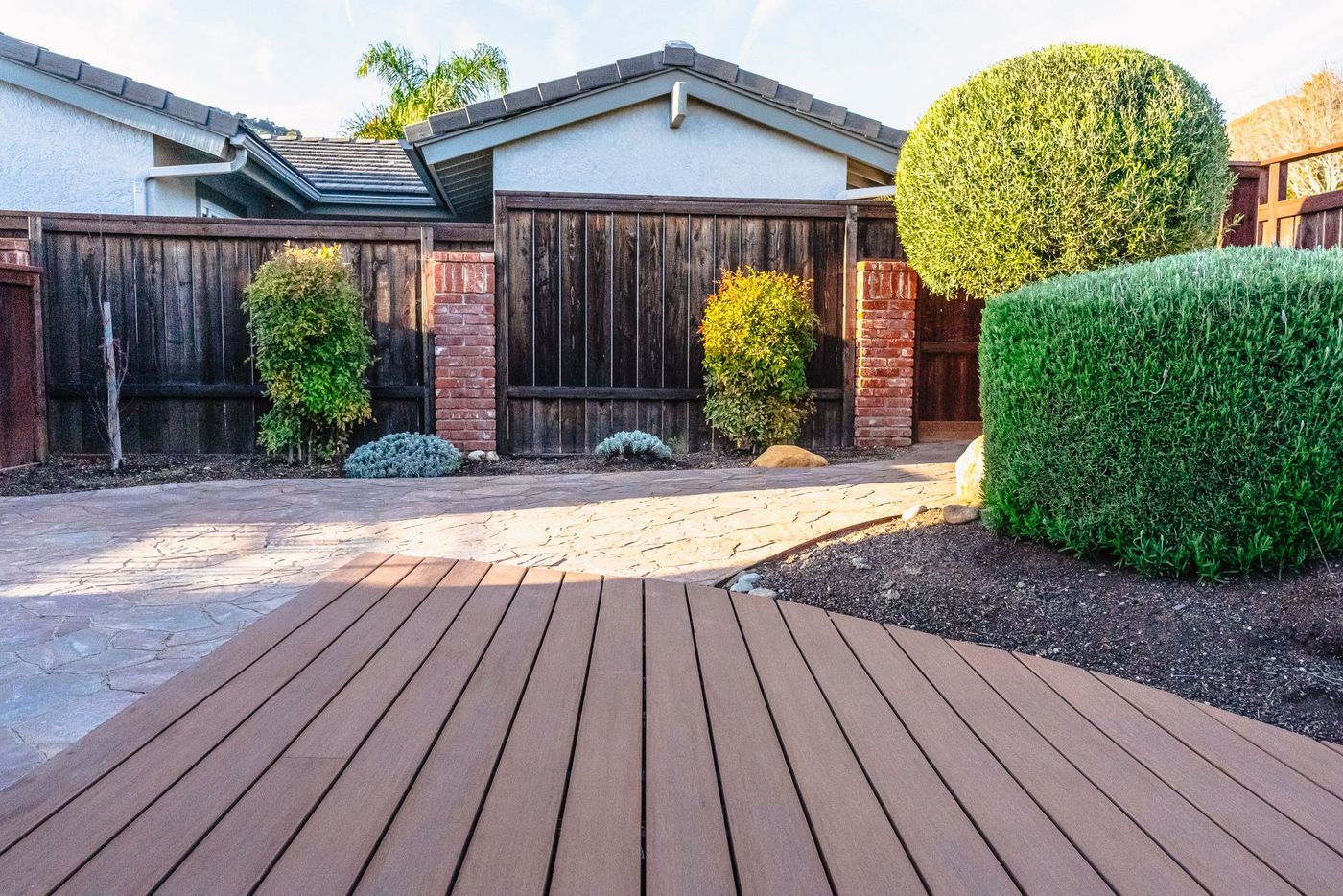
Patios & Hardscape
Oceano sits beside the dunes, with Oceano Lagoon on one side and Arroyo Grande Valley farmland on the other. We design patios that get proper base depth and compaction for sandy soil, with corrosion-resistant materials for the marine air, then build them with our own in-house crews.
Start here
The right approach follows how you want to use the space. Pick what you're actually after below, and the materials and layout mostly follow from it. Every project shown was built here in Southern California, so the choices are suited to this climate.
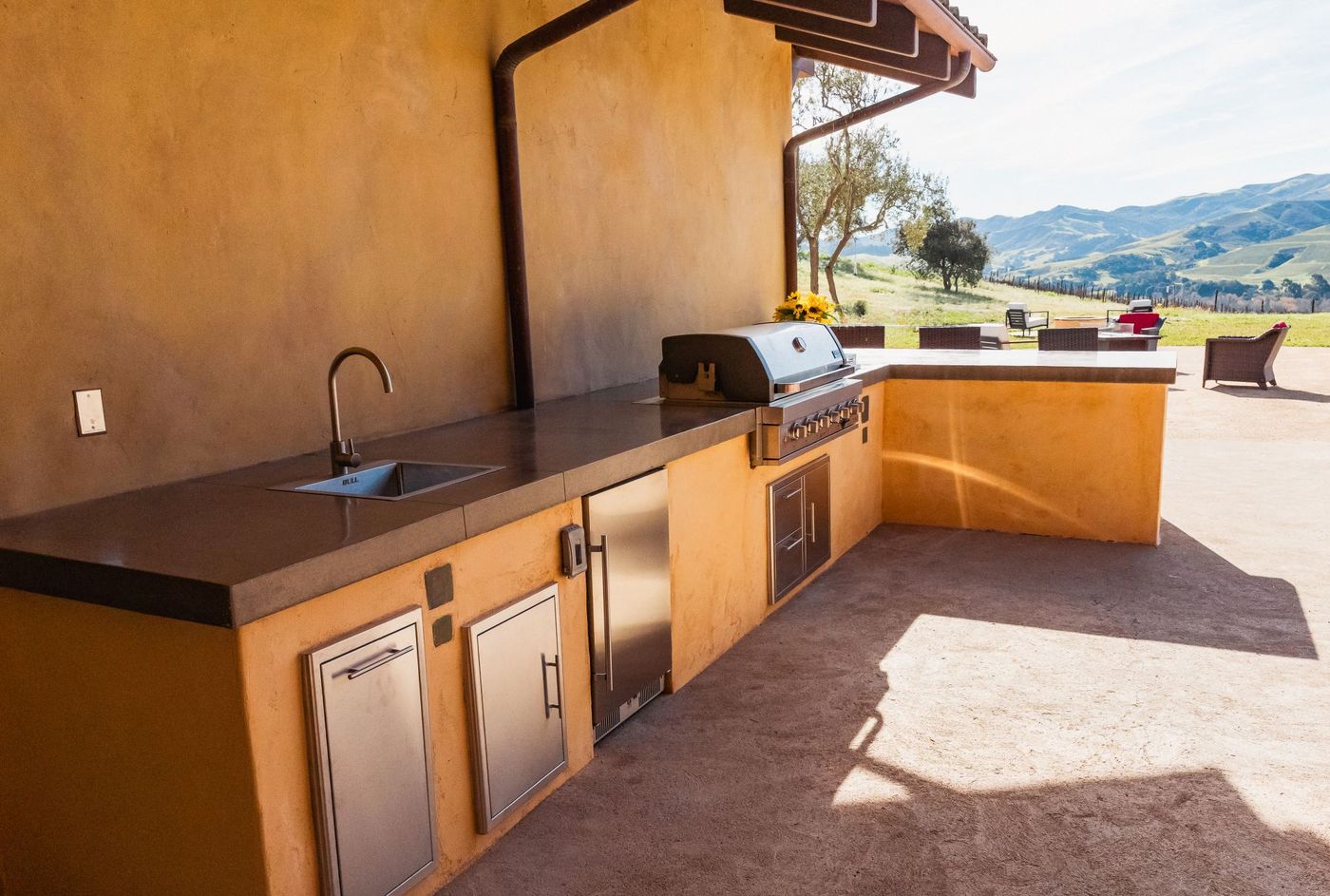 01 An entertaining space A patio positioned in the lee of the house or a hedge, sheltered enough from the dependable afternoon onshore breeze to actually use. See entertaining patios
 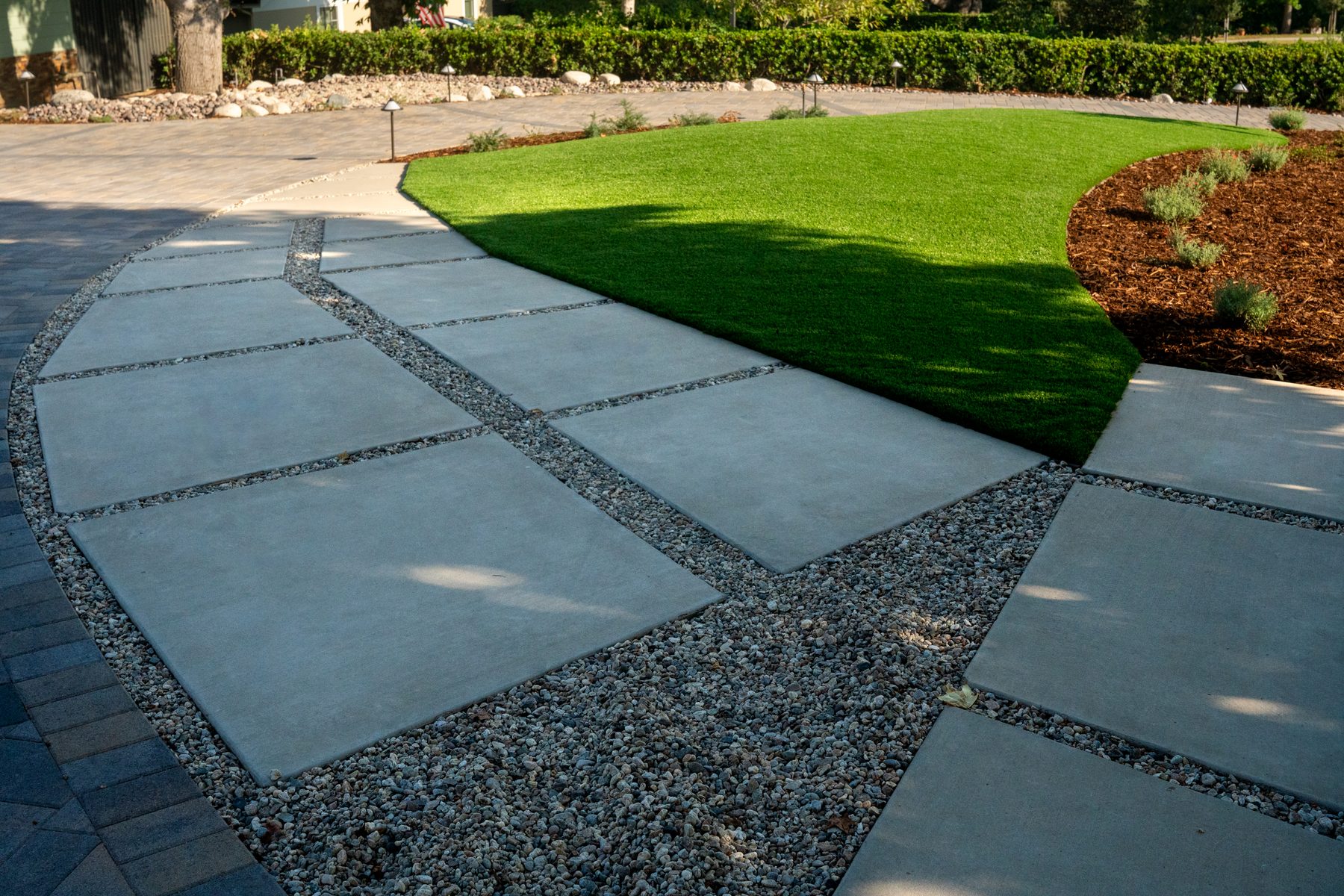 02 A family-friendly backyard Durable, corrosion-resistant surfaces built for sandy, fast-draining ground and steady coastal wind. See family patios
 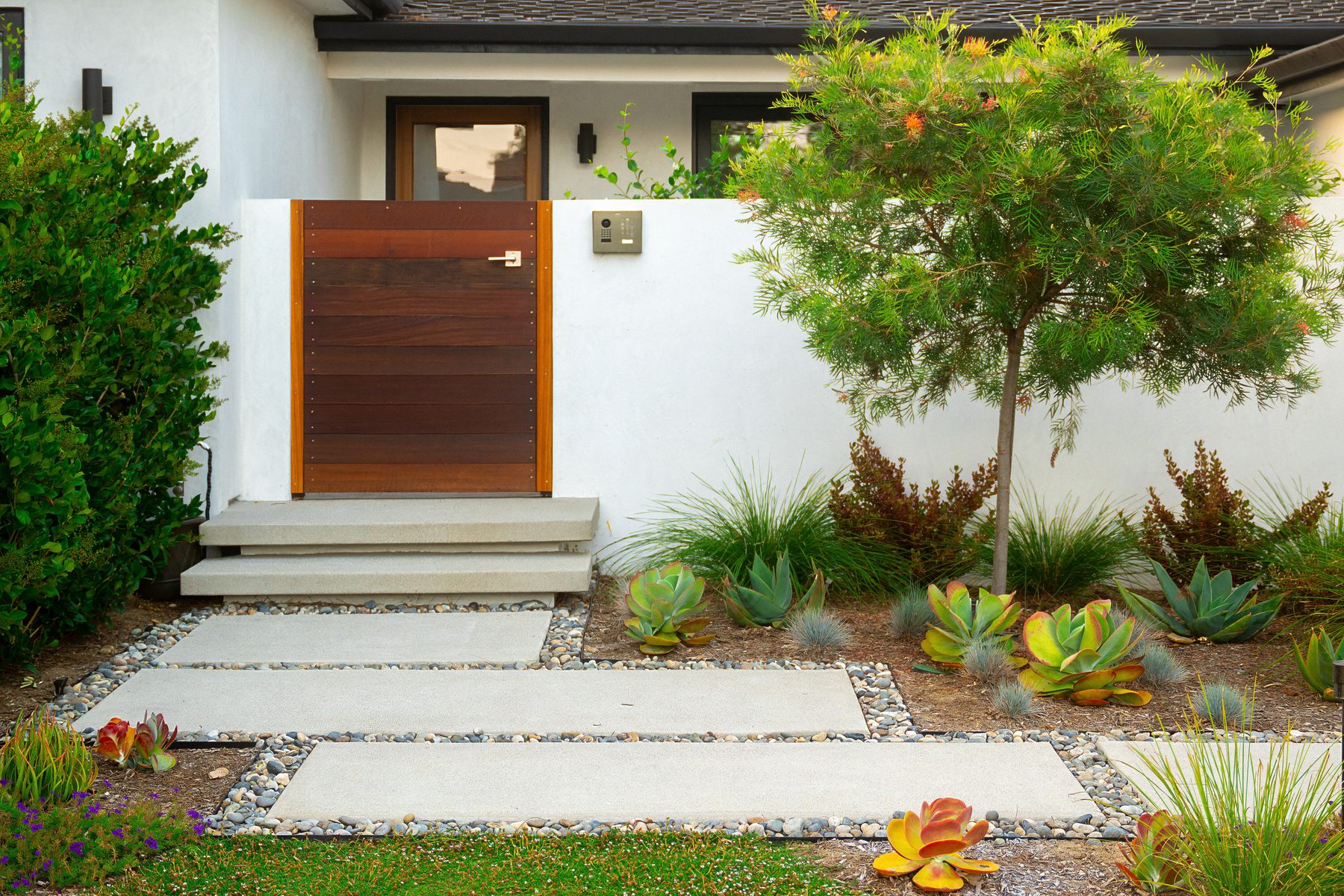 03 A refined, minimal look A restrained, wind-tolerant material palette suits Oceano's working-coastal character better than a lush, high-maintenance one. See modern patios
 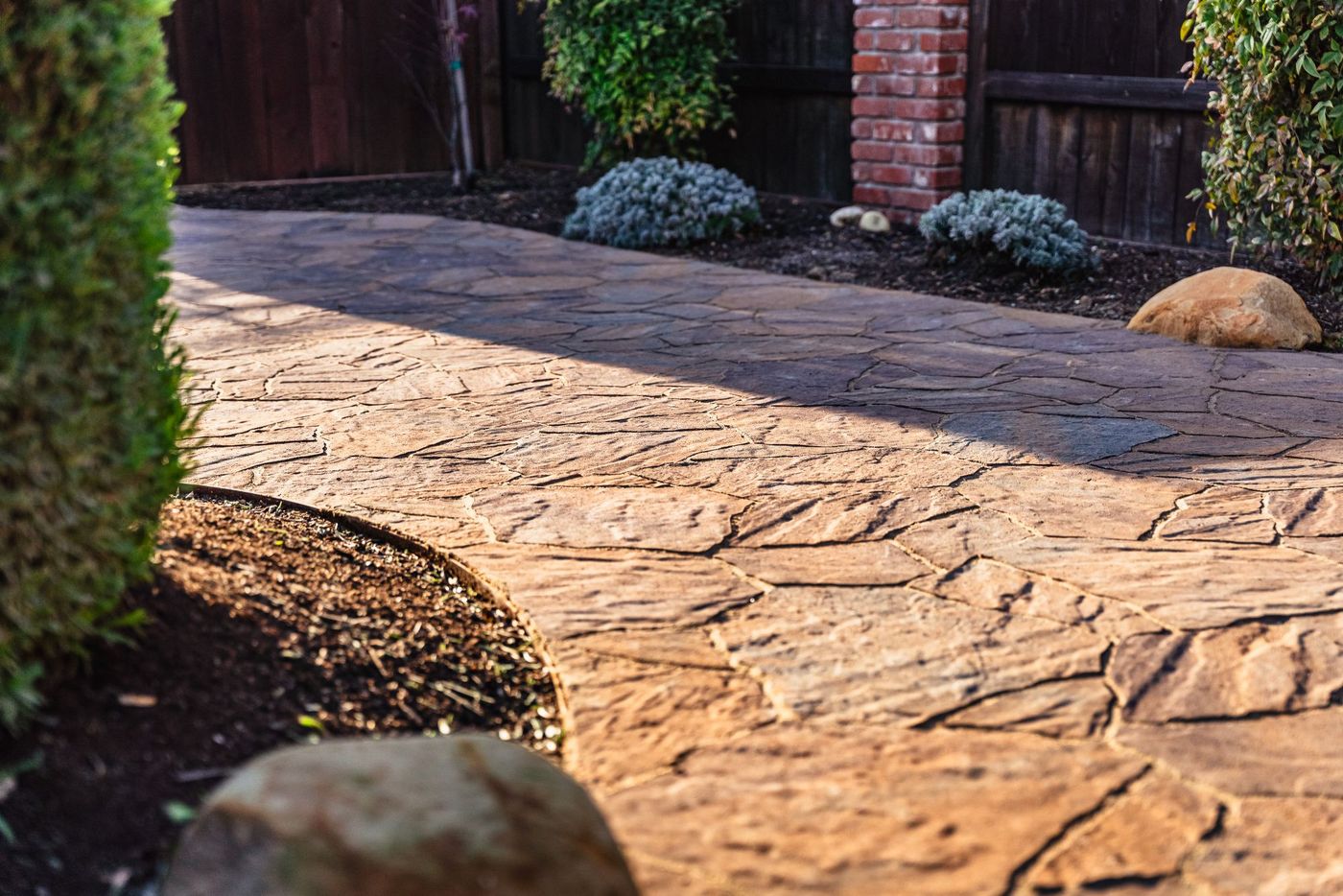 04 An informal, rustic feel Stamped concrete finished with a natural stone pattern, practical and durable rather than an imported resort look. See rustic patios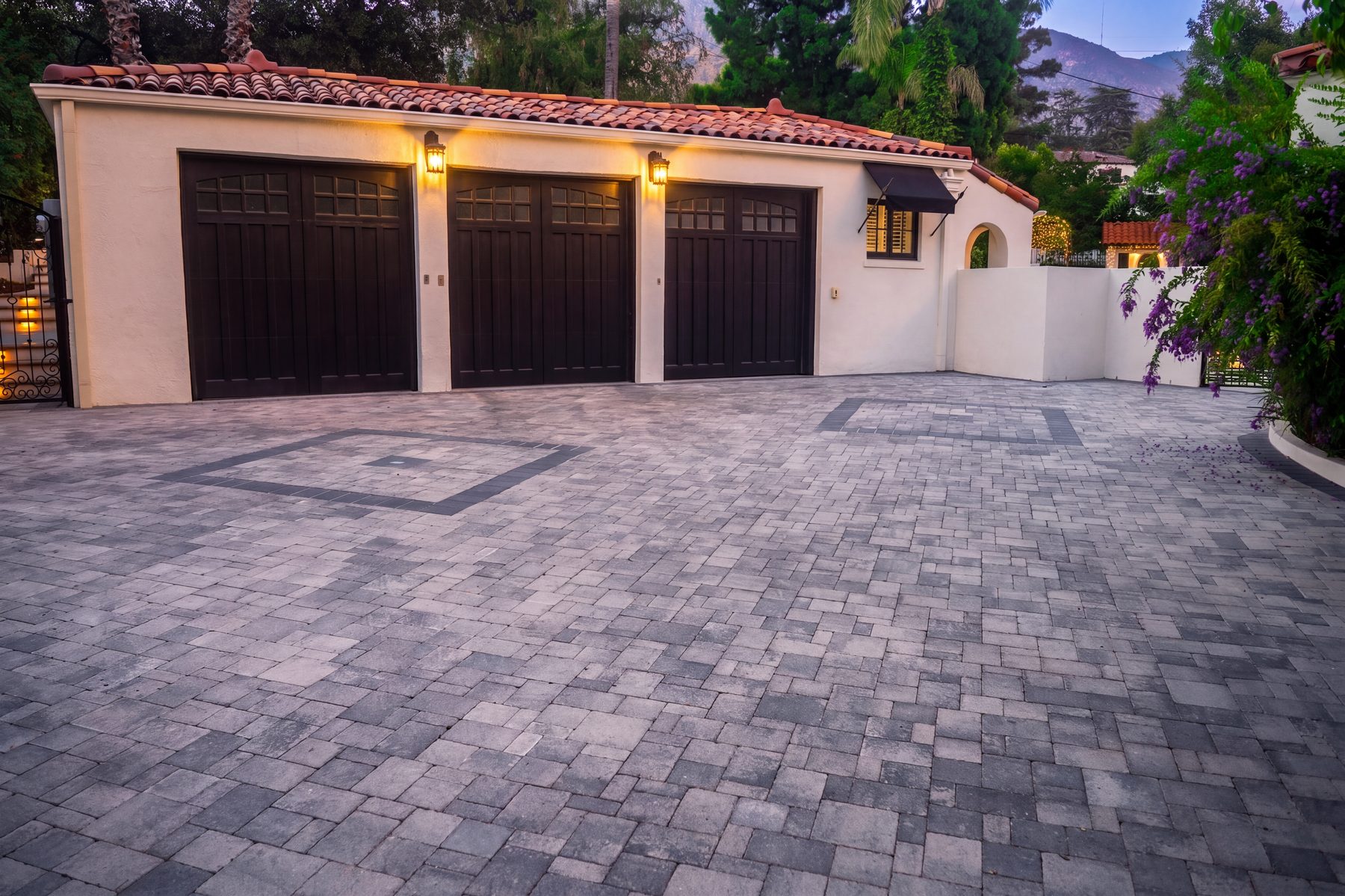
Best for Anyone who wants durability, color longevity, and easy repairs.
On your property Oceano's sandy soil behaves differently under load than clay, so base depth, compaction, and edge restraint all matter more here than the pattern itself.
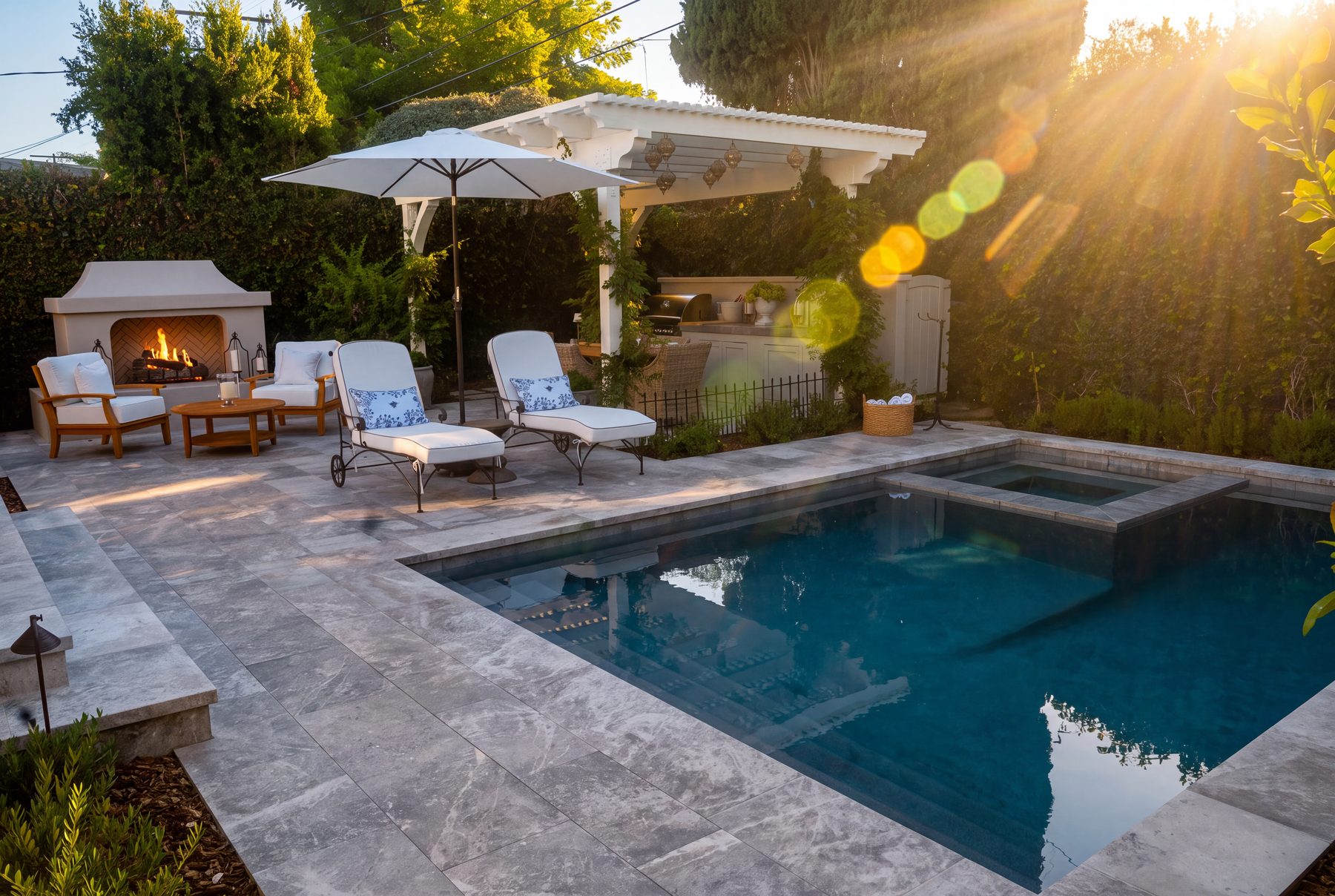
Best for Modern homes and anyone who wants a seamless, minimal look that reads as an extension of the house.
On your property Needs a stable base. On a slope or in a complex grading situation, porcelain is heavier to work with than pavers.
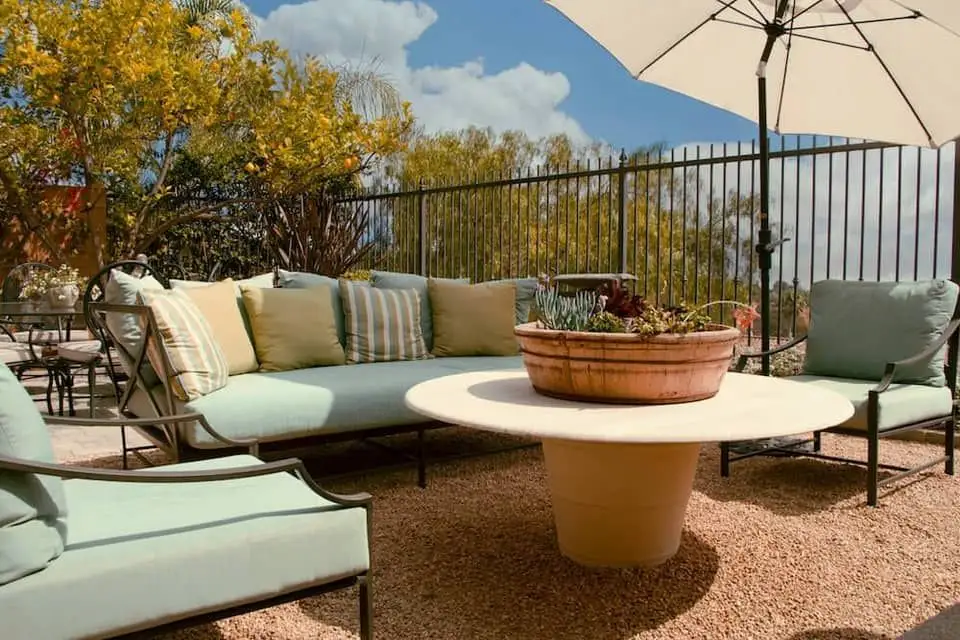
Best for Alfresco dining spaces and anyone who wants an Italianate or rustic aesthetic.
On your property Needs regular raking and occasional re-compaction. Fine dust settles in wind. Works best in protected courtyards.
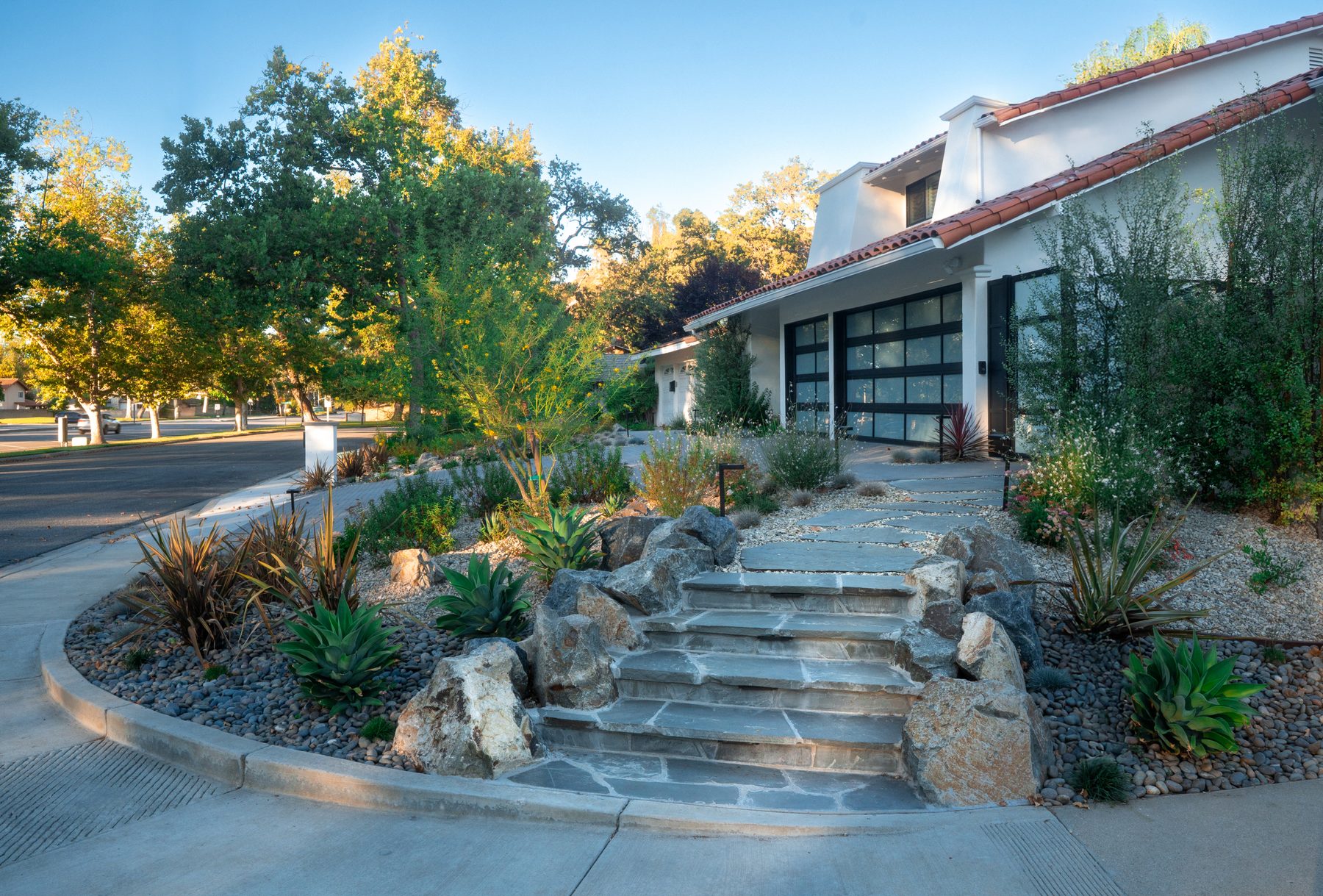
Best for Traditional houses and anyone who wants a timeless, high-end appearance.
On your property Marine air this close to the dunes makes real quarried stone higher-maintenance; stamped concrete finished with a natural stone pattern gets the look with less upkeep.
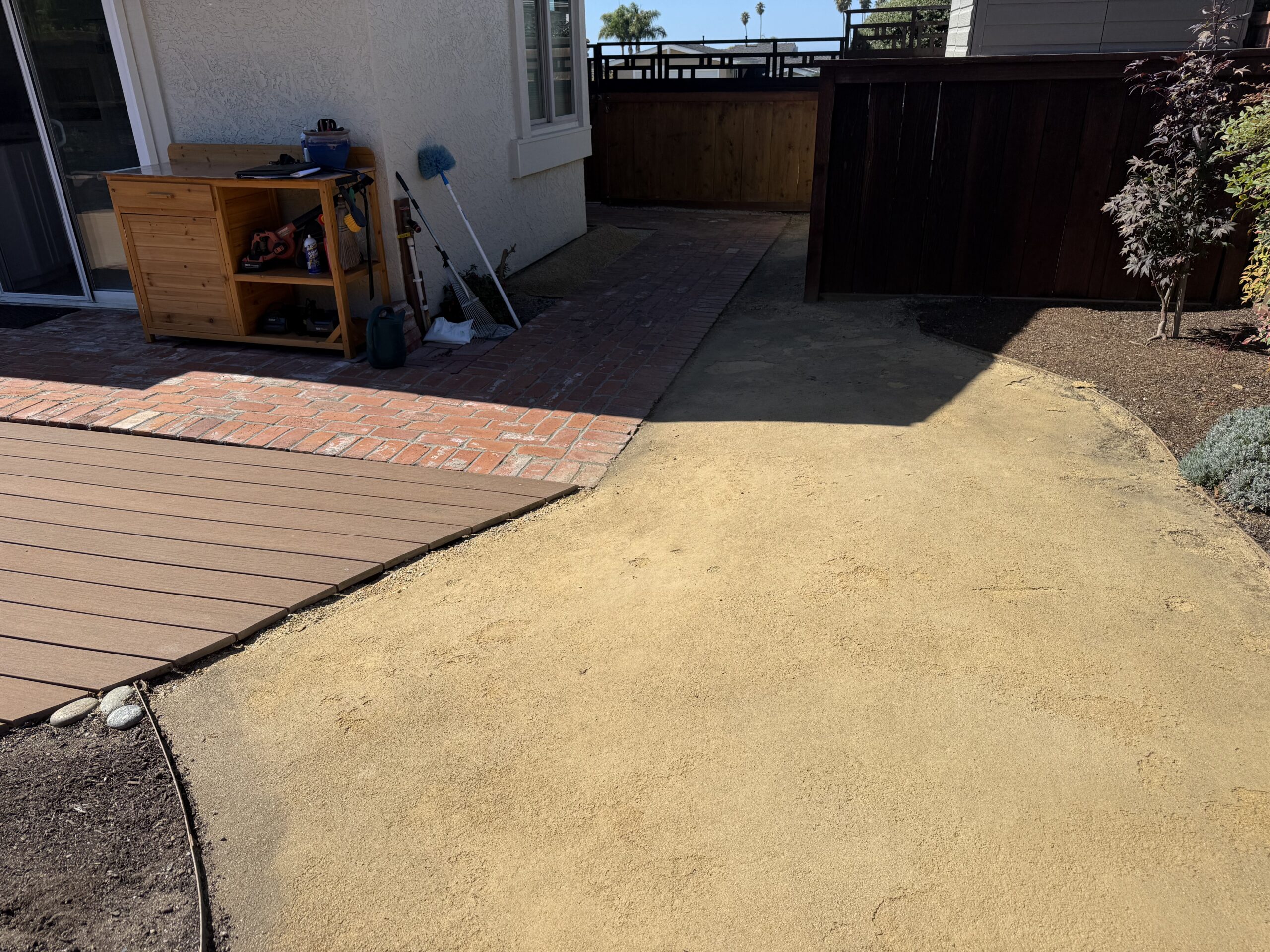 Before
 We assess sandy soil conditions, the afternoon onshore breeze, and drainage. This determines what will actually hold up and stay usable on your specific Oceano lot.
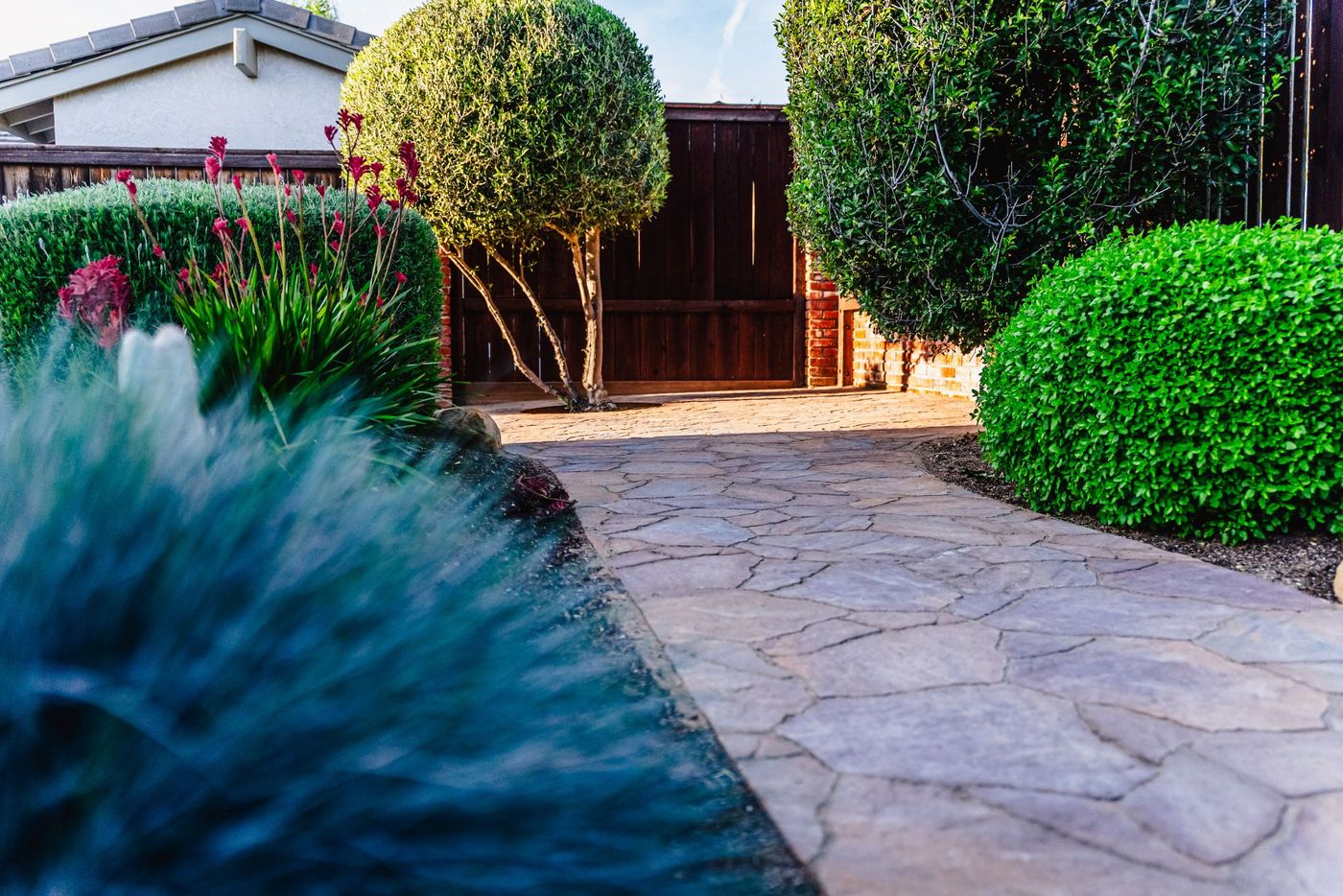 Design
 The patio gets drawn to scale weighted toward shelter and durability: a terrace in the lee of the house, and materials that hold up to sandy, wind-exposed ground.
 Permitting
 Permits go through our in-house team. Oceano is unincorporated, so San Luis Obispo County code applies directly rather than a separate city planning department.
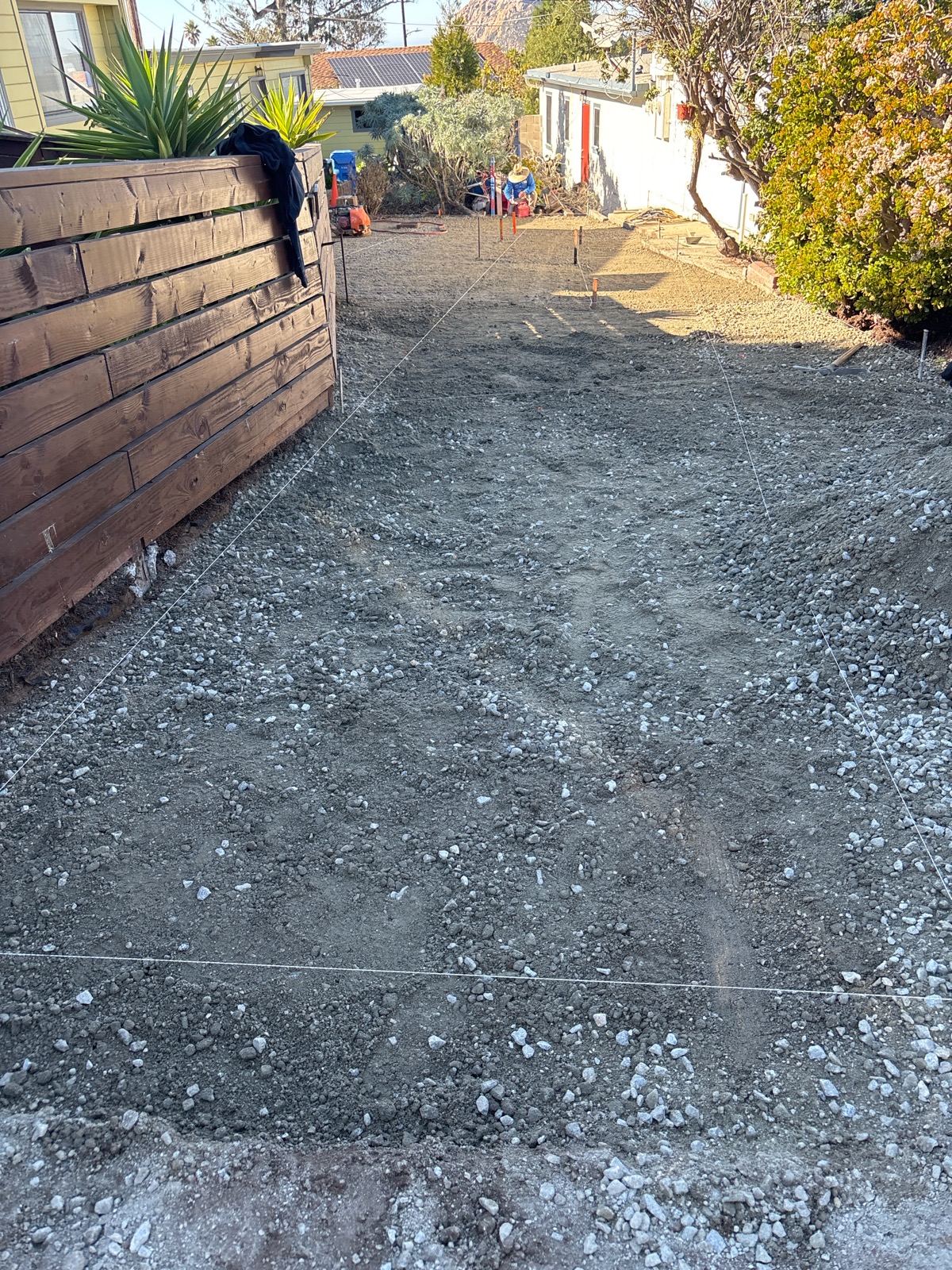 Under construction
 Hardscape gets proper base depth and compaction for sandy soil, a different job than a clay-soil property needs.
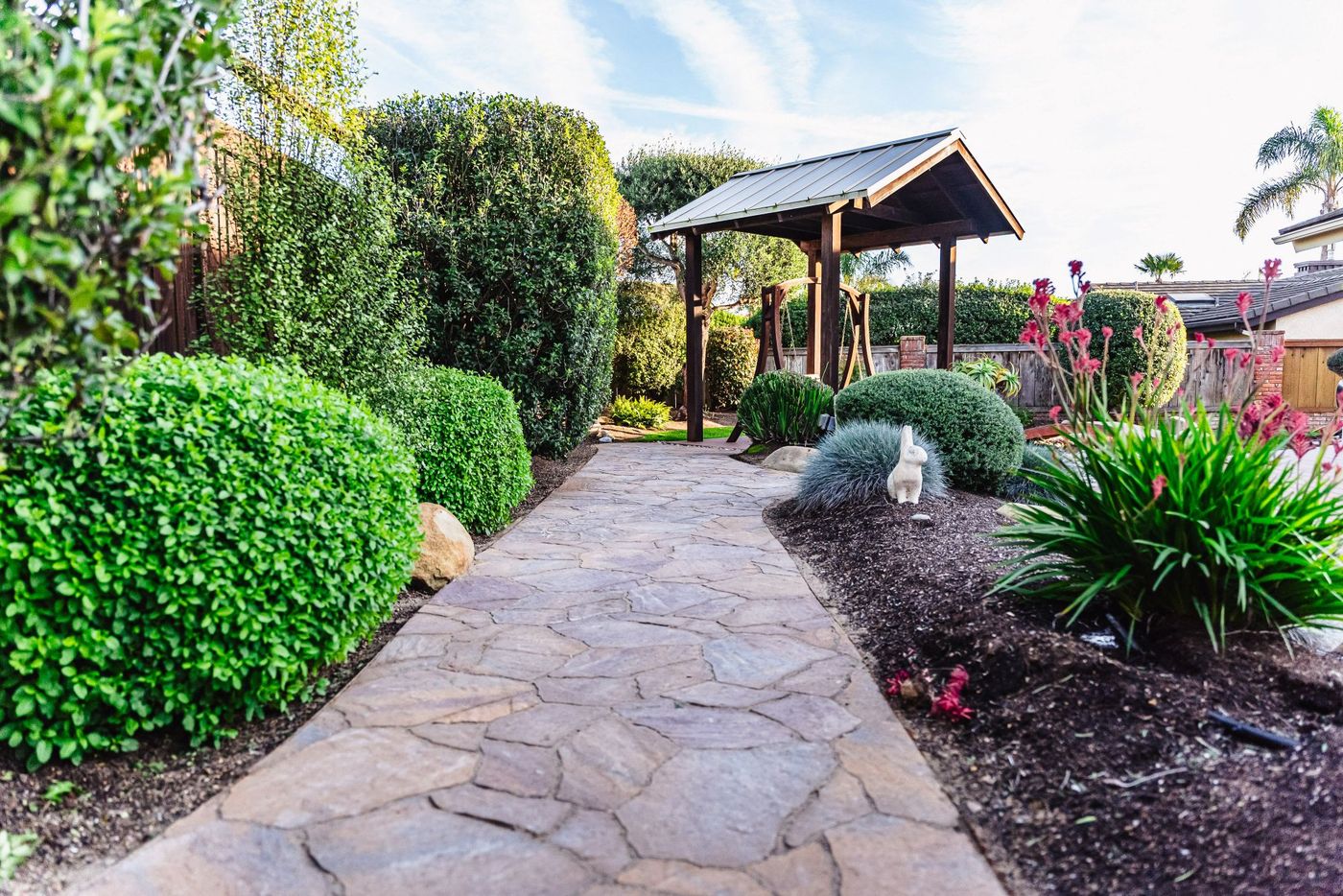 Finished
 Corrosion-resistant materials go in with trained crews, then planting fills in around the finished hardscape.
Things worth knowing before a first consultation.
Poured concrete costs least. Pavers and DG are mid-range. Natural stone and porcelain cost most. Durability and maintenance vary significantly.
Sandy soil drains fast and compacts differently than clay. Hardscape base depth and edge restraint need to account for it, or the patio settles unevenly.
How the patio meets the house door, the pool deck, pathways, and planting beds. These transitions determine whether the space feels cohesive or fragmented.
Entertaining space needs 20x20 feet or more. A narrow side-yard patio serves circulation and planting. Sizing changes material choices and cost dramatically.
Pavers and stone come in patterns: running bond, herringbone, basket weave. Joints can be colored, filled with turf, or left open. Pattern affects both look and cost.
Conduit for lighting, gas, and water should run under the patio base, not added afterward. Deciding these in the design phase prevents costly retrofits.
No quote written off a photograph can account for what your property is like.
Decking, drainage, utilities, planting, shade and lighting all bear on where a feature goes and how it gets built. Settling them on one set of drawings is what keeps conduit out of the wrong trench and stops paving being cut to fit afterward.
Access, engineering, permits, finishes and scope vary a lot from one property to the next, so the investment and the schedule for your project are set once we have seen the site and the design is settled.
Tell us about the property and what you want the space to do. We will walk through the design, site and permitting factors likely to shape it.
The new backyard living area turned out beautifully, with responsive people throughout and the project completed within the expected time and budget. Their responsiveness and professionalism made the entire process smooth and stress-free. We were impressed by their commitment to staying on schedule and respecting our budget.
Pacific Outdoor Living replaced the original landscaping with drought-tolerant plants, making the yard look like a completely different home. The transformation was stunning and immediately improved our curb appeal. We were thrilled with how they handled the planting design and modern aesthetic choices.
Yes. Oceano is within our San Luis Obispo County service region, alongside Grover Beach, Pismo Beach, and Arroyo Grande.
Only if the base is not prepared for it. Sand behaves differently under load than clay, so base depth, material selection, compaction, and edge restraint all matter more. Done properly, a paver or stamped-concrete patio on sandy ground performs very well.
Properly installed interlocking pavers last 25 to 50 years. They resist cracking better than concrete and individual stones can be replaced without affecting the whole patio.
Yes. A 1 to 2 percent slope (about 1 inch per 8 feet) directs water away from the house and allows it to sheet across the patio into yard drainage.
Yes. Our design process includes 3D renderings so you can see layout, materials, colors, and how the patio connects to your house and yard before construction begins.
Cost depends on size, material, and site conditions such as sandy soil and wind exposure. A typical 20x20-foot patio runs from a few thousand dollars for concrete to significantly more for natural stone.
Schedule a consultation with one of our designers to discuss your project goals and explore what's possible on your property.
What happens next: we set up a visit, measure the property and talk through what you want the space to do. Then you get a design to look at before you commit to anything.